Yesterday was an extremely emotional day. It has been a very long time since I felt such emotion that went from sadness to anger back to sadness and finally depression. Today, I do not understand God. I suppose we are not meant to understand God. Katie is gone. Hopefully, she is at peace. It was so sudden. Friday night I was told she went into acute liver failure then kidney failure and by Sunday she was dead. When she was little I babysat her. I am 13 years older. Her Dad, my uncle Billy was special. As a little girl, he called me "butter cup". When my parents divorced and I lived with my grandparents I was surrounded by my uncles. Uncle Billy was in his thirties when he got married. Within a few years my cousin Billy and Katie were born. When I was a teenager I would babysit my younger cousins and play monopoly with my aunt until late in the evening. My uncle and aunt did not have it easy. When Midvale steel closed, it placed my uncles out of work. My uncle Billy would work for my parents, coca cola then the medical society. When my cousin Billy was 19 years old he was diagnosed with a brain tumor that was the size of a lemon. He was a patient at Temple Neurosurgery Intensive Care for a very long time. He lost his sight as a result. I remember sitting outside the operating room for 16 hours with my mother, aunt & uncle while Billy was being operated on. There were times when we thought he would not make it through the surgery and the weeks that followed. When my uncle was 65 years old, he retired. Shortly thereafter he would be diagnosed with multiple myeloma, cancer of the bone marrow. He would die within two years. His daughter, my cousin Katie, would go on to raise a child on her own, work her way through nursing school and battle her own demons. I was told my cousin drank too much rum and took too many Tylenol (chronic arm pain) which is a perfect combination for acute liver failure. By the time she was too sick to get out of bed she was in acute liver failure. When one's liver shuts down, death comes quickly.
I believe in heaven and I believe that those who left this earth before us come back to open their arms to those who are ready to leave this earth behind and enter heaven. I believe my uncle Billy opened his arms to Katie and I believe that my grandparents and brother stood beside them. Some people would say this is a fairy tale belief. I say, there is a God and we are accompanied to heaven.
Showing posts with label Midvale Steel. Show all posts
Showing posts with label Midvale Steel. Show all posts
Monday, July 28, 2014

Saturday, July 07, 2012
William and Anna McCaffery Gallagher 1940

Vital Statistics;
- William worked as a Crane Operator at Midvale Steel making 720 dollars per month.
- Address in 1940 was 4137 Terrance Street Phila Pa 19127
- Married to Anna Marie McCaffery
- Children in home were William III, John, Collum and Mary.
Sunday, July 19, 2009

Saturday, August 04, 2007
Atwater Kent Factory "Approx 1929"
 The above picture shows the radio factory "Atwater Kent" that was once located at 5000 Wissahickon Avenue in the Nicetown section of Philadelphia. If you look closely at this photo, you can also see Midvale Steel located North of Atwater Kent. In 1936, Atwater Kent closed and sold its property to the Philadelphia Battery & Storage Company which later on was known as Philco.
Wednesday, August 01, 2007
Midvale Steel
An outstanding example of an industry no longer operating in Nicetown was Midvale Steel, founded in 1867 as the Butcher Steel Works and named for William Butcher, a recent immigrant steelmaker from Sheffield, Great Britain. Butcher enlisted the aide of importer Philip Justice and banker Edward Clark and shortly thereafter, began steel production in direct competition with the Pencoyd Iron Works in Manayunk and Henry Disston’s crucible steel plant in the Northern Liberties. Butcher died three years later and the company was subsequently taken over by William Sellers, a local machine tool builder.
The company's name was changed to Midvale Steel in 1872 and three years later, it landed its first contract with the U.S. Navy. Later contracts for steel were soon had with Baldwin Locomotive, the Pennsylvania Railroad, and John Roebling’s Sons (builders of the Brooklyn Bridge); by 1912 the site covered over fifty acres and employed over 3,500 workers.
Midvale’s huge success is attributed, in part, to the fact that it was organized and managed by a consortium of financial interests as well as people trained in the making of steel. (Most other Philadelphia industries were owned and operated simply by people trained in their specific fields.)
In 1915, Midvale merged with the Cambria Steel Company of Johnstown, Pennsylvania and two other steel companies near Philadelphia to become the Midvale Steel and Ordnance Company. This merger, according to Scranton and Licht, was motivated by the efforts of “a syndicate of steelmakers trained by Carnegie and Wall Street bankers;” the timing of the merger enabled the company to capitalize on enormous war-related contracts for the Army and the Navy during World War I.
By 1919, Midvale’s payroll swelled to 7,300. After the war, in the 1920s, the company’s productivity declined dramatically and Bethlehem Steel gained control of Cambria and several other portions of the company. Midvale itself reorganized as the Midvale Company and set out to diversify its production and tighten its workforce.
By 1928, the number of employees on the payroll had dropped to 1,800. During that time, it also became one of the nation’s largest producers of armor plate steel for ships and tanks. It also produced large forgings, propellers and shafts for ships, chemical vessels, and marine engines.
Midvale Steel was the home of one of America’s foremost innovators in labor efficiency—Frederick Winslow Taylor. Taylor grew up in Germantown, the child of a wealthy family. He attended good schools, but instead of pursuing college, he apprenticed in a Philadelphia machine shop.
In 1878, he came to work at Midvale as a day laborer, rose to clerk, then to machinist, then to gang boss, and finally to Chief Engineer prior to his leaving the company in 1890.
During his tenure, Taylor became intensely interested in the efficient management of work-related time. Using methods introduced by Charles Brinley, Taylor systematically developed techniques to raise the efficiency of production throughout the entire plant to an exceptionally high level.
Taylor believed that each workman should be given, as far as possible, the highest grade of work for which his ability and physique were fitted, that each workman should be called upon to turn out the maximum amount of work that a first-rate man of his class should do, and thrive, and that each workman, when working at the best pace of a first-class man, should be paid from 30 to 100% beyond the average of his class, according to the nature of the work he was doing.
Taylor introduced an elaborate system of time studies to determine precisely how much time should be allowed for each operation, first into the machine shop and later into other departments. He then developed a “differential” piece rate system (in accordance with Brinley’s methods) under which an employee’s pay rate was based upon his output and efficiency.
Taylor’s ideas stemmed from the concept that workers operate at a much lower level of productivity than their actual capability. If their capabilities were scientifically determined, and if workers received proper pay incentives for producing at their capacity, then productivity, wages, and profits would all be substantially improved. Taylor’s ideas were opposite to those of the “welfare work” movement which was based on the idea that improving a worker’s welfare (his place, lot, etc.) would inspire the worker to seek self-betterment, loyalty to the company and cooperation.
Taylor left Midvale in 1890 and soon began establishing similar work studies at the Manufacturing Investment Company (a paper manufacturer), and eventually at Bethlehem Steel.
Midvale’s slowdown after World War I led to experimentation and innovation in new products by the company. One of the products, a nickel and chrome alloy steel (originally developed for military uses) found an effective use in the auto industry. However, in spite of these developments, the Depression hurt Midvale seriously and by 1933, only 800 workers were on the site.
The demands of the recovery in the late 1930s, and the threats of war brought activity back to Midvale, in staggering proportions. By 1940, the site had grown to 80 acres.
Wartime production caused employment to swell as the company produced steel for the Army and the Navy. After the War, Midvale’s production began to drop off, and during the 1960s, its life slowly started to come to an end.
In 1970, the newly reorganized Midvale-Heppenstal Corporation began the systematic shutdown of the Nicetown plant; its eulogy was written by Scranton and Licht.
The last to close of our four nineteenth-century Philadelphia plants, Midvale is soon to be demolished. For the moment, its massive forge hammers are still in place, but they will never again shake the earth with their power. Their silence leaves a bitter emptiness after a century of steel and sweat.
Information Taken http://www.workshopoftheworld.com/introduction/introduction.html
The company's name was changed to Midvale Steel in 1872 and three years later, it landed its first contract with the U.S. Navy. Later contracts for steel were soon had with Baldwin Locomotive, the Pennsylvania Railroad, and John Roebling’s Sons (builders of the Brooklyn Bridge); by 1912 the site covered over fifty acres and employed over 3,500 workers.
Midvale’s huge success is attributed, in part, to the fact that it was organized and managed by a consortium of financial interests as well as people trained in the making of steel. (Most other Philadelphia industries were owned and operated simply by people trained in their specific fields.)
In 1915, Midvale merged with the Cambria Steel Company of Johnstown, Pennsylvania and two other steel companies near Philadelphia to become the Midvale Steel and Ordnance Company. This merger, according to Scranton and Licht, was motivated by the efforts of “a syndicate of steelmakers trained by Carnegie and Wall Street bankers;” the timing of the merger enabled the company to capitalize on enormous war-related contracts for the Army and the Navy during World War I.
By 1919, Midvale’s payroll swelled to 7,300. After the war, in the 1920s, the company’s productivity declined dramatically and Bethlehem Steel gained control of Cambria and several other portions of the company. Midvale itself reorganized as the Midvale Company and set out to diversify its production and tighten its workforce.
By 1928, the number of employees on the payroll had dropped to 1,800. During that time, it also became one of the nation’s largest producers of armor plate steel for ships and tanks. It also produced large forgings, propellers and shafts for ships, chemical vessels, and marine engines.
Midvale Steel was the home of one of America’s foremost innovators in labor efficiency—Frederick Winslow Taylor. Taylor grew up in Germantown, the child of a wealthy family. He attended good schools, but instead of pursuing college, he apprenticed in a Philadelphia machine shop.
In 1878, he came to work at Midvale as a day laborer, rose to clerk, then to machinist, then to gang boss, and finally to Chief Engineer prior to his leaving the company in 1890.
During his tenure, Taylor became intensely interested in the efficient management of work-related time. Using methods introduced by Charles Brinley, Taylor systematically developed techniques to raise the efficiency of production throughout the entire plant to an exceptionally high level.
Taylor believed that each workman should be given, as far as possible, the highest grade of work for which his ability and physique were fitted, that each workman should be called upon to turn out the maximum amount of work that a first-rate man of his class should do, and thrive, and that each workman, when working at the best pace of a first-class man, should be paid from 30 to 100% beyond the average of his class, according to the nature of the work he was doing.
Taylor introduced an elaborate system of time studies to determine precisely how much time should be allowed for each operation, first into the machine shop and later into other departments. He then developed a “differential” piece rate system (in accordance with Brinley’s methods) under which an employee’s pay rate was based upon his output and efficiency.
Taylor’s ideas stemmed from the concept that workers operate at a much lower level of productivity than their actual capability. If their capabilities were scientifically determined, and if workers received proper pay incentives for producing at their capacity, then productivity, wages, and profits would all be substantially improved. Taylor’s ideas were opposite to those of the “welfare work” movement which was based on the idea that improving a worker’s welfare (his place, lot, etc.) would inspire the worker to seek self-betterment, loyalty to the company and cooperation.
Taylor left Midvale in 1890 and soon began establishing similar work studies at the Manufacturing Investment Company (a paper manufacturer), and eventually at Bethlehem Steel.
Midvale’s slowdown after World War I led to experimentation and innovation in new products by the company. One of the products, a nickel and chrome alloy steel (originally developed for military uses) found an effective use in the auto industry. However, in spite of these developments, the Depression hurt Midvale seriously and by 1933, only 800 workers were on the site.
The demands of the recovery in the late 1930s, and the threats of war brought activity back to Midvale, in staggering proportions. By 1940, the site had grown to 80 acres.
Wartime production caused employment to swell as the company produced steel for the Army and the Navy. After the War, Midvale’s production began to drop off, and during the 1960s, its life slowly started to come to an end.
In 1970, the newly reorganized Midvale-Heppenstal Corporation began the systematic shutdown of the Nicetown plant; its eulogy was written by Scranton and Licht.
The last to close of our four nineteenth-century Philadelphia plants, Midvale is soon to be demolished. For the moment, its massive forge hammers are still in place, but they will never again shake the earth with their power. Their silence leaves a bitter emptiness after a century of steel and sweat.
Information Taken http://www.workshopoftheworld.com/introduction/introduction.html
Friday, April 13, 2007
Family Trivia


Did you know that Uncle Jack and Uncle Billy shined shoes and sold newspapers outside what was once known as Shibe Park then Connie Mack Stadium where the Phillies once played?
Did you know that Uncle Jack once sold a newspaper to Babe Ruth and President Franklin D. Roosevelt at that same stadium?
Did you know that this stadium was located in a Philadelphia neighborhood called "Swamppoodle"?
Did you know that this neighborhood was where Aunt Ann was born and that the older children attended St. Columbus grade school before the family moved to Ridge Avenue?
Did you know that Uncle Billy was an excellent Baseball player in his own right who along with Uncle Gene played on the Midvale Baseball Team?
Did you know I attended some of their games?
Did you know that Uncle Billy was a Paratrooper during the Korean War who received two Bronze Stars and one Purple Heart?
Did you know that there was another local Philadelphia neighborhood called "Paradise" located around 29th & Clearfield?
Did you know that when I was a little girl living in East Falls, my older brother Michael found a stray collie roaming around in Laurel Hill Cemetery and brought him home?
Did you know that this same collie jumped out of the window in my mother's moving car on Germantown Avenue but still managed to find its way home all the way back to East Falls limping the entire way?
Did you know that this same collie wandered off to 29th & Clearfield in Paradise and decided to check himself into the S.P.C.A?
Did you know that this dog layed outside the S.P.C.A. and would not move even though its employees tried to chase him away finally prompting a telephone call to my mother for her to come and pick the dog up?
Did you know that Uncle Jack once sold a newspaper to Babe Ruth and President Franklin D. Roosevelt at that same stadium?
Did you know that this stadium was located in a Philadelphia neighborhood called "Swamppoodle"?
Did you know that this neighborhood was where Aunt Ann was born and that the older children attended St. Columbus grade school before the family moved to Ridge Avenue?
Did you know that Uncle Billy was an excellent Baseball player in his own right who along with Uncle Gene played on the Midvale Baseball Team?
Did you know I attended some of their games?
Did you know that Uncle Billy was a Paratrooper during the Korean War who received two Bronze Stars and one Purple Heart?
Did you know that there was another local Philadelphia neighborhood called "Paradise" located around 29th & Clearfield?
Did you know that when I was a little girl living in East Falls, my older brother Michael found a stray collie roaming around in Laurel Hill Cemetery and brought him home?
Did you know that this same collie jumped out of the window in my mother's moving car on Germantown Avenue but still managed to find its way home all the way back to East Falls limping the entire way?
Did you know that this same collie wandered off to 29th & Clearfield in Paradise and decided to check himself into the S.P.C.A?
Did you know that this dog layed outside the S.P.C.A. and would not move even though its employees tried to chase him away finally prompting a telephone call to my mother for her to come and pick the dog up?
Thursday, February 15, 2007
Midvale Steel and Frederick Winslow Taylor
http://www.americanheritage.com/articles/magazine/ah/1979/5/1979_5_26.shtml
http://www.americanheritage.com/articles/magazine/it/1991/3/1991_3_56.shtml
Articles of interest for those interested in obtaining more information about Midvale Steel.
http://www.americanheritage.com/articles/magazine/it/1991/3/1991_3_56.shtml
Articles of interest for those interested in obtaining more information about Midvale Steel.
Friday, February 02, 2007
A Little Bit Of Local Steel Work History
I have been working on obtaining some background information on the history of three main steel work plants that have had a direct affect on the employment history of many of our family members throughout the years 1880 to 1976.
Here is a small summary of what I have found so far.
PENCOYD IRON WORKS
This mill was located on fifty acres along the Schuylkill River which was once known as West Manayunk. This area today is called Belmont Hills.
The mill was founded in 1852 by the Robert's Family and was a major bridge and structural steel maker in its time. In 1900 Pencoyd joined the United States Steel Company and changed its name to the American Bridge Company. It employed about 1,000 men.
In 1937 it became a subsidiary of the Carnegie-Illinois Steel Company but closed its door after World War II. Portion of the plant's grounds was taken over by Connelly Containers which was a carton factory. Next to the mill there was a dyewood and chemical mill which later was known as S.A. Rudolph's Ashland Paper Mill.
ALLENWOOD STEEL PLANT
There was very little information I was able to locate on this mill. However, what I did find out was the plant was started by the Allen Wood Family who at the time owned most of Conshohocken and whose family had one of the largest estates/mansions (Spring Mill Road) on the Main Line.
I came across alot of legal ligation about the plant's huge asbestos problem and its relation to an increase in cancer among its employees. I have not investigated in its entirety therefore, I do not know what the outcome may have been. The plant was torn down and as of today a large part of it remains a large empty lot. In the surrounding areas, there are quarries and some new housing developments. Hopefully, I can discover more about this plant and its operations at a later date.
Midvale Steel
The mill was founded in 1873 by Edward Clark (son of a City Banker and wealthiest known residents of Germantown) and William Sellers (who discovered a thread for machine screws and bolts).
In the 19th Century, Midvale Steel was one of the largest leading metal works along side of Baldwin Locomotive and William Cramp Shipyard.
By the late 1870's it became the country's leader in the development of machine tools such as heavy-duty lathes, planers, boring machines and metal-cutting machines.
In 1875, Midvale received an order to make Naval guns and became the Nation's "pioneer" maker of steel for all large guns and heavy armor. Congress wanted the country to become a World Power by having a strong Navy which Midvale helped provide and during this time in 1875 the plant still lit its factory with kerosene torches and employed only about 4oo men who used a small open hearth furnace to melt steel. Midvale was the leader in all top military contracts until Bethlehem and Carnegie Steel entered the Steel Works business.
In 1878 Frederick Taylor was hired on as a foreman for the machine shop and would later be known as the "Father of Scientific Management" for his invention of the "high speed tool" used for steel.
As the 19th Century came to a close, Midvale had 1200 employees whom 200 of them were black, By 1900 there would be 3400 employees whom 1,000 of them would be black.
When World War I broke out the plant had so many military orders to fill it had 11,500 employees. After this war it converted its Nicetown operation to produce only "specialty steel products" and by 1928 the plant was down to 1800 employees which increased during the time of World war II but never regained its earlier popularity because of other steel works competition in Pittsburgh.
In 1976, Midvale closed its doors due to severe economic problems.
In 1977, it was purchased and was to reopen under new ownership. That endeavor failed.
Today, most steel is made overseas.
Here is a small summary of what I have found so far.
PENCOYD IRON WORKS
This mill was located on fifty acres along the Schuylkill River which was once known as West Manayunk. This area today is called Belmont Hills.
The mill was founded in 1852 by the Robert's Family and was a major bridge and structural steel maker in its time. In 1900 Pencoyd joined the United States Steel Company and changed its name to the American Bridge Company. It employed about 1,000 men.
In 1937 it became a subsidiary of the Carnegie-Illinois Steel Company but closed its door after World War II. Portion of the plant's grounds was taken over by Connelly Containers which was a carton factory. Next to the mill there was a dyewood and chemical mill which later was known as S.A. Rudolph's Ashland Paper Mill.
ALLENWOOD STEEL PLANT
There was very little information I was able to locate on this mill. However, what I did find out was the plant was started by the Allen Wood Family who at the time owned most of Conshohocken and whose family had one of the largest estates/mansions (Spring Mill Road) on the Main Line.
I came across alot of legal ligation about the plant's huge asbestos problem and its relation to an increase in cancer among its employees. I have not investigated in its entirety therefore, I do not know what the outcome may have been. The plant was torn down and as of today a large part of it remains a large empty lot. In the surrounding areas, there are quarries and some new housing developments. Hopefully, I can discover more about this plant and its operations at a later date.
Midvale Steel
The mill was founded in 1873 by Edward Clark (son of a City Banker and wealthiest known residents of Germantown) and William Sellers (who discovered a thread for machine screws and bolts).
In the 19th Century, Midvale Steel was one of the largest leading metal works along side of Baldwin Locomotive and William Cramp Shipyard.
By the late 1870's it became the country's leader in the development of machine tools such as heavy-duty lathes, planers, boring machines and metal-cutting machines.
In 1875, Midvale received an order to make Naval guns and became the Nation's "pioneer" maker of steel for all large guns and heavy armor. Congress wanted the country to become a World Power by having a strong Navy which Midvale helped provide and during this time in 1875 the plant still lit its factory with kerosene torches and employed only about 4oo men who used a small open hearth furnace to melt steel. Midvale was the leader in all top military contracts until Bethlehem and Carnegie Steel entered the Steel Works business.
In 1878 Frederick Taylor was hired on as a foreman for the machine shop and would later be known as the "Father of Scientific Management" for his invention of the "high speed tool" used for steel.
As the 19th Century came to a close, Midvale had 1200 employees whom 200 of them were black, By 1900 there would be 3400 employees whom 1,000 of them would be black.
When World War I broke out the plant had so many military orders to fill it had 11,500 employees. After this war it converted its Nicetown operation to produce only "specialty steel products" and by 1928 the plant was down to 1800 employees which increased during the time of World war II but never regained its earlier popularity because of other steel works competition in Pittsburgh.
In 1976, Midvale closed its doors due to severe economic problems.
In 1977, it was purchased and was to reopen under new ownership. That endeavor failed.
Today, most steel is made overseas.
Thursday, February 01, 2007
William Joseph Gallagher I
I came across the military records of my great grandfather William J Gallagher I recently. Though he did not serve in either World War I or II, he did register for the draft. Therefore, I was able to view some personal information about the man who was my grandpop's father.
William Joseph Gallagher was born June 29th, 1884 to Patrick and Hannah (Dougherty) Gallagher. He was their only son. William had three sisters Grace (Silverthorn), Mary (Cannon) and Sarah "Sally" (Keller).
According to the World War I Draft Records, William had blue eyes and light brown hair. He was 5 "7" with a ruby complexion and was of medium built. When he signed up for the draft on September 12th, 1918, he lived at 143 Seville Street in the Manayunk Section of Philadelphia. Occupation was listed and this was in 1918 "folks" Electrical Machinist for Midvale Steel at 4201 Wissahickon Street.
On April 27th, 1942, he signed up for the World War II Draft. He was still 5"7" and 150lbs with blue eyes, gray hair and a ruby complexion. He was also listed as being employed at Allenwood Co., Ivy Rock Plant in Conshohocken. He was also listed as living on 317 Roxborough Ave. This is in the year 1942.
William Joseph Gallagher was born June 29th, 1884 to Patrick and Hannah (Dougherty) Gallagher. He was their only son. William had three sisters Grace (Silverthorn), Mary (Cannon) and Sarah "Sally" (Keller).
According to the World War I Draft Records, William had blue eyes and light brown hair. He was 5 "7" with a ruby complexion and was of medium built. When he signed up for the draft on September 12th, 1918, he lived at 143 Seville Street in the Manayunk Section of Philadelphia. Occupation was listed and this was in 1918 "folks" Electrical Machinist for Midvale Steel at 4201 Wissahickon Street.
On April 27th, 1942, he signed up for the World War II Draft. He was still 5"7" and 150lbs with blue eyes, gray hair and a ruby complexion. He was also listed as being employed at Allenwood Co., Ivy Rock Plant in Conshohocken. He was also listed as living on 317 Roxborough Ave. This is in the year 1942.
Sunday, November 19, 2006
Robert Pester "The Son-In-Law"
I did a little research on Collum McCaffery's son-in-law, Robert Pester. Though he is only related by marriage to us through his union with Collum McCaffery's daughter Anna, I researched his background to find more McCaffery clues. So here is a little information for you on this man.
Robert Pester was born in Port Leydan New York on April 4th, 1891. His father was named Mattheiu. His mother was named Cora. Robert had many brothers and sisters but by the time he was a teenager, he resided with his maternal grandparents (LeFlar). According to World War I records, Robert was married, lived on Hermitage Street and had one child. He was listed as being 6ft with blue eyes and light colored hair, a fair complexion and stout.
At age 50 years, Robert registered for the World War II draft. During this time in 1941-1942, his wife Anna was no longer listed. Next of kin listed on his draft records was his son also named Robert Pester. Address at time of registration was 145 Kalos Street in the Wissahickon section of Philadelphia. He was also listed as being an employee of Midvale Steel 4300 Wissahickon Avenue. His son Robert Pester took over the Hermitage Street house.
Of interest; another Midvale Steel employee. It appears that nearly every male Gallagher, Keller and McCaffery relative worked at Midvale Steel from the late 1920's until they closed in the early 1970's. Here is just a small list of fellow Midvale Steel employees, William Gallagher I (grandpop's father), John Keller II (Uncle John), William Gallagher II (grandpop), William Gallagher III (Uncle Billy), John Gallagher (Uncle Jack), Collum Gallagher (Uncle Gene), Collum McCaffery (Uncle Coll), Robert Pester.
According to the Social Security Index records, Robert Pester's son, Robert Pester was born October 22nd, 1917 and died in December 1976. He was listed as living in Manayunk at the time of his death.
Robert Pester was born in Port Leydan New York on April 4th, 1891. His father was named Mattheiu. His mother was named Cora. Robert had many brothers and sisters but by the time he was a teenager, he resided with his maternal grandparents (LeFlar). According to World War I records, Robert was married, lived on Hermitage Street and had one child. He was listed as being 6ft with blue eyes and light colored hair, a fair complexion and stout.
At age 50 years, Robert registered for the World War II draft. During this time in 1941-1942, his wife Anna was no longer listed. Next of kin listed on his draft records was his son also named Robert Pester. Address at time of registration was 145 Kalos Street in the Wissahickon section of Philadelphia. He was also listed as being an employee of Midvale Steel 4300 Wissahickon Avenue. His son Robert Pester took over the Hermitage Street house.
Of interest; another Midvale Steel employee. It appears that nearly every male Gallagher, Keller and McCaffery relative worked at Midvale Steel from the late 1920's until they closed in the early 1970's. Here is just a small list of fellow Midvale Steel employees, William Gallagher I (grandpop's father), John Keller II (Uncle John), William Gallagher II (grandpop), William Gallagher III (Uncle Billy), John Gallagher (Uncle Jack), Collum Gallagher (Uncle Gene), Collum McCaffery (Uncle Coll), Robert Pester.
According to the Social Security Index records, Robert Pester's son, Robert Pester was born October 22nd, 1917 and died in December 1976. He was listed as living in Manayunk at the time of his death.
Monday, March 13, 2006
What It Was Like For Those Who Worked In The Iron Mills In The Late 19th and Early 20th Centuries
An explosion of gas, a slipping of the furnace, a cave-in of the furnace stack, a tilted ladle, a cracked converter, an overturning of a pile of iron, the breaking of a rotten scaffold . . . these are some of the most common of death-dealing [conditions] which make human life in and about iron mills and locomotive works as precarious as upon a field of battle.
And for all this slaughter . . . [management gives] but one answer: “Carelessness on the part of the injured person"
Taken from an earlier 1900's report on Iron Mills.
And for all this slaughter . . . [management gives] but one answer: “Carelessness on the part of the injured person"
Taken from an earlier 1900's report on Iron Mills.
Saturday, March 11, 2006
Midvale Steel and William Joseph Gallagher

After our country entered into War World II, the once lagging industry and country's depression receded and opportunity for workers began once again. It was at this time that my grandfather William Gallagher got a job at Midvale Steel in the Nicetown section of Philadelphia as a " roller " of steel but it was not long before he ran the biggest crane in the city in what was considered the largest one story building in the nation where he used the crane to pick up the large guns that went on the Navy's gun ships to dip them into the hot steaming steel. Before long my grandfather became one of the most respected employees in Midvale due to his courage and ability to perform a job well done. As his sons William, John and Gene became of age, they also were employed at Midvale. Sadly, Midvale Steel fell on difficult financial times and closed its doors a final time in 1976. It should be noted that Coll McCaffery, my grandmother's cousin and husband of William's sister Anna was also once employed by Midvale Steel. As a Train Conductor, he drove the trains in the rail yard to transport the steel. John Gallagher (Uncle Jack) resigned his position at Midvale Steel in the early 1960's to relocate to California and seek work as a Life Insurance agent.
Midvale Steel
Midvale Steel Company, Car Axles, Tires, Projectiles And Armor Plate Nicetown "Though a modern establishment, the Midvale Steel Works had rapid growth and constitute one of the gigantic industries of the country. Car axles, steel tires for locomotive wheels and structural work have long been their well-known products. They also made propeller shafts for steamships, and gun forgings and steel projectiles and armor plates for the United States Government".
Thursday, December 22, 2005
Midvale Steel

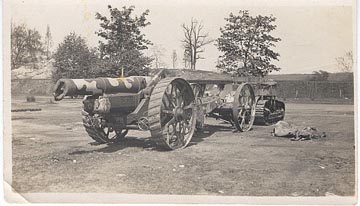

Located in the Nicetown section of Philadelphia, Midvale Steel was known for its production of steel and weapons during World War I and World War II.
Subscribe to:
Posts (Atom)