Showing posts with label family history. Show all posts

Tuesday, October 06, 2026

Memorials and Virtual Cemeteries

I have been busy lately! I now manage 149 memorials and 56 virtual cemeteries. This work is ongoing, and those numbers will continue to increase as time goes by. I am still trying to figure out how to link them to my website, and I also have several outstanding requests to manage other family memorials that I am currently awaiting answers to.
Beyond tracking the records, I am working on a few story lines regarding the eras our ancestors lived through. Specifically, I am exploring how their environments prompted them to leave their homelands and immigrate to America. One of the primary time periods I am focusing on is the era of the Austro-Hungarian Empire (1867-1918).


Monday, September 28, 2026

Rudolph Row and the Boland/McCaffery Connection

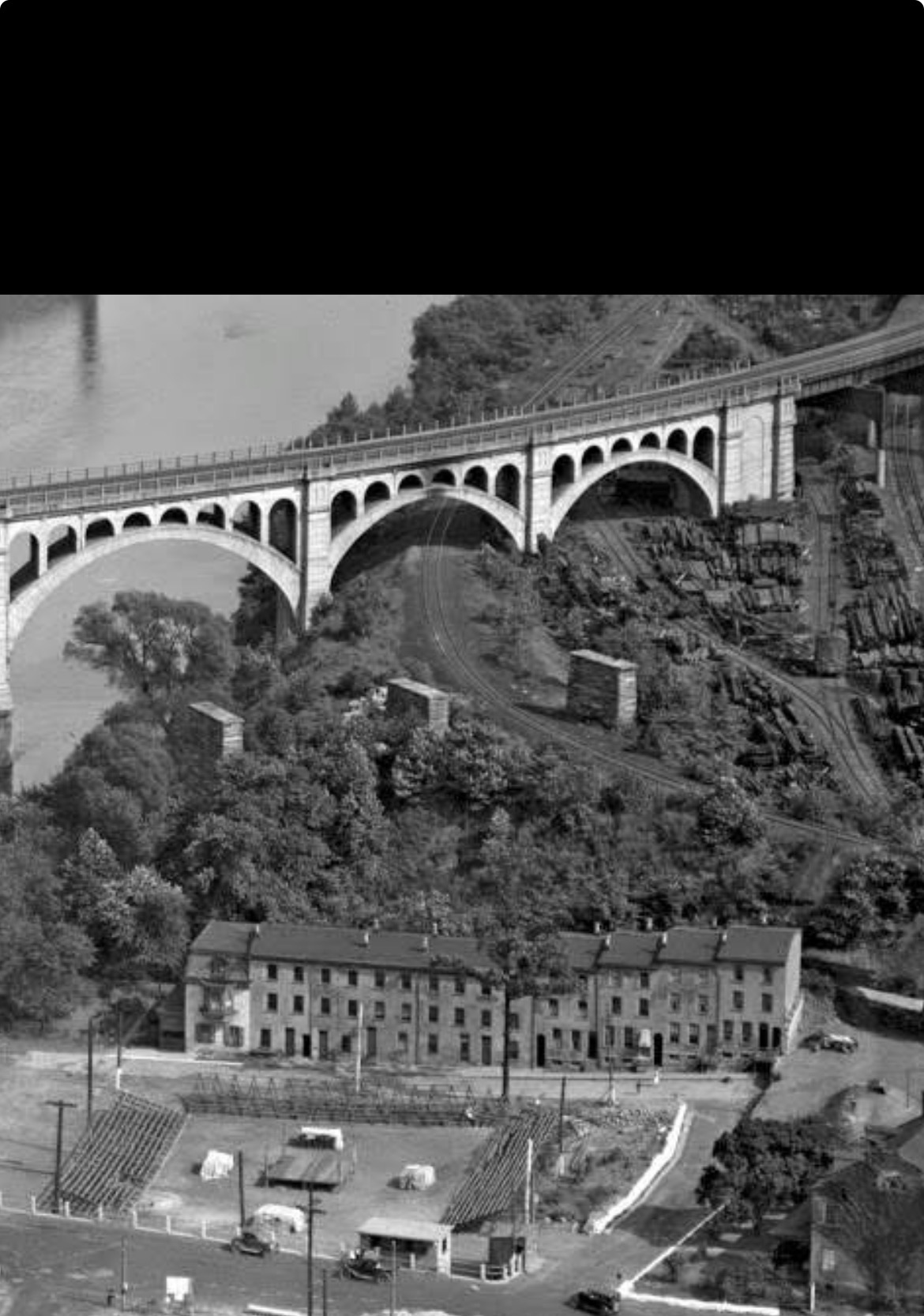
​I recently wrote a post about my paternal grandfather’s boxing career and mentioned one of the venues he fought at was known as Rudolph’s Open Air  Ring located in front of of a group of employee row-houses known as Rudolph’s Row. 

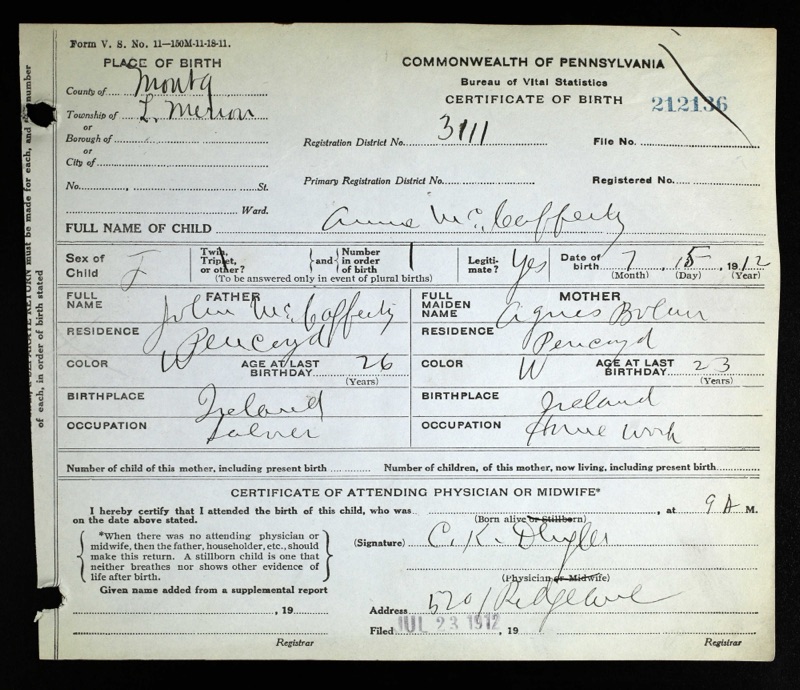
After I wrote the post, I remembered my maternal grandmother Ann Marie McCaffery’s birth certificate that stated she was born in a house on the grounds of Pencoyd Iron Works. On a hunch, I went back to look at my research records on the McCaffery (also spelled McCafferty) clan. Lo and behold, I was able to connect the dots and solve another piece of the puzzle. My grandmother was born in one of the Rudolph Row houses. I discovered that employees of Pencoyd Iron Works also lived in Rudolph’s Row-Houses. At first I thought it was only the employees of Sebastian Rudolph’s paper mill known as Ashland that resided in those homes. I discovered that John and Agnes (Bridget) Boland McCafferty resided at Rudolph’s Row and that my grandmother was born there. John McCafferty immigrated from Letterkenney Ireland to Philadelphia Pennsylvania in 1908 and found employment at Pencoyd Iron Works. John’s brother Columb (later Americanized to Collum) was already living in Manayunk and working at Pencoyd. Later, I discovered the the connection between Letterkenney, Ireland and the neighborhood of Manayunk and Pencoyd Iron Works.

Before John McCafferty left his home in Ireland, he already had a place to live and work in Philadelphia Pennsylvania. 

By 1908 and even as early as Columb’s immigration in the late 1800’s, the worst of the Great Famine had passed. However, it left County Donegal economically “stagnant”. At the same time, Manayunk in Philadelphia was booming in textiles, locomotive manufacturing and steel production. As a result, young men from County Donegal left in the thousands to travel to a little section of town known as Manayunk “Workplace of the World” to seek employment. 

Rudolph was a historic collection of connected mill worker houses that housed the employees and their families of Ashland Paper Mill and Pencoyd Iron Works. Though the houses were located on the west side of the River known as West Manayunk, it was deeply connected to the industrial and social fabric of next door Manayunk. Today, West Manayunk is Belmont Hills and Rudolph Row was removed to build the Schuylkill Expressway in the 1950’s. 

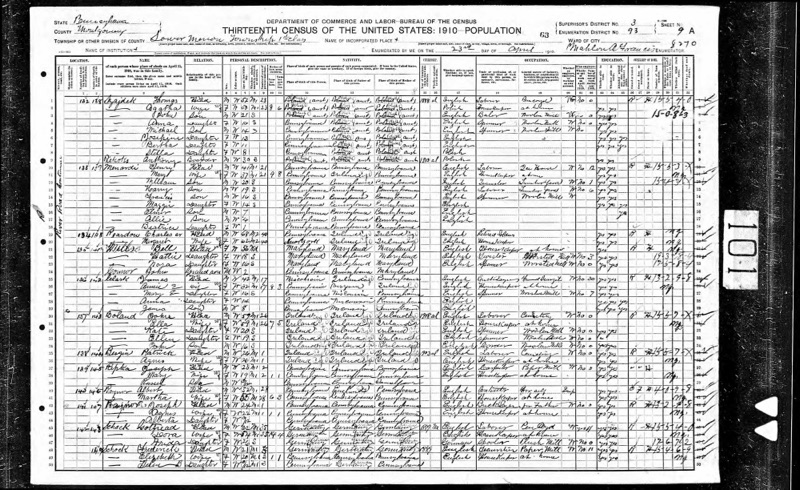
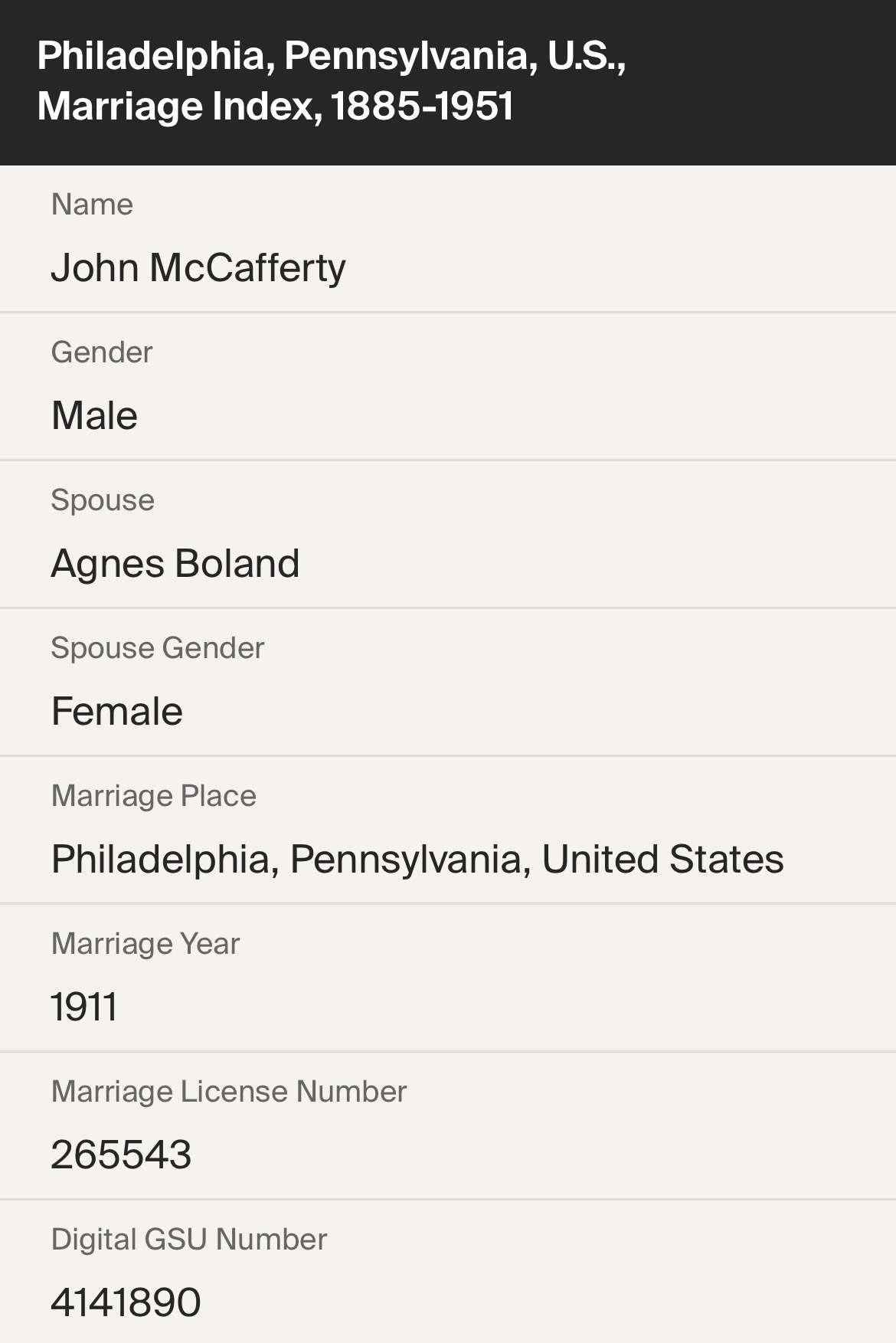
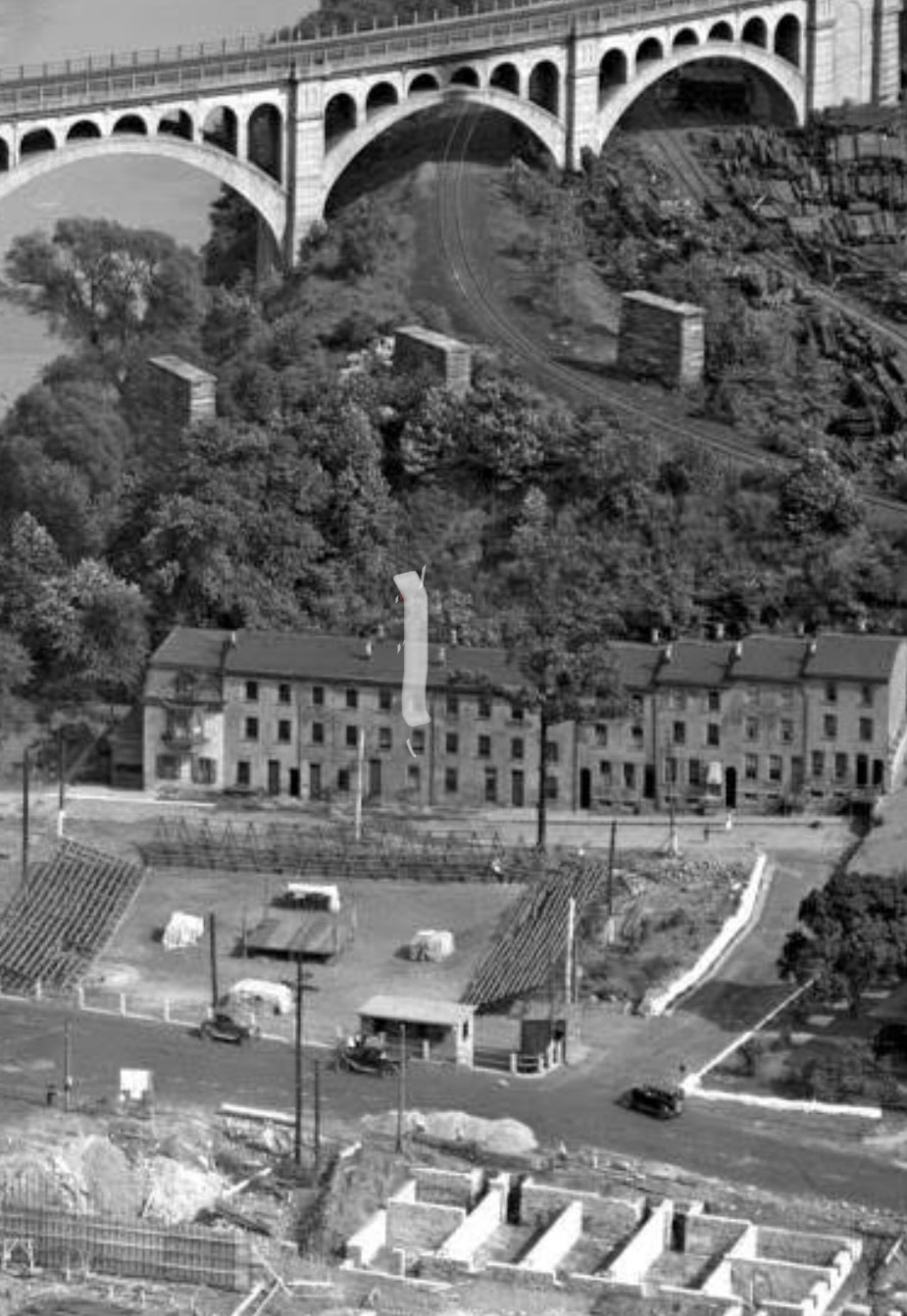
I believe my maternal great grandfather was an employee of Pencoyd Iron Works who lived with his wife and his wife’s family. In the 1910 census records, my great great grandparents John and Ellen Boland resided on River Rd with their children. What is interesting about that is my great great grandfather did not work at Ashland Paper Mill or Pencoyd Iron Works but worked digging graves at nearby Westminster Cemetery. I always thought 137 River Rd was on the grounds of Westminster Cemetery only to discover it was a Rudolph Row house. In 1911, John McCafferty married their daughter Agnes (Bridget) Boland and Agnes gave birth to their daughter (my grandmother)  in that house in 1912. 

Living at Rudolph Row meant you shared one water well located on the sidewalk, had no indoor plumbing, lived between a river and railroad tracks which had locomotives belch out thick coal smoke, high noise and pollution levels from nearby industries and close to prize boxing fights and carnivals at the Rudolph Open Air Ring that was located across from the row houses.

Work conditions at Ashland Paper Mill and Pencoyd Iron Works were physically grueling and dangerous. At Ashland Paper Mill, workers were crashed by machines or drowned in large vats that contained bleaching agents. At Pencoyd, there were blast furnace accidents, intense heat, toxic gases and ash that polluted the air. Employees worked 12 hour shifts six days a week without overtime or benefits with few breaks. Child labor was abundant where children worked long hours with even less pay. It was a time where industry was unregulated and life threatening. 

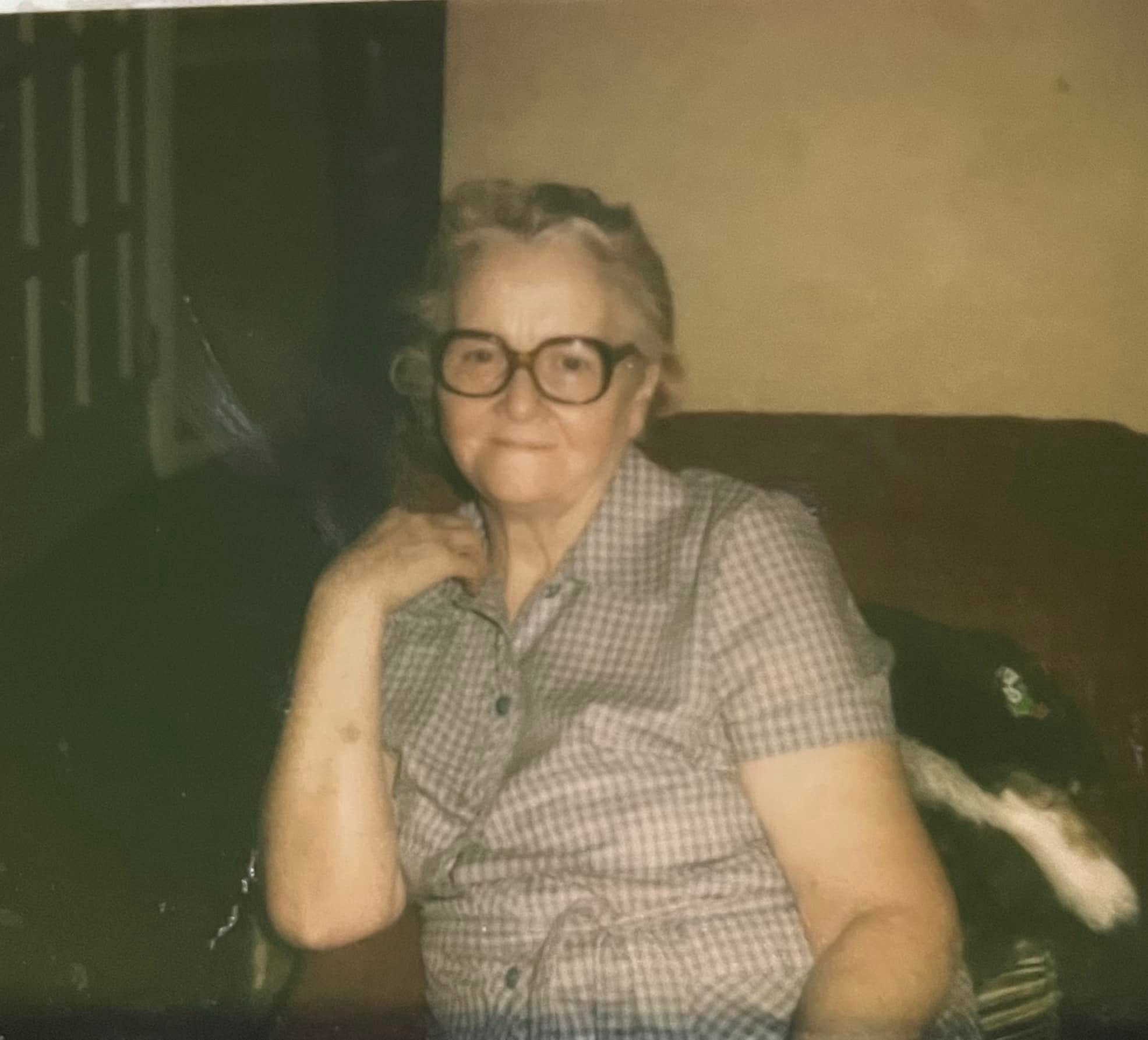
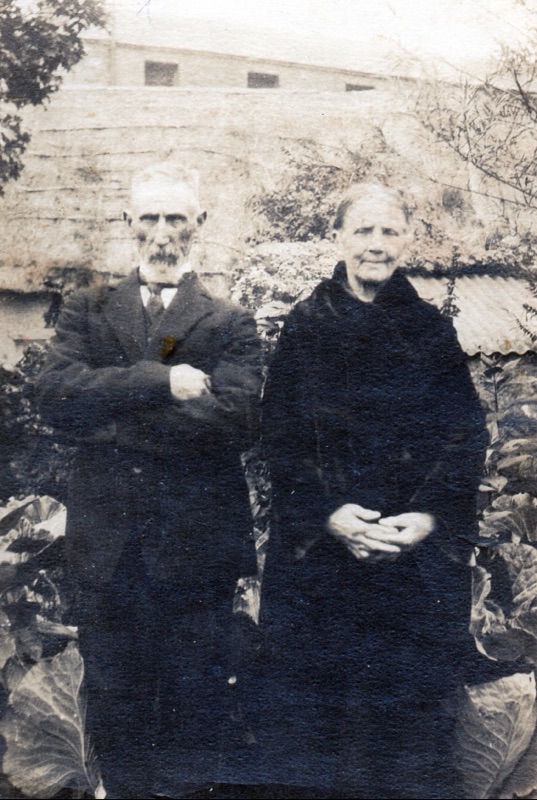
Attached are pictures of my grandmother Ann McCaffery/McCafferty’s birth certificate and the 1910 census records of the Boland family on River Rd. I also added the pictures of Rudolph Row, John and Ellen Boland, marriage certificate of John and Agnes Boland Mccafferty/Mccaffery and Ann McCaffery Gallagher. The last picture of Rudolph Row, I added a white line pointing out the Boland House (137) where my grandmother (Anna) was born. 

Wednesday, September 26, 2012

Uncle Jack

He has been transferred to Capistrano Beach Care Center and began palliative care. His disease is very rare in the general population, but not rare in my family history. I want to see him. I want to say, "Goodbye". I want to give his family a copy of the article I wrote years ago that was published. It was an interview with him, about his growing up years, his neighborhood, his friends, his connection to Laurel Hill. I gave him a published copy years ago. I am not sure whether or not he still has it. I want to give him another copy and one to his family. I know now, he told me things, he never shared with them. I want to share them. Not once did I ever speak to my uncle where he did not tell me, "I love You". He has been through hell. He lost his leg. He had surgery to stop bleeding in his stomach, liver, esophagus. Before, they took his leg, they tried to save it by cutting it open from hip to toe. All this over a rare blood disorder, a blood cancer out of control.

Palliative care is a step up from hospice. There is really no difference. I cannot imagine what he is thinking. He was so strong, which is why he has survived all these bleed-outs and surgeries. He ate healthy, walked miles everyday, enjoyed his life, laughed, loved, did not drink or smoke, took vitamins, washed his hands to avoid viruses. He was so much like my grandpop. He even resembled him. Out of three sons, Uncle Jack looked like my grandfather. Today, I hold him close to my heart and hope I am on a plane to Southern California in the near future.
  Uncle Jack with my cousin John and his son, Finn. We are a tall family and Uncle Jack reminded me of my grandfather who when he walked into a room, you felt his presence.
Grandpop holding my son, Shaun in 1978. I adored this man.
Uncle Jack and Aunt Polly's children and grandchildren. They had five boys before they had a girl. From left to right, Matt, Kathleen, John, Paul, Brian, Eric, Aunt Polly and Uncle Jack. My cousin Kathleen is 6 feet tall. She is the tallest female granddaughter/cousin among the females in our family. I am the shortest at 5"7". Birth order of my California born cousins are; Eric, John, Brian, Matthew, Paul and Kathleen. Uncle Jack is the second oldest of five children born to William and Anna McCaffrey Gallagher.

My grandparents named all their children after a family member; William Joseph (after his Dad), John Patrick (after my grandmom's Dad), Collum Eugene (after my grandmom's cousin and the priest(Father Eugene) who was godfather to my great grandmother Mary Keller Gallagher), Mary Louise (after my great grandmother and the Blessed Virgin) and Ann Marie (after her Mom).

Thursday, September 13, 2012

Process with Progress

Has been started as of today. I made some important decisions and followed it up with action. It is just the beginning, but at least it is a beginning.

On another note, I am not feeling well. My blood pressure is up again. I have been worried about my uncle Jack who resides in California and have kept in touch with my cousin. I am worried about my uncle Gene who resides in New Jersey. Both uncles are in the hospital. My mom has been by their bed sides and when she left the one in California to be with the one in New Jersey, she was filled with guilt and worry. Both my sister and I are worried about our mother who is doing the caretaking and now struggling with all the anxiety, fear, exhaustion on her own. I spent some late nights talking with her, my sister and cousin. I am so glad "superwoman" actually agreed to have someone help her. My Dad went down today.

Seems to be a trait within my family. Women trying to to help everyone else without asking for help themselves. No wonder, we crash and burn at times. But we always get up and move forward. I told my sister if our mother did not slow down, I was going to kidnap her to an undisclosed location without cell phones or computers. Thank God, I have a sister.

I feel the days ahead will be tough.

My husband has been great.

I think I am more focused today and less scattered than yesterday. I have taken advantage of my intern whom I trained in June and will be with us for a year. He has been an amazing help with my patient caseload this week.

I set some new boundaries last night.

God granted me intelligence. I have used it. I intend to really use it.

Sunday, February 01, 2009

Earliest Memories Of The Ridge Avenue House


  • Being in a crib on the third floor bedroom of my grandparents house on Ridge Avenue in the East Falls Section of Philadelphia. I remember my older brother was in the room with me and I also remember being frighten over a noise in the closet. My brother ran downstairs and left me in the crib. I cried but no one heard me.
  • Watching my grandmother climb out a bedroom window to grab my brother off the second story roof.
  • Watching my grandmother grab my brother off the back yard fence as he was climbing over it.
  • Remembering the bed frame breaking in the second story back bedroom of my grandparents' house. I believe it was the bed my Aunt slept in. I also believe my brother was jumping on it.
  • Sitting on a chair in my grandmother's kitchen watching her roll out dough to bake a pie. I remember she wore a house dress and the front of it was covered in flour.
  • Watching my grandmother wash clothes using a ringer washer. She told me not to get too close or I could get my arm caught in the ringer. I used to have visions of losing my arm in that ringer.
  • Sitting on the basement steps watching my grandfather shovel coal into a furnace. I remember the high flames, a result of the hot burning coals.
  • Spending summer evenings sitting on the front steps of my grandparents' house and looking over to the cemetery (Laurel Hill) across the street and seeing the bats flying out of the trees.
  • Sometimes the Charles truck would come around and my uncles would buy chips and pretzels and surprise me with cookies.
  • Sitting on the front steps of my grandparents' house talking with my grandmother or taking a walk up to the drug store on Allegheny Avenue to buy an ice cream with my grandfather.

  • Remembering the Avon lady pushing a baby carriage with her products. I believe she was the victim of polio.

  • Watching the twilight zone on a television with a little black & white screen and thinking the creature on the television could climb out of the set and get me.

  • Watching Uncle Bill & grandmom getting into an argument over a woman Uncle Bill was seeing and witnessing Uncle Bill running down the stairs holding onto the banister on his way out the front door. The argument was about the woman being a divorcee. Uncle Bill would later marry that woman and have two children.

Wednesday, November 12, 2008

It's Here

Eighteen years of research has finally made it's way in book form. The Family Library Edition came out today. All one hundred and forty-four pages of it.

Monday, June 02, 2008

Family History Update

I met a distant Cafferty cousin on May 22nd, when she flew in from her home in Seattle Washington. We spent the morning researching together at St. Bridget's Catholic Church. I found a lot of new information on both the paternal & maternal branches of the family, though I still could not find anymore clues on what happen to John & Ellen Boland after 1920. I thought maybe they were buried from St. Bridget's, because I could not find any records at St. John the Baptist's Church. When Ellen died in 1926, she & John lived on the 4800 block of Ridge Avenue. Afterwards, John moved in with their son & his family who lived on Laboratory Hill in East Falls. If I can find John & Ellen Boland in 1920, then there is a good possibility I will be able to find my grandmother Anna Marie McCaffery Gallagher too. I already know she did not live with her Aunt Kate in 1920, because I found the 1920 census records that listed Daniel, Catherine & Helen on Terrace Street.

John's brothers also resided in that same section of East Falls on and around Calumet Street as John's son. Mary Boland Cafferty (his daughter) resided on the 4000 block of Ridge Avenue and owned several Ridge Avenue properties.

I have a list of the records, I found over at St. Bridget's including my own, since I was baptized there, attended grade school, and made my First Holy Communion & Confirmation there. I will post them soon.

On another note regarding St. Bridget's, I got to tour a little of the rectory. What a beautiful building the rectory was, which has woodwork, ect. dating back to the middle 1850's. The place is grand. I wonder if it was someone's old house at one time? I will need to research the history.

Thursday, April 24, 2008

Update

The family history book is right on schedule. It is nearly two hundred pages long and I am in the process of arranging the final layout while adding stories to some family members. So far I have added stories written by Terry Wittman, Eileen Dougherty Russo, Janet Savino, Helen Malervy, Jack Gallagher, Mary Gallagher Maier, Christine Kelly and of course myself. All stories and/or photographs are cited as to give the proper credit to the proper person. If anyone else has a photo and/or story you want to add, please send to me "via" personal email.

I made the decision to delete "Census Records" in the book because the preview does not allow the reader to view all the details due to lack of print size. Why waste previous space on documents that do not print well when I can use those same pages for photographs and/or other records. The military and ship passenger records print pretty well so the reader may actually be able to view the detailed information in those records. I will add a "post note" at the end of the book for those who wish to have copies of the actual Census records, they can email me and I will send them a copy. I have Census Records dating back to 1850 on the statistics of many of our family members.

The Book will be titled "A Journey Into The Past" and will include information on the following families; Beatty, Bednarski, Boland, Cafferty, Cannon, Dabkowski, Dolhanceyk, Dombrowka, Dougherty, Forte, Gallagher, Keller, Maier, Malervy, McCaffery, McCarrick-Doherty, Mervine, Nicholson, Pester, Ritter, Schroeder, Silverthorn, Valentino, Voigt, Walsh, Weleski/Wislocki/Wisloski and Zysk.

Other names are mentioned throughout the book. However, there is probably no detailed ancestral information on those "other" names. Many names are mentioned because of whom a person married. The list is too long to go into it on this website.
Remember, this is 18 years of research.

Tuesday, April 15, 2008

A Great Prize


Bill came across an old book written in 1918 called "The History of the Church of St John the Baptist" located in Manayunk known as the Grand Souveuir 41,ooo dollar campaign.
According to the book, in 1918 the church was in debt, and they organized a fundraiser with the expectation of collecting 30,000 dollars, half of the total debt the church owed its creditors. In the end, the parishers gave Father Murphy 41,000 dollars to help cover the costs incurred in building a new church, church hall and school between 1894 & 1906.
What was interesting about this particular fundraiser was the amounts of money those who belonged to the church gave. Yes, there was a list of who gave & how much. Yes again, if you wondered if any of our relatives were on that list in this book dated 1918.
Grace Silverthorn & Sally Keller gave a total of 50.00 dollars. Address of residence listed in the book was 3886 Terrace Street, which was the home of James & Grace Gallagher Silverthorn. John & Sally Gallagher Keller lived with Grace & James at the time. Daniel & Katherine Boland Malervy gave 5.00 dollars and they resided at 17 Osborne Street at the time. George & Mary Gallagher Cannon gave 10.00 dollars and resided at 137 Kalos Street at the time. William & Mary Keller gave 10.00 dollars and resided at 143 Seville Street at the time.

To donate 50, 10 or even 5 dollars to the church in 1918 was a lot of money for a Manayunk factory and/or Iron worker. Again, it says a lot about our ancestors' character and their devotion to church and community. The above residences were not houses our ancestors' own but houses they rented. It would be several more years, before they own their homes.
Bill discovered this little treasure in an used book store near a train station located in Mt. Airy. I guess you never know what you can come across at any given time. My husband, the flea market/yard sale/used book store junky.

Monday, April 07, 2008

Because I Am Nice Like That

I gave Bill about a dozen photos (old & new) to scan and email me "via" his computer to my computer, so I can use them in the book.

In other book related news, my cousin Karin sent me several pictures and John is suppose to write a story or two for me to add. She also gave me some good advice considering she has been a writer & editor for fifteen years. She told me to remember that sometimes less is best. I will keep that in mind as I sort through all the pages and have to decide which ones stay and which ones go. I wish she lived closer, because I value her opinion, and it would have been great to get her input first hand.

I will meet another distance cousin (Terry) in May who is from the Cafferty Family. She was nice enough to send me some death records/grave site pictures of the family. She also gave me valuable Cafferty information.

I am very fortunate to have made contact with so many distance family members from all over the world. It is because of them that I have been able to piece all the puzzles together. I know so much about my grandmother's family, because of all the family members (Boland, Cafferty, McCaffery & Malervy) that found my site and emailed me. I am especially grateful to Helen Nicholson for helping me connect the dots of the Boland/Malervy Families. She gave me some clues, which I promptly researched and discovered all those missing pieces. It still amazes me how one piece of information can lead to a ton of information. It was as though, I was peeling back the layers of an onion.

Tuesday, April 01, 2008

Off To Print

I completed a shorter version of my book "A Journey Into The Past" and sent it off to print yesterday. I am hoping it comes back before my mother's birthday dinner that is to be held here at my house on the 27th of April.

The original work is still in progress. The goal is to have it in print by the end of the year. It appears I will make that deadline unless some unforeseen event takes place. Keep your fingers crossed.

On that same note, I need photographs from family members. I prefer that you scan them and send them "via" email address at pzysk14@verizon.net so that I can add them to the book. When I created the shorter version that was just recently sent to print, I realized that I had a ton of pictures of my children/grandchildren but lacked pictures of other family members. Included in the book will be documents that I discovered in my research such as census records, death records, pension records, military records, ect. I even added some short stories so if you remember something about the family and want to share it in the book, please send the story to the email address. I will cite you on the story in the book.

This is a story about "our family", a story I have been working on for 18 years. I have gone back several generations and discovered a variety of details. I charted entire "time periods" of history.

Sunday, December 23, 2007

Did You Know

As of today's date, I counted 24 Mary's, 18 John's, 17 Ann's, 15 William's, 7 Elisabeth's and 4 Catherine's, as first names in our family tree?

Just thought you would want to know.

Saturday, December 22, 2007

Eight Generations Of Family

I have been working really hard, this past week trying to compile, all the information, into some sort of readable form. I am trying to find the right program, that will allow the reader to view as much detailed information on the individual as possible. Whatever format, I use will be the format, you will see in the book. It is an overwhelming task and almost, if not an obsession for me. I have 206 years of information, on our ancestors and I have counted eight generations.

How did I manage all this? Seventeen years of walking through cemeteries, researching burial, church, census, military, immigration, passenger, ship, passport, old newspapers, you name it and I have probably looked through that record. My head spins just thinking about it. Some records, I needed translated from German to English. Thank God for the help of the curator (fluent in German) of the German Lutheran Archives in Germantown who translated some of this information for me. If it wasn't for her, I would not have known the what, when and how's of the Keller clan who immigrated here in 1854. Of course, there is a program, you can use to help with language translation on the Internet. I have used that a time or two to figure out a specific word here or there.

I am sure, there are as many relatives out there, who are just as interested in their past, as there are those who could care less. However, they may think, this is a gift to my grandparents William & Anna Gallagher's memory. Something, I promised my grandmother, I would do during that last lunch, we had together two months before she died in 1980.

I am so grateful for that lunch, where she spoke about her family and gave me, the first clues to research. She was showing signs, that the cancer had returned and was very weak that day. At the time, I never realized, it would be our last lunch together, before her health failed to the point, where she stopped eating. Again, I am so grateful for that time, we had together. Though, grandmom spoke about her family in the past, I never really viewed it as more than, some family folklore, a grandparent would tell their grandchild. In retrospect, I wished, I had paid closer attention to that folklore, because it may have helped make my research easier.

It should be of interest to you all, that parts of our German branch of the family, may actually date back, just prior to the Revolutionary War. This is the Mervine Branch. I just came upon this information in the last week. I have traced our Voigt/Keller/Ritter/Schroeder Branches of the Family back to 1852 when several of them began to immigrant from countries such as Prussia/Germany. The Irish Branches Boland/Cafferty/Gallagher/McCaffery (McCafferty) began immigrating in 1880 Thu to 1908. In order to seek any more information on them, I need to research them in Ireland, itself. The Polish Branch Wisloski/Weleski immigrated from Austria in the late 19th century, around 1897 to be exact. The spelling of their ethnic name changed so much, it is a wonder that I am not crazy. Part of this name changing was because of language barriers and some of it was just plain intentional, as in the case of my American born grandfather, John J Wisloski who changed the spelling to Weleski, sometime in the early 1940's. Why? I will probably never know, but it makes it difficult to create a beta version of a family tree, when the siblings' "last name" is spelled differently than the paternal parent. You have to repeatedly "override" those nice annoying "error" flashes that pop up, because the computer program thinks you are making a mistake.

Some other facts, that may be of interest are the different wars, the men in our family served in and/or at least registered for. I have actual data that places several/if not most of them, in nearly every war fought in this country, and if my data proves correct, then I will be able to add the Revoluntary War as one of them. We have at least one relative that fought in the Mexican War (1847), several that fought in the Civil War (1861), World War I (1917), World War II (1942), Korean War (1950), Vietnam War (1965) and if you count my youngest son, Joseph who joined the Navy after 9/11, then we can include the Iraq War.

I have so many dates, addresses, burial records, ect., ect., ect. That when I die, they will need to be passed down to someone. I have 206 years of files. Much of which, I will not be able to add to the book, but will be available for future use, if there is someone, who has an interest, and I can "Will" the stuff to them. These documents are my most valuable treasures, not because they are worth anything in the monetary sense, but because it tells a story about our family.

This will be my legacy to my children.

Monday, October 01, 2007

Find A Grave

A few years ago I started listing the graves of our ancestors past and present as I uncovered the information myself. I am not up-to-date with all the various details and/or family members as this is a work in progress sort of thing. However, if you check back from time to time, you may actually find the information you are interested in. I will add this link to my side-bar on the upper right hand corner. Just click link to find all 92 names I have listed so far. http://www.findagrave.com/cgi-bin/fg.cgi?page=gsr&GSmid=46611524 (Graves Of My Ancestors)

Thursday, September 27, 2007

Philadelphia's Own Ellis Island


Immigrants have been arriving through the Port of Philadelphia since 1682. In the years between 1717 to 1749, Philadelphia saw mass migrations of Germans and Scot-Irish. Though it took seven weeks to make the Trans-Atlantic trip, nearly 70,000 Germans and 150,000 Scot-Irish alone immigrated to the city through the Port of Philadelphia before the Revolutionary War. Most were indentured servants and had to work off the cost of their passage to America.

The largest immigration years were after 1815 and at that time New York City was considered the Chief Port for immigration while Philadelphia came in 4th.
Before docking in Philadelphia and in order to prevent disease there was a "quarantine hospital" built a few miles South of the city where local medical inspections were done on those who wanted to enter the city.

By 1820, there were two distinct ship lines that carried large numbers of Irish and English immigrants from Liverpool to Philadelphia. The cost for passage in the steerage compartment was approximately 5 pounds per traveller. Steerage berths were 6 by 6 feet and held four passengers.
After the Great Potato Famine in 1847, 60,000 immigrants came through the Port of Philadelphia from Ireland. Several more thousands came through New York City because it was impossible to dock in Philadelphia because in the winter months there could be up to 5 feet patches of ice in the Delaware River.

By 1854, Philadelphia was known as the 3rd largest port for immigration to this country. The immigration season was April thu October and the Trans-Atlantic trip took about a month.

Between 1855 and 1864, 50,000 more immigrants entered through Philadelphia and in the city 3 out of every 10 people who lived here were known as "foreign-born" Most of those were either of German or Irish descent.

The Irish were poorer than the Germans and were employed in positions such as weaving, carting and day labor. Most lived in areas known as Southwark, Moyamensing and Gray's Ferry. The Germans were more skilled and held positions as construction workers, tailors, shoemakers and bakers and most lived in Northern Liberties.

In 1870, there were about 100,000 Irish and 50,000 German immigrants living in Philadelphia and this made up most of the total population of the city. In earlier times, the population was mostly made up of those of English or Scottish descent.
As the population increased so did the need for housing. Therefore large tracts of row houses sprung up in areas such as North, South and West Philadelphia whereas Germantown became more middle class.

Most of those in skilled trades were of German or British descent. The Irish still held unskilled positions in factories, as servants and farmers. Many Germans in the late 19th century began to move into places such as Kensington and NorthEast Philadelphia.

By 1873, immigration into the Port of Philadelphia was so great that the American Ship Line with support from the Pennsylvania Railroad opened its first ever immigration center at Washington Avenue in South Philadelphia where it completed its own medical inspections.

The American Ship Lines had 3 sailings a week from Liverpool to Philadelphia and in the year 1882 alone, 17,342 passengers arrived from Liverpool. The line had four ships that travelled "via" Liverpool and Queenstown to Philadelphia. They were called Kensington, Southwark, Haverford and Merion. The Merion is the ship that carried our Cafferty and Boland ancestors to America.

All in all, the ship brought in around 20,000 immigrants each year between 1880 and 1910 from England/Ireland.

The years between 1910 and 1914 created the height of Southern and Eastern European Immigration to the Philadelphia Port. The city saw a huge influx of Jewish, Polish and Italian immigrants and the Port of Philadelphia was still considered the 3rd largest port in the country following New York and Boston.

The area surrounding the port was filled with warehouses, factories, sugar refineries, freight depots and grain elevators. Philadelphia in itself was leading the entire nation in the production of locomotives, streetcars, saws, hosiery, hats, leather goods and cigars and was second in the production of drugs and chemicals. It also had a large affordable housing market and along with plenty of employment.

After World War I, the government changed the immigration laws which curtailed the influx of immigrants that arrived in the country. By 1923, immigration really trickled down though in the years that followed, the city experienced an increase in the Asian and Cuban populations.

Today, the Washington Avenue Immigration Center is nothing more than a historical memory.
(information taken on the writings of the following authors; Fredric M. Miller, Morris J. Vogel and Allen F. Davis)
Friday, September 14, 2007

Because I Am Having So Much Fun With This

I thought you may like to know what other members of an Irish family are called in Gaelic.

Mothers are called Mam, Mom, Mommy and Ma in Ireland. However, if you were to call your mother in her Gaelic name it would be Mathair.

Fathers are called Dad, Daddy and Da in Ireland. However, if you were to call your father in his Gaelic name it would be Athair.

Grandmother in Gaelic is called Seanmathair "meaning old mother", Mathair Mhor "meaning great mother" and Mathair Chriona "meaning mother of the heart"

As a post note, I do not want to be known "ever" as Seanmathair. However, if one of my grandchildren called me Mathair Mhor or Mathair Chriona, well that is just fine with me.

Grandfather in Gaelic is known as Seanathair "old father", Athair Mor "great father" and Athair Criona "father of the heart"

Other members in the family in their Gaelic names are as followed;

Daughter Inion
Son Mac
Granddaughter Garinion
Grandson Garmhac
Aunt Aintin
Uncle Uncail
Niece Neacht
Nephew Nia
First Cousin Col Ceathrair
Second Cousin Col Seisir

Thursday, September 13, 2007

Irish Names Used In America But Not Really Used In Ireland

Many Irish Americans name their children Irish names. However, what we call our children here in America is not necessarily what the Irish in Ireland call their own children. We call the names we give our children "Irish American names".

Alana, Aileen, Ashlyn, Brady, Brandon, Brendan, Brenna, Brian, Brianna, Casey, Catrina, Cody, Cole, Colleen, Conor, Corey, Dana, Deirdre, Eileen, Erin, Fiona, Katelyn, Kelly, Kevin, Kyla, Kyle, Liam, Maureen, Moira, Molly, Owen, Patricia, Riley, Rory, Shannon, Shea, Tara

Anglicization Of Irish Names Used In Our Family

When a name was originally spelled in Irish Gaelic then was replaced with the name in the English form it is called Anglicization of that name. Here are just a few names used in our family.

Bridget/Brigid (Brid, Bride) "High Goddess"
Kathleen (Caitlin) which we already know means Catherine.
Shaun/Shane (Sean) which we already know means John.

Wednesday, September 12, 2007

Another Distant Cousin

I have made contact with another Cafferty Cousin a few days ago. More accurately, she found me through Ancestry. Anyway, Terry is a descendant of Bernard Cafferty's brother Michael Cafferty. She lives in Washington State and will be arriving in Philadelphia this Friday. I hope to meet up with her over the weekend or at least chat on the phone.

She remembers Bernard Cafferty. She actually spent time at his house in East Falls. She also grew up in East Falls. Bernard Cafferty was married to Mary Boland. As you may remember, Mary Boland was the daughter of John & Ella (Doherty) Boland and sister to my great grandmother Agnes (Bridget) Boland McCaffery.

Stay tune for more updates.