 Lucas Wisloski died December 29, 1905 and was interred January 1, 1906 in St. Mary's Roman Catholic Church Cemetery in Manayunk. Apparently, Lucas died before the birth of his youngest child Julie. At the time of his death, my grandfather (John Weleski/Wisloski) his son was nearly two years old. At Westminster Cemetery are interred his wife, sister and most of his children, which appeared odd to me considering his wife was not interred with him at St. Mary's. However, it could have been about space or the fact that at the time of Lucas's wife's death in the early 1930's, the children decided to purchase a large family plot. Although my grandfather John Weleski (he changed his name) is interred with the Schroeder Family at Laurel Hill Cemetery, his two other sons Andrew and Samuel are interred in the family plot over at Westminster. It appears Lucas was born in 1858 and was the first Wisloski to come to the United States. He worked in the steel mill and eventually sponsored his brothers, sister, wife and older children to come to this country from Austria.
Showing posts with label Pencoyd. Show all posts
Showing posts with label Pencoyd. Show all posts
Wednesday, March 14, 2012
Lucas (Lewis) Wisloski
Lucas Wisloski died December 29, 1905 and was interred January 1, 1906 in St. Mary's Roman Catholic Church Cemetery in Manayunk. Apparently, Lucas died before the birth of his youngest child Julie. At the time of his death, my grandfather (John Weleski/Wisloski) his son was nearly two years old. At Westminster Cemetery are interred his wife, sister and most of his children, which appeared odd to me considering his wife was not interred with him at St. Mary's. However, it could have been about space or the fact that at the time of Lucas's wife's death in the early 1930's, the children decided to purchase a large family plot. Although my grandfather John Weleski (he changed his name) is interred with the Schroeder Family at Laurel Hill Cemetery, his two other sons Andrew and Samuel are interred in the family plot over at Westminster. It appears Lucas was born in 1858 and was the first Wisloski to come to the United States. He worked in the steel mill and eventually sponsored his brothers, sister, wife and older children to come to this country from Austria. 
Friday, February 02, 2007
A Little Bit Of Local Steel Work History
I have been working on obtaining some background information on the history of three main steel work plants that have had a direct affect on the employment history of many of our family members throughout the years 1880 to 1976.
Here is a small summary of what I have found so far.
PENCOYD IRON WORKS
This mill was located on fifty acres along the Schuylkill River which was once known as West Manayunk. This area today is called Belmont Hills.
The mill was founded in 1852 by the Robert's Family and was a major bridge and structural steel maker in its time. In 1900 Pencoyd joined the United States Steel Company and changed its name to the American Bridge Company. It employed about 1,000 men.
In 1937 it became a subsidiary of the Carnegie-Illinois Steel Company but closed its door after World War II. Portion of the plant's grounds was taken over by Connelly Containers which was a carton factory. Next to the mill there was a dyewood and chemical mill which later was known as S.A. Rudolph's Ashland Paper Mill.
ALLENWOOD STEEL PLANT
There was very little information I was able to locate on this mill. However, what I did find out was the plant was started by the Allen Wood Family who at the time owned most of Conshohocken and whose family had one of the largest estates/mansions (Spring Mill Road) on the Main Line.
I came across alot of legal ligation about the plant's huge asbestos problem and its relation to an increase in cancer among its employees. I have not investigated in its entirety therefore, I do not know what the outcome may have been. The plant was torn down and as of today a large part of it remains a large empty lot. In the surrounding areas, there are quarries and some new housing developments. Hopefully, I can discover more about this plant and its operations at a later date.
Midvale Steel
The mill was founded in 1873 by Edward Clark (son of a City Banker and wealthiest known residents of Germantown) and William Sellers (who discovered a thread for machine screws and bolts).
In the 19th Century, Midvale Steel was one of the largest leading metal works along side of Baldwin Locomotive and William Cramp Shipyard.
By the late 1870's it became the country's leader in the development of machine tools such as heavy-duty lathes, planers, boring machines and metal-cutting machines.
In 1875, Midvale received an order to make Naval guns and became the Nation's "pioneer" maker of steel for all large guns and heavy armor. Congress wanted the country to become a World Power by having a strong Navy which Midvale helped provide and during this time in 1875 the plant still lit its factory with kerosene torches and employed only about 4oo men who used a small open hearth furnace to melt steel. Midvale was the leader in all top military contracts until Bethlehem and Carnegie Steel entered the Steel Works business.
In 1878 Frederick Taylor was hired on as a foreman for the machine shop and would later be known as the "Father of Scientific Management" for his invention of the "high speed tool" used for steel.
As the 19th Century came to a close, Midvale had 1200 employees whom 200 of them were black, By 1900 there would be 3400 employees whom 1,000 of them would be black.
When World War I broke out the plant had so many military orders to fill it had 11,500 employees. After this war it converted its Nicetown operation to produce only "specialty steel products" and by 1928 the plant was down to 1800 employees which increased during the time of World war II but never regained its earlier popularity because of other steel works competition in Pittsburgh.
In 1976, Midvale closed its doors due to severe economic problems.
In 1977, it was purchased and was to reopen under new ownership. That endeavor failed.
Today, most steel is made overseas.
Here is a small summary of what I have found so far.
PENCOYD IRON WORKS
This mill was located on fifty acres along the Schuylkill River which was once known as West Manayunk. This area today is called Belmont Hills.
The mill was founded in 1852 by the Robert's Family and was a major bridge and structural steel maker in its time. In 1900 Pencoyd joined the United States Steel Company and changed its name to the American Bridge Company. It employed about 1,000 men.
In 1937 it became a subsidiary of the Carnegie-Illinois Steel Company but closed its door after World War II. Portion of the plant's grounds was taken over by Connelly Containers which was a carton factory. Next to the mill there was a dyewood and chemical mill which later was known as S.A. Rudolph's Ashland Paper Mill.
ALLENWOOD STEEL PLANT
There was very little information I was able to locate on this mill. However, what I did find out was the plant was started by the Allen Wood Family who at the time owned most of Conshohocken and whose family had one of the largest estates/mansions (Spring Mill Road) on the Main Line.
I came across alot of legal ligation about the plant's huge asbestos problem and its relation to an increase in cancer among its employees. I have not investigated in its entirety therefore, I do not know what the outcome may have been. The plant was torn down and as of today a large part of it remains a large empty lot. In the surrounding areas, there are quarries and some new housing developments. Hopefully, I can discover more about this plant and its operations at a later date.
Midvale Steel
The mill was founded in 1873 by Edward Clark (son of a City Banker and wealthiest known residents of Germantown) and William Sellers (who discovered a thread for machine screws and bolts).
In the 19th Century, Midvale Steel was one of the largest leading metal works along side of Baldwin Locomotive and William Cramp Shipyard.
By the late 1870's it became the country's leader in the development of machine tools such as heavy-duty lathes, planers, boring machines and metal-cutting machines.
In 1875, Midvale received an order to make Naval guns and became the Nation's "pioneer" maker of steel for all large guns and heavy armor. Congress wanted the country to become a World Power by having a strong Navy which Midvale helped provide and during this time in 1875 the plant still lit its factory with kerosene torches and employed only about 4oo men who used a small open hearth furnace to melt steel. Midvale was the leader in all top military contracts until Bethlehem and Carnegie Steel entered the Steel Works business.
In 1878 Frederick Taylor was hired on as a foreman for the machine shop and would later be known as the "Father of Scientific Management" for his invention of the "high speed tool" used for steel.
As the 19th Century came to a close, Midvale had 1200 employees whom 200 of them were black, By 1900 there would be 3400 employees whom 1,000 of them would be black.
When World War I broke out the plant had so many military orders to fill it had 11,500 employees. After this war it converted its Nicetown operation to produce only "specialty steel products" and by 1928 the plant was down to 1800 employees which increased during the time of World war II but never regained its earlier popularity because of other steel works competition in Pittsburgh.
In 1976, Midvale closed its doors due to severe economic problems.
In 1977, it was purchased and was to reopen under new ownership. That endeavor failed.
Today, most steel is made overseas.
Monday, March 13, 2006
What It Was Like For Those Who Worked In The Iron Mills In The Late 19th and Early 20th Centuries
An explosion of gas, a slipping of the furnace, a cave-in of the furnace stack, a tilted ladle, a cracked converter, an overturning of a pile of iron, the breaking of a rotten scaffold . . . these are some of the most common of death-dealing [conditions] which make human life in and about iron mills and locomotive works as precarious as upon a field of battle.
And for all this slaughter . . . [management gives] but one answer: “Carelessness on the part of the injured person"
Taken from an earlier 1900's report on Iron Mills.
And for all this slaughter . . . [management gives] but one answer: “Carelessness on the part of the injured person"
Taken from an earlier 1900's report on Iron Mills.
Saturday, March 11, 2006
Three Generations of Iron Workers at Pencoyd

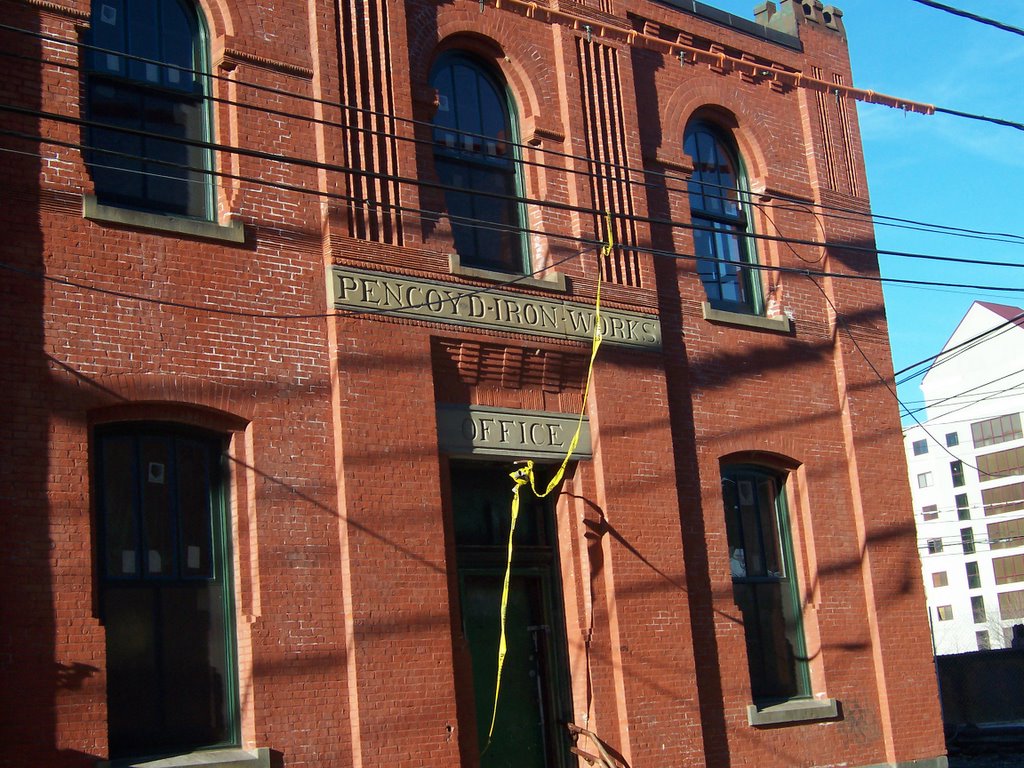
The building above is the remains of what was once Pencoyd Iron Works. Located on the west side of the Schuylkill River in Belmont Hills (once called West Manayunk), this mill was the employer of John Keller (my grandfather William Gallagher's grandfather), William Gallagher (my grandfather's father) and my grandfather William Gallagher. John Keller was a "heater" of iron at the mill and in 1890 he was involved in an explosion. Though he did not perish right away, he did eventually die from burns he received at the mill. My grandfather William Gallagher was a "roller of steel" at the mill and in the early 1930's was asked by the mill's owner to relocate to South Africia to open a plant down there. However, he turned down this opportunity because of pressure from his family to remain in Philadelphia. An opportunity, he regretted until the day he died in 1980 because shortly thereafter the mill suffered financial loss and many of its employees were laid off including my grandfather and his father.
Tuesday, January 24, 2006

Thursday, December 22, 2005
Pencoyd Iron Works
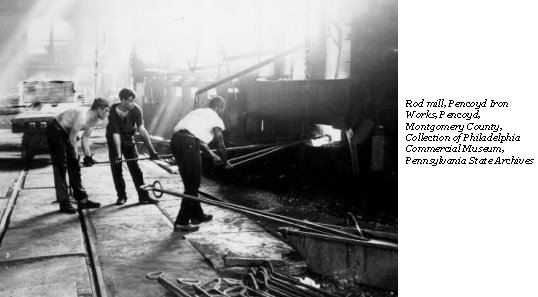
Founded in 1852 by the Roberts' brothers and located along the Schuylkill River that was once known as West Manayunk. Pencoyd Iron Works merged with the American Bridge Company which then merged with United States Steel. Pencoyd was known for the Iron/Steel that made the metal bridges.
Tuesday, December 20, 2005
Wissahickon Village
What is now known as simply Wissahickon was once known as "Wissakitkonk" because this village was located at the mouth of the Wissahickon Creek along the Schuylkill River. Wissahickon Village was founded by Pencoyd Iron Works in the middle of the 19th century for houses to be built for the managers of their Company. Before long an entire community was built. First the Wissahickon Railroad Station was built in 1834 followed by the "Merrick Estate" in 1861 then the "Camac Estate" in 1863. St. Stephan's Church was built in 1876 followed by the St. Timothy's Workingmen's Club in 1877. Wissahickon Methodist was built in 1883 followed by Terrace Hall in 1889 and the Wissahickon Baptist church also in 1889. Another church, Wissahickon Presbyterian opened in 1893. The library (Wissahickon) opened in 1909 and the Pencoyd Club came along in 1910.
Today most of these buildings are gone.
Today most of these buildings are gone.
Subscribe to:
Posts (Atom)