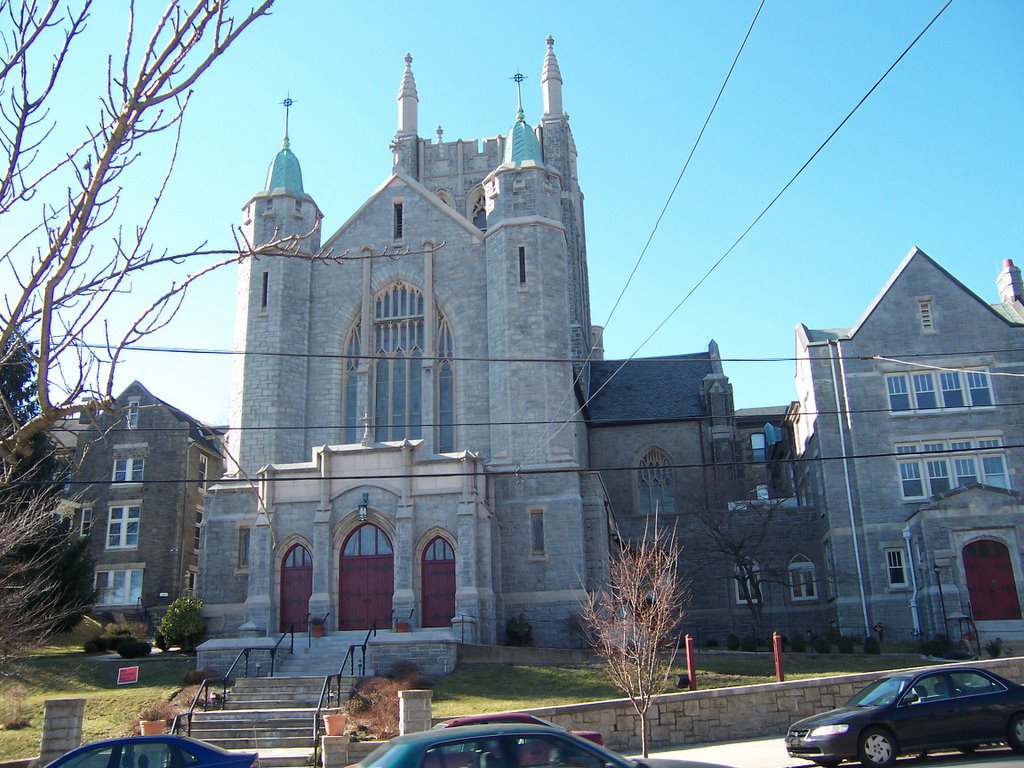
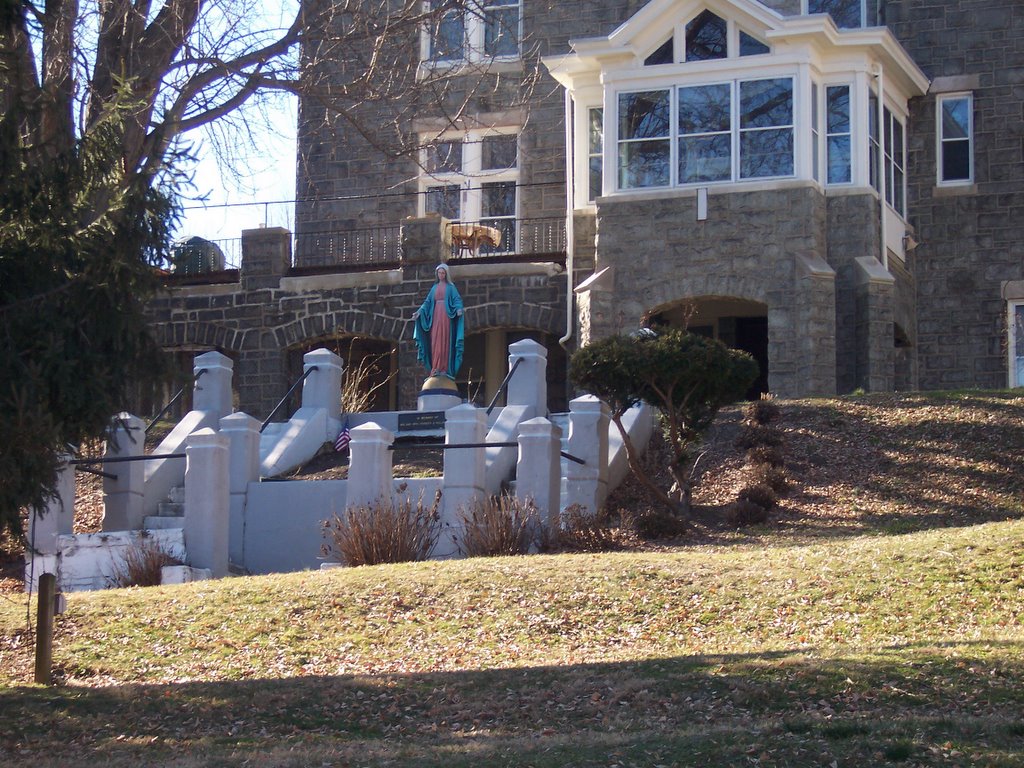
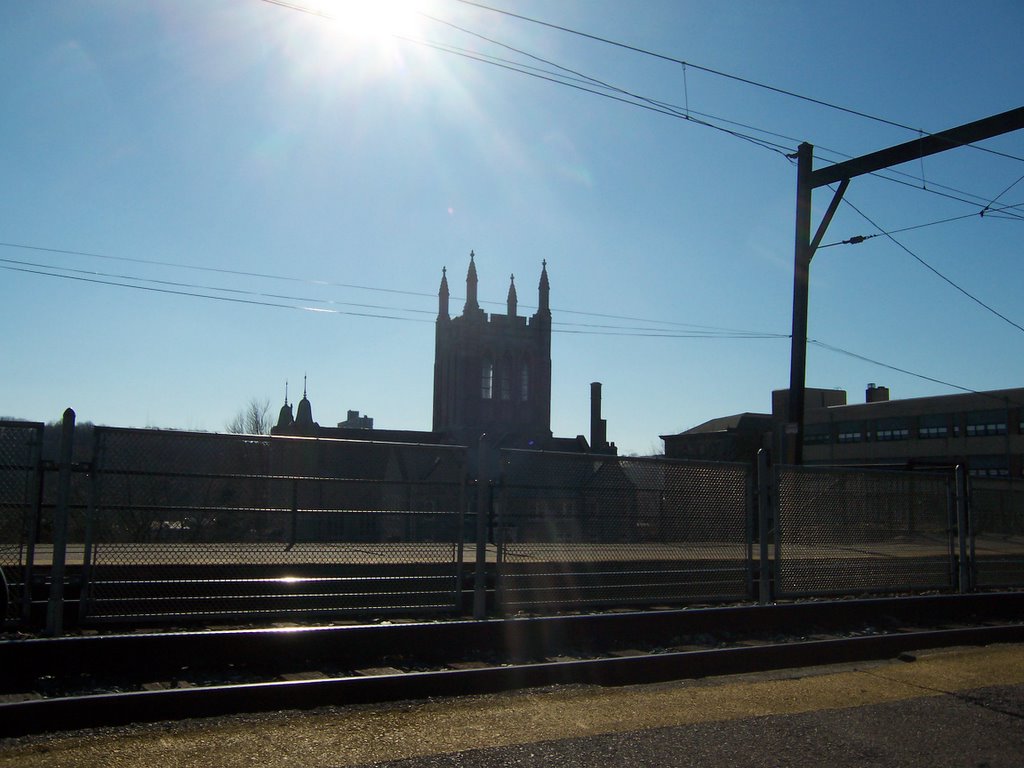
In one of my family updates, I wrote about Bernard and Mary Cafferty and their nine children. According to the records, Bernard and Mary Cafferty lived and raised their children in a section of Philadelphia called East Falls. They lived on Ridge Avenue across the street from Dobson Mill. They attended St. Bridget’s Roman Catholic Church located on Midvale and Stanton Streets. In the following paragraphs, I will review the historical backgrounds of some of the places that had a societal influence on the East Falls’ community.
DOBSON MILLS
One place of great societal influence on the local community of East Falls was Dobson Mills. The first mill was located on Ridge Avenue and the Wissahickon Creek. During the Civil War, Dobson Mills made all the woolen army blankets for the Union soldiers. When the Fairmount Park Commission decided to extend the Wissahickon Park in 1872, Dobson Mills relocated to Scotts Lane and Ridge Avenue until it closed its door in the 1930’s. Though Dobson Mills gave employment to many hundreds of people it also employed Children. Before the Child Labor Laws went into effect, the mill owners had children work 6a to 5p at a rate of three dollars a week. In addition, the employees of the mill had few rights as workers and it was commonly known that if one family member offended its employer, all members of that family who worked in the mill would suffer the consequences by being laid off.
OLD FALLS TAVERN
The Old Falls Tavern was built in 1731 and located at Ridge Avenue and Indian Queen Lane. It was a building two and one half stories tall with heavy white washed plaster, a steep pitched roof and a two story porch in the front upper section framed with a fancy black iron balustrade. The back faced the river and on sunny afternoons and warm summer nights, its porches were filled with people enjoying refreshments. The central double doors had long panels of glass and when you entered its doors you were greeted by a long colonial staircase covered in a deep red carpet. The bar stood off to the left and was darkly paneled with a very large fireplace that was lit in the cold winter months. The tavern was famously known for its catfish and waffle dinners. The catfish was caught directly from the Schuylkill River. Sadly this historical building met its fate by a wrecking ball when demolished in 1973.
FALLS HOUSING PROJECT
Before the city built the Falls Housing Project, the land on Ridge Avenue was home to a Chemical Plant and its workers. This Chemical Plant made distilled alcohol and fumes from the plant threw obnoxious gases into the air. Because the plant needed workers, its owners built a group of houses behind the plant up on the hill which was called Laboratory Hill by the community. The plant workers and their families lived in these houses. During the Civil War, the chemical plant made a lot of money because of the high cost of Quinine. Later the plant was taken over by Merck Chemical until it was demolished by the city for public housing. Today, the Falls Housing Project has been replaced by other low income housing.
LAUREL HILL CEMETERY
Located on Ridge Avenue, the cemetery opened in 1835. Before the cemetery came into existence in 1835, the grounds belonged to a Catholic Men’s College called Laurel Hill College. The college existed until 1834 before it was made into the first rural cemetery in Philadelphia. The North section of the grounds was once the country estate of Joseph Sim while the Central section was home to George Worten Pepper.
SAINT BRIDGET’S ROMAN CATHOLIC CHURCH
Located on Midvale and Stanton Streets, St. Bridget’s was the first Roman Catholic Church built in the East Falls section of Philadelphia. The first mass was held on April 15th, 1855. The school opened in September of 1888 under the Sisters of St. Joseph Nuns. The following is a list of all the pastors who served at St. Bridget’s from its creation in 1853 to 1973.
Father James Cullen 1853-1865
Reverend Thomas Fox 1865-1874
Reverend Richard O’Connor 1874-1883
Father Michael Martin 1883-1884
Reverend William Walsh 1884-1908
Reverend Bernard Gallagher 1908-1918
Monsignor Wenceslaus Walsh 1918-1928
Reverend David Munyon 1928-1947
Reverend Edward Allen 1947-1952
Reverend John Cartin 1952-1973
Reverend James Murphy 1973
For those of you who attended St. Bridget’s are any of the above names familiar to you?
RIDGE AVENUE
Ridge Avenue is known as the “Natural Highway”. It started out as a well established Indian path that was the main route for the last three hundred years from the city to the countryside. Before Ridge Avenue became Ridge Avenue, the highway had several names throughout the years. In the 1700’s the road was known as “King’s Road” before becoming “Manatawny Road”. Then it was called “Reading turnpike” and “Robeson’s Road” before being called “Rock’s Burrow” then “Wissahickon Road”. Then the name changed to “Rich Road” before it changed again to “Ridge Road”. In the 1800’s the road changed yet again to “Ridge Road Turnpike then finally to its current name “Ridge Avenue”.