Showing posts with label Bolands. Show all posts

Monday, September 28, 2026

Rudolph Row and the Boland/McCaffery Connection

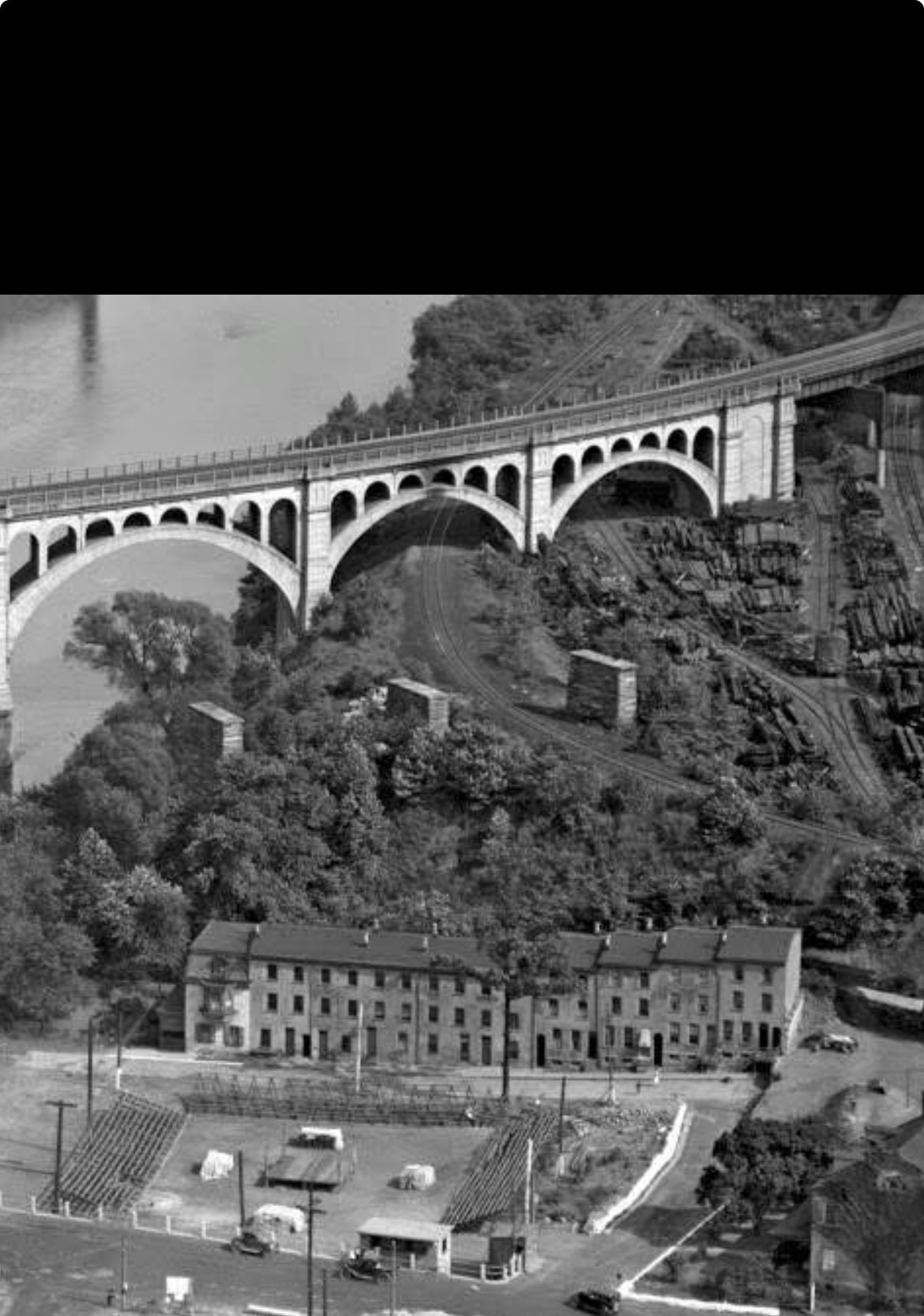
​I recently wrote a post about my paternal grandfather’s boxing career and mentioned one of the venues he fought at was known as Rudolph’s Open Air  Ring located in front of of a group of employee row-houses known as Rudolph’s Row. 

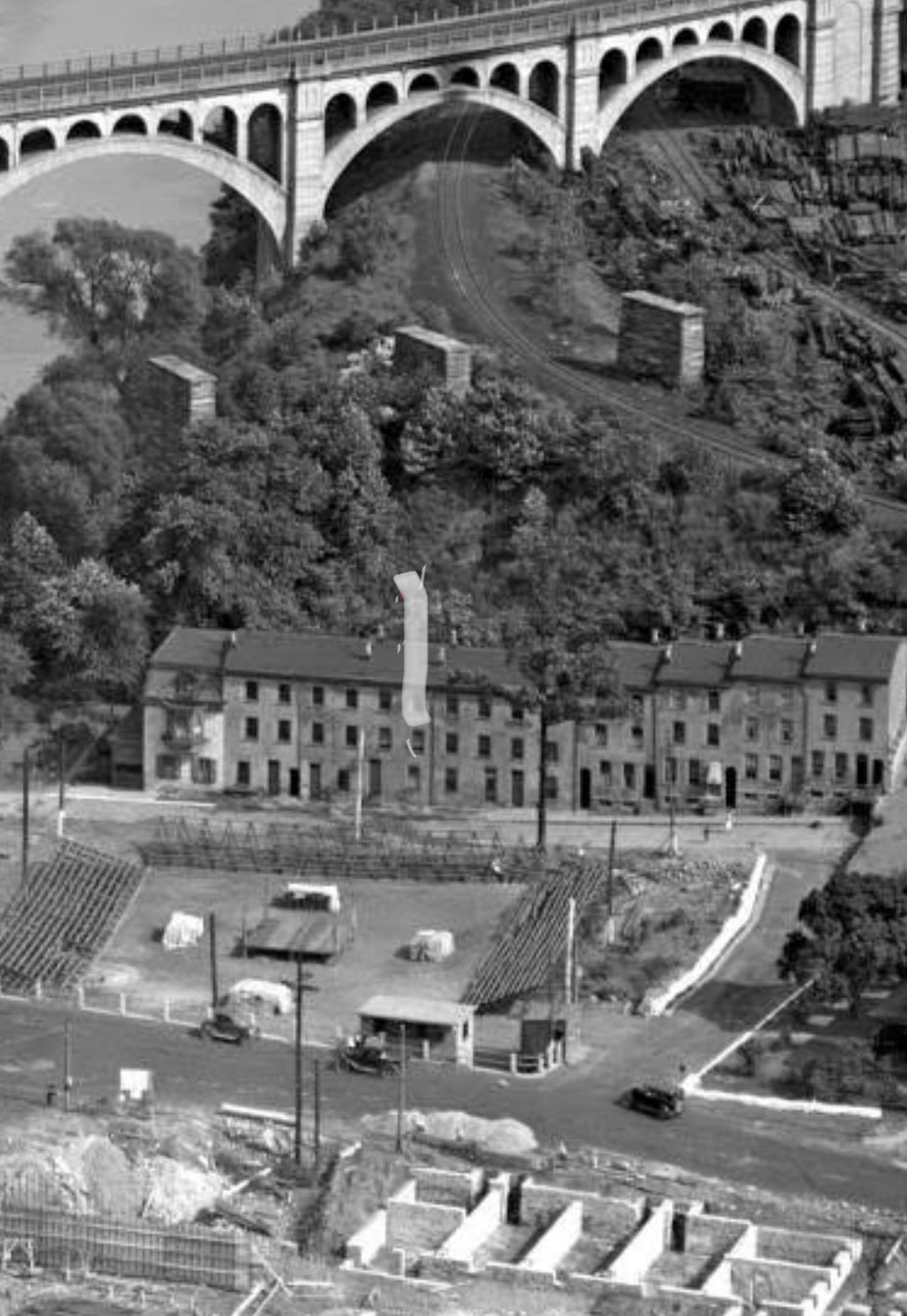
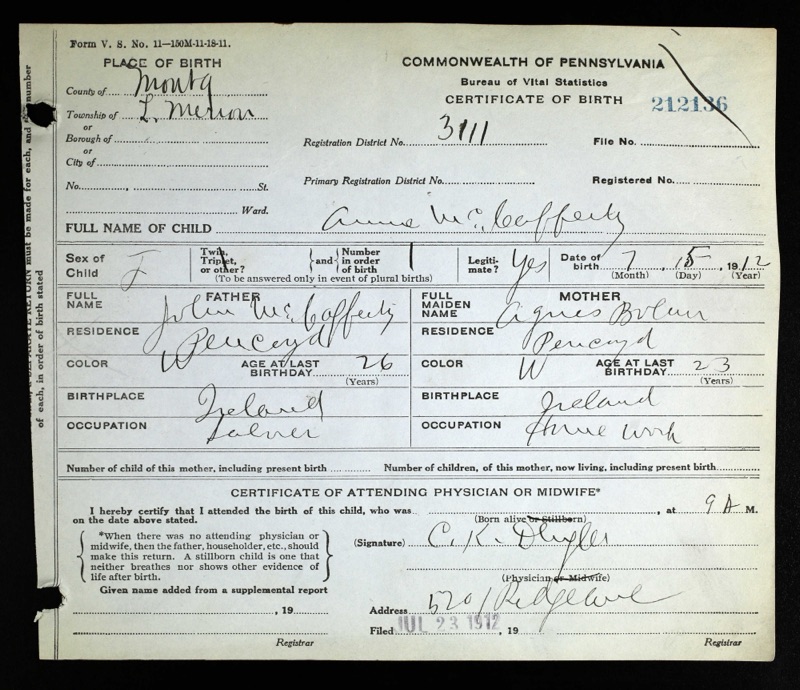
After I wrote the post, I remembered my maternal grandmother Ann Marie McCaffery’s birth certificate that stated she was born in a house on the grounds of Pencoyd Iron Works. On a hunch, I went back to look at my research records on the McCaffery (also spelled McCafferty) clan. Lo and behold, I was able to connect the dots and solve another piece of the puzzle. My grandmother was born in one of the Rudolph Row houses. I discovered that employees of Pencoyd Iron Works also lived in Rudolph’s Row-Houses. At first I thought it was only the employees of Sebastian Rudolph’s paper mill known as Ashland that resided in those homes. I discovered that John and Agnes (Bridget) Boland McCafferty resided at Rudolph’s Row and that my grandmother was born there. John McCafferty immigrated from Letterkenney Ireland to Philadelphia Pennsylvania in 1908 and found employment at Pencoyd Iron Works. John’s brother Columb (later Americanized to Collum) was already living in Manayunk and working at Pencoyd. Later, I discovered the the connection between Letterkenney, Ireland and the neighborhood of Manayunk and Pencoyd Iron Works.

Before John McCafferty left his home in Ireland, he already had a place to live and work in Philadelphia Pennsylvania. 

By 1908 and even as early as Columb’s immigration in the late 1800’s, the worst of the Great Famine had passed. However, it left County Donegal economically “stagnant”. At the same time, Manayunk in Philadelphia was booming in textiles, locomotive manufacturing and steel production. As a result, young men from County Donegal left in the thousands to travel to a little section of town known as Manayunk “Workplace of the World” to seek employment. 

Rudolph was a historic collection of connected mill worker houses that housed the employees and their families of Ashland Paper Mill and Pencoyd Iron Works. Though the houses were located on the west side of the River known as West Manayunk, it was deeply connected to the industrial and social fabric of next door Manayunk. Today, West Manayunk is Belmont Hills and Rudolph Row was removed to build the Schuylkill Expressway in the 1950’s. 

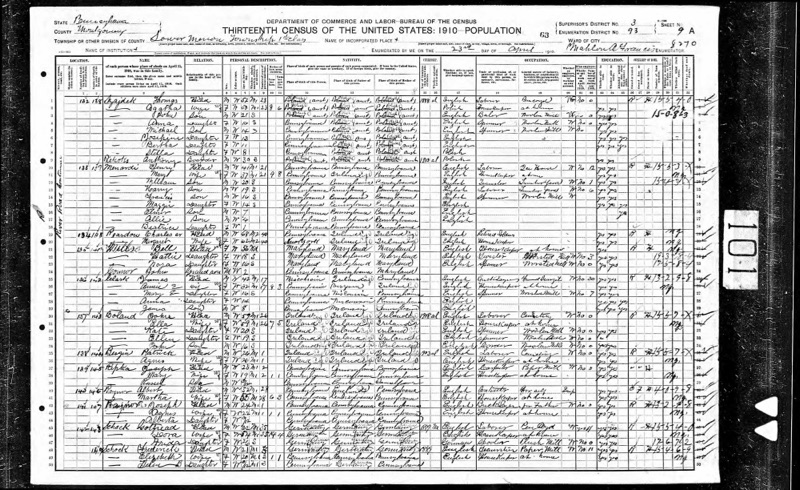
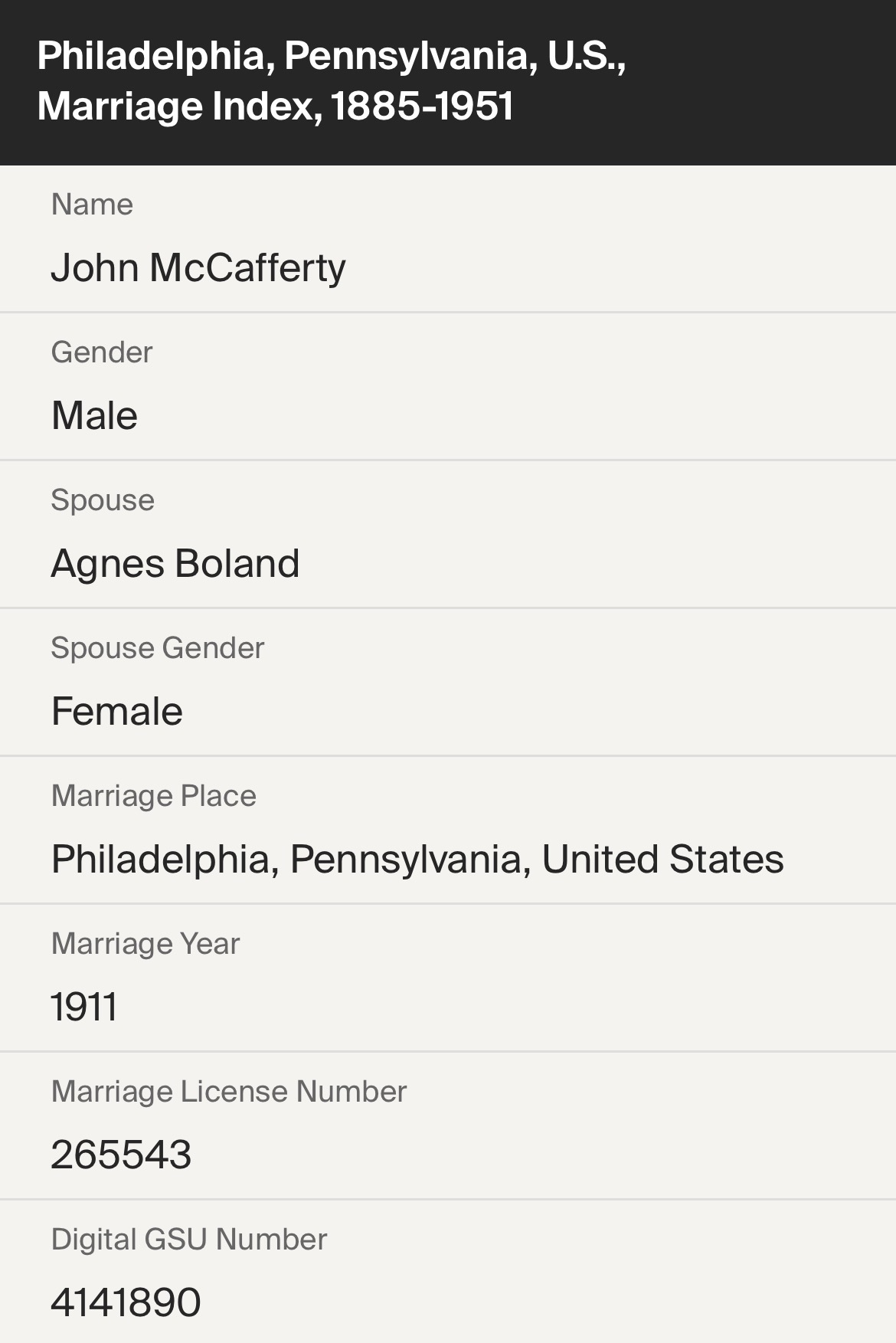
I believe my maternal great grandfather was an employee of Pencoyd Iron Works who lived with his wife and his wife’s family. In the 1910 census records, my great great grandparents John and Ellen Boland resided on River Rd with their children. What is interesting about that is my great great grandfather did not work at Ashland Paper Mill or Pencoyd Iron Works but worked digging graves at nearby Westminster Cemetery. I always thought 137 River Rd was on the grounds of Westminster Cemetery only to discover it was a Rudolph Row house. In 1911, John McCafferty married their daughter Agnes (Bridget) Boland and Agnes gave birth to their daughter (my grandmother)  in that house in 1912. 

Living at Rudolph Row meant you shared one water well located on the sidewalk, had no indoor plumbing, lived between a river and railroad tracks which had locomotives belch out thick coal smoke, high noise and pollution levels from nearby industries and close to prize boxing fights and carnivals at the Rudolph Open Air Ring that was located across from the row houses.

Work conditions at Ashland Paper Mill and Pencoyd Iron Works were physically grueling and dangerous. At Ashland Paper Mill, workers were crashed by machines or drowned in large vats that contained bleaching agents. At Pencoyd, there were blast furnace accidents, intense heat, toxic gases and ash that polluted the air. Employees worked 12 hour shifts six days a week without overtime or benefits with few breaks. Child labor was abundant where children worked long hours with even less pay. It was a time where industry was unregulated and life threatening. 

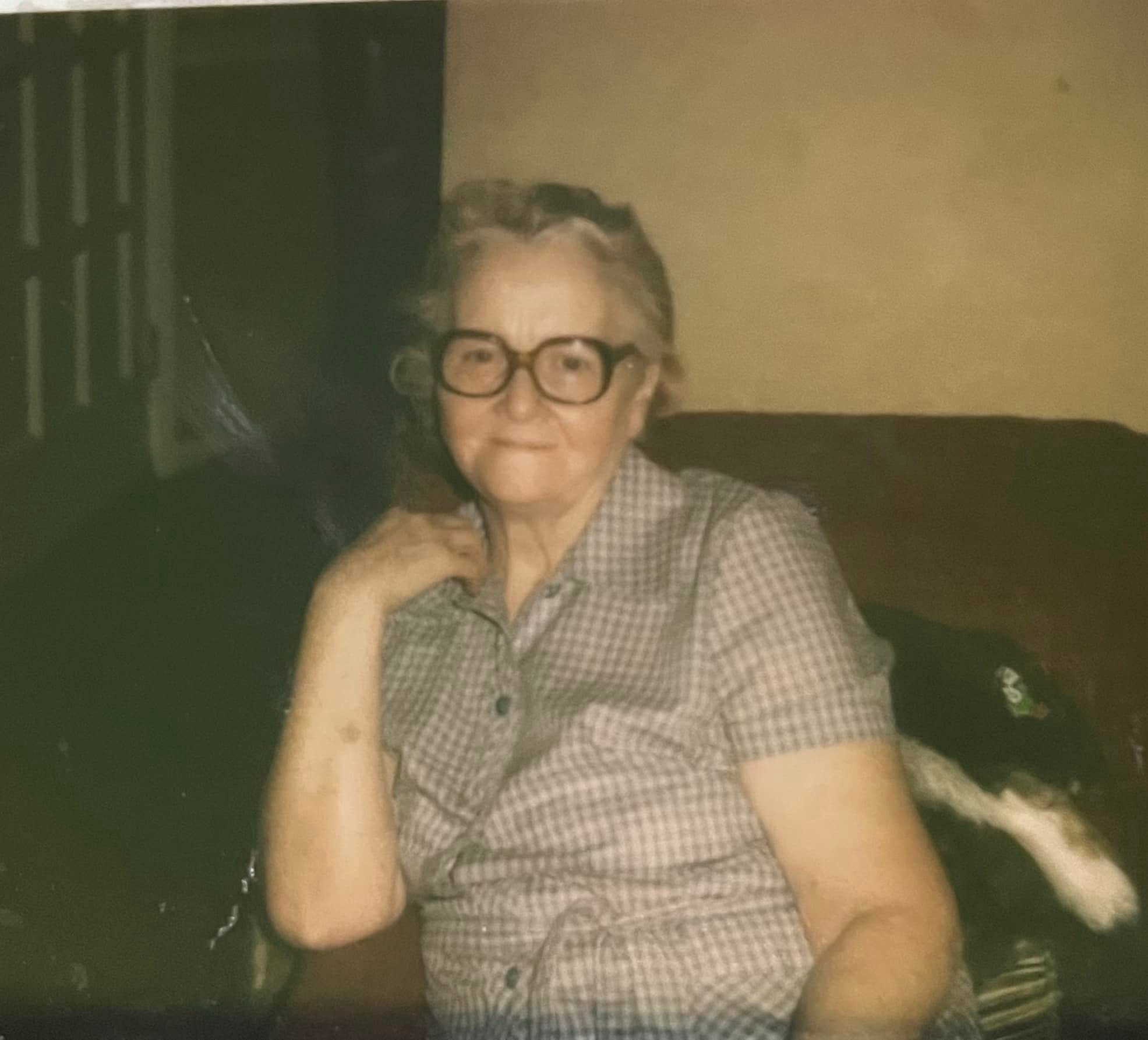
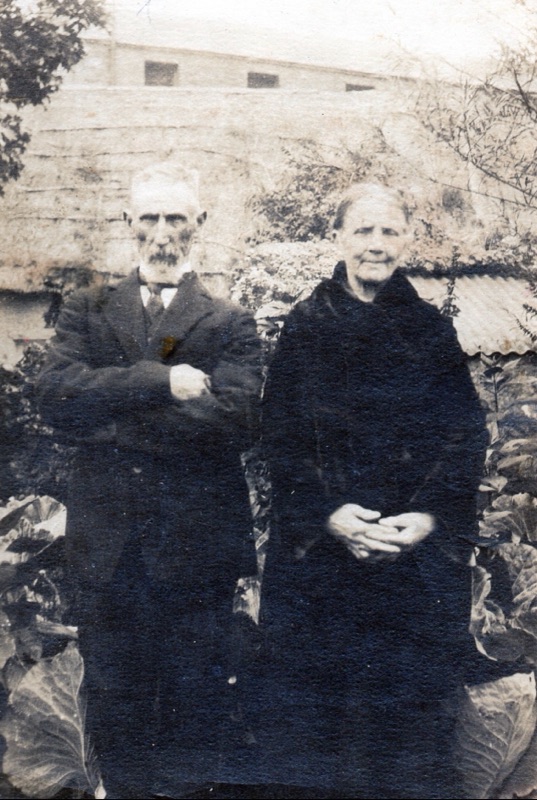
Attached are pictures of my grandmother Ann McCaffery/McCafferty’s birth certificate and the 1910 census records of the Boland family on River Rd. I also added the pictures of Rudolph Row, John and Ellen Boland, marriage certificate of John and Agnes Boland Mccafferty/Mccaffery and Ann McCaffery Gallagher. The last picture of Rudolph Row, I added a white line pointing out the Boland House (137) where my grandmother (Anna) was born. 
Sunday, December 14, 2014

Boland's Bakery

'Boland's Bakery' was the largest bakery in Dublin in the late 19th century. It was founded by the Boland family. The company would have sold a number of products such as bread, biscuits, cakes, confectionery and flour, although over the years the biscuit became the company's main product. The original bakery was off Capel Street between Mary (Abbey) Street and Little Mary Street. The Boland family lived on Capel Street.


Following the death of Patrick Boland (father of future MP and Olympic champion John Pius Boland) in 1888 the company was floated by the executor of his will Bishop Nicholas Donnelly, his brother in law. A number of members of the Boland family remained shareholders in the company


The company had a number of production facilities around the city such as the buildings around Grand Canal street and Dock as well as a distribution network. Vans with the company name on it were a familiar sight up until the last quarter of the twentieth century.


Boland's Bakery building on the corner of Grand Canal Street and Macken Street (then Great Clarence Street), now the Treasury Building, played an integral part in the 1916 Rising and was occupied by Éamon de Valera.  Also during a dispute when unemployed demonstrators, led by the writer Liam O’Flaherty, occupied the Rotunda Hospital, Boland's Bakery in Capel St. donated 500 loaves to the demonstrators.


In the late 1970s Boland's merged with Jacobs Biscuits Ltd., to form Irish Biscuits Ltd. with much of the production moved to premises in Belgard, Tallaght. Although many products were now being produced in Britain and labeled as the Irish Brands.  In 2004 production at the Tallaght facility stopped. Irish Biscuits were taken over by a number of foreign companies eventually ending up being owned the French Groupe Danone. In 2004 it was sold to the Irish Fruitfield Food Group.


The name survives today in a number of brands produced by Jacob Fruitfield Food Group, such as Custard creams, Cream crackers and Bourbon creams. The name Boland's Mill on Grand Canal Dock is still clearly visible

Tuesday, December 10, 2013

Genealogist Update

I came across some burial records for both Leverington and Westminster Cemeteries. A few things caught this genealogist's attention. Graves were reopened and relocated much more often than I expected and August 1900 was a horrible year for Diphtheria as there was an epidemic that hit through Manayunk and East Falls. What stood out to me was a family at 3339 W. Clearfield Street where four members of that family died from Diphtheria in a single day. The Flu Epidemic in 1918 resulted in hundreds of deaths and it appears the median age in Philadelphia was those under ten years old especially those under two years old. My journey began when I came across information for the Silverthorns. James Rowley Silverthorn died in 1942 and was interred at Leverington which I thought was strange as his wife Grace Gallagher Silverthorn who died in 1930 was interred at St. John the Baptist. It makes a person wonder why the wife was interred in one cemetery while the husband was interred in another cemetery. Did St. John's run out of space? I know James and Grace had five sons, two whom died as infants in 1906 and 1911 so were they interred at St. John's? Is that why there was not room for James twelve years later? I will probably never find the answers because there were no personal journals written or saved. We can only go by the official records. Some information was verified on Grace Gallagher Silverthorn and some additional information discovered such as Grace was born in April 1880 in Scotland and the exact location was Camghouran. My question is "why did Patrick and Hannah leave Donegal, Ireland and how did they end up in Camghouran, Scotland? Why did they leave Scotland in 1882 and come to Philadelphia? As far as I know, they came to America on their own without other family members. Forget about ever finding the exact year Patrick was born. I cannot find one single record that verifies his birth or even the age he was when he died in the summer of 1910. No age is indicated. Weird. So Gallagher! On the other hand, I can find the age of Hannah. When she died in 1926, she was listed on the records as being 65 years old. Another person of interest was from the Boland Clan. I am not sure if it was 1897 or 1900 but I came across the nephew of John Boland. Edward Boland died as a baby and was interred at Westminster. His father was William Boland who lived on Laboratory Hill. Years later I would come across several Bolands living on or around Laboratory Hill and one of them was my great-grandmother's brother and John's son, John Boland. John would reside on Laboratory Hill with his wife and children and my great great- grandparents until my great great grandmother died in 1926 (Ellen) and their relocation to Germantown.

Sunday, October 27, 2013

Killala

My great grand mother Agnes Bridget Boland McCaffery (McCafferty) was born in this tiny village with a population of 500 people before she relocated with her family to Ballina.

 Killala , County Mayo in the West of Ireland

Location

Killala (in Irish: Cill Ala) is a picturesque seaside village six and a half miles north-west of Ballina in north Mayo, famous in Irish history for the part it played in the 1798 rebellion.

History

In August of 1798 General Humbert arrived into Kilcummin pier from France and combined with the Irish forces against the English forces in the area. This year is chronicled in Irish history as the Year of the French and a book and television history celebrate this unique event.
Consequently, Killala has become a popular location for the historian and in fact was used as a major location for the 1981 multi million pound film "The Year of the French". In 1998 Killala celebrated the bicentenary by twinning with a town in Chauve in France.

Killala Round Tower

Killala's skyline is dominated by a round tower, dating to the 12th century, a testament to the historic distinction of the village as an ecclesiastical centre. The Killala round tower was most likely used as a belfry and is one of the best examples of round towers in Mayo.
In the centre of Killala there is a Church of Ireland cathedral, built in 1670 over the remains of a ruined Catholic cathedral that had stood on the same site. The adjoining graveyard has a 9th century souterrain with numerous chambers.
The origins of the Killala diocese date from the time of St Patrick who appointed his disciple, St Muredach, over the church there - dating back to 442 or 443 AD.

Archaeology

The area is rich in archaelogical remains such as:
  • Rosserk Abbey (founded in 1400 AD as an early Franciscan Friary)
  • Moyne Abbey
  • Rathfran Abbey (Dominican Priory 1274 AD)
  • Meelick Castle
  • Humberts Rock
  • Céide Fields (the oldest enclosed farms in the world) are a short distance away near Ballycastle.

If my husband can get off from work around Christmas, there is a good chance I will be here!

Tuesday, February 05, 2008

Today On My Way


To Joe & Jackie's house, I drove on a cobblestone road and made a stop at a local bakery that is known for its tomato pie where I was greeted at the door by the elderly baker of Italian ethnicity before I crossed the street and entered a neighborhood corner market where I was greeted by the owner who was of Polish ethnicity.

I could not help, but to think at that moment, that this is exactly how this neighborhood was a hundred years ago in the days of my own ancestors, right down to the cobblestone road..

Saturday, February 02, 2008

Ballina County Mayo Ireland


Ballina is in County Mayo in the West of Ireland.

Ballina, (gaelic Béal an Átha) home of the famous River Moy, is Mayo's largest town. There is a rich variety of pubs, restaurants and nightclubs in the town, which is famous for its hospitality and excellent accommodation base. Among Ballina's key visitor attractions are the ruins of Moyne Abbey, and Rosserk Friary dating back to the 15th century and the impressive St Muredach's Cathedral stands imposingly on the banks of the River Moy.
Population from Census
10,056 (2006)
9,478 (2002)
6,852 (1996)

The River Moy is internationally acknowledged as an exceptional salmon fishery, producing several thousand salmon to the rod annually. The famous Ridge Pool, the salmon anglers paradise, is located in the heart of the town.
Ballina is, of course, the home of the past President of Ireland, Mrs Mary Robinson, and the favourite fishing retreat of the Republic of Ireland's ex Soccer Manager, Jack Charlton.
Each year in July, Ballina ignites into a frenzy of activity with its annual Festival. Over the past four years it has developed into one of Ireland's major festivals, providing a week long feast of free entertainment for the entire family - music, song, theatre, art, heritage, culture and novelty events. Foreign visitors view and experience what is best about Mayo during this spectacular week.

Saturday, January 26, 2008

Killala County Mayo Ireland

If you look closely at the middle top portion of this map of County Mayo, you can find the location of the town known as Killala, birth place of the Boland Family. Killala has a population of only 500 people, which makes it great for me because it will be easier to trace records of the family in this town. As a matter of fact, I contacted the diocese of Killala recently for the baptism records of Agnes Bridget Boland and the marriage records of John & Ella Boland. If you look south of Killala, you will discover the town of Ballina, birth place of the Cafferty family and home of the Boland family just before they immigrated to the United States. Ballina has a population of 10,000 people.
You are probably asking yourself the question, "how did I know Killala was the birth place of our Bolands and Ballina is the last location where they lived before immigrating over to the United States?" The answer is in their ship records.

The last address listed in Ireland for Bridget Boland McCaffery was the residence of her step-brother Michael Doherty in Ballina, County Mayo Ireland. This was the same address listed for all the Bolands with the exception of Bernard & Mary Boland Cafferty whom lived in Ballina at the time of their immigration but not with Michael Doherty.

Ella (Ellen) Boland was born Ella McCarrick. She married Michael Doherty and had at least one child before her husband died. That child was Michael Doherty. Ella McCarrick Doherty then married John Boland and as far as I know they had four children together. However, I have questioned whether or not the child known as Mary Boland Cafferty was a Doherty or a Boland? Bernard & Mary married in Ballina, County Mayo Ireland and their first child Michael Cafferty was born in Ballina before the family immigrated to the United States.

If I can locate the marriage records of Bernard & Mary Cafferty, then that question would be answered.

At this time, I do not know if Michael Doherty ever immigrated to the United States but I believe he remained in Ireland.

Killala, County Mayo Ireland was a seaside village located at the Killala Bay. During the famine, the village was hit hard. While researching this town, I came across an article which stated that over 140 bodies layed out on the roadside and were buried in a mass grave during the Great Famine. It should also be noted that the town of Ballina was also hit hard during the famine. Ballina had vast farmlands.

Other background history of Killala;

Killala is a picturesque seaside village six and a half miles North-West of Ballina in North County Mayo, famous in Irish history for the part it played in the 1798 rebellion.
History
In August of 1798 General Humbert arrived into Kilcummin pier from France and combined with the Irish forces against the English forces in the area. This year is chronicled in Irish history as the Year of the French and a book and television history celebrate this unique event.
Consequently, Killala has become a popular location for the historian and in fact was used as a major location for the 1981 multi million pound film "The Year of the French". In 1998 Killala celebrated the bicentenary by twinning with a town in Chauve in France.
Killala's skyline is dominated by a round tower, dating to the twelfth century. There is a Church of Ireland cathedral, which was built in the 17th century over the remains of a ruined Catholic cathedral.
The area is rich in archaeological remains such as:
Moyne Abbey
Rosserk Abbey
Rathfran Abbey
Meelick Castle
Humberts Rock
Céide Fields (the oldest enclosed farms in the world) are a short distance away near Ballycastle.

Saturday, September 29, 2007

I Finally Found Him In 1930


But I am sadden by my discovery. For many years I searched for information about my grandmother's father, John McCaffery. I finally made my first breakthrough several months ago when a McCaffery relative came across my website and contacted me. I was thrilled beyond belief at my good fortune that someone out there knew something about John McCaffery. Though I had searched numerous records, I could never pinpoint the whereabouts of his life. The only information I had on this man was folklore passed down generation through generation. But, I had no facts. I had no facts to verify any of the folklore. I wanted to know who this man was. Where he came from? I also wanted a clue to why he left his only child, my grandmother in the hands of relatives after the sudden and unexpected death of his wife when my grandmother was just three years old.


I remember very clearly the times I sat with my grandmother and listened as she spoke about her parents. There was such sadness in my grandmother's face and voice as she told the story of her mother's death. What was especially heart breaking was my grandmother could not remember her mother's face and no one in her extended family ever had or if they did never showed my grandmother a picture of her parents let alone the mother she did not remember. She was 76 years old and did not know what her own mother looked like. It would be several years later and after much research that I would finally come across a ship record that stated my great grandmother Agnes (Bridget) Boland McCaffery had dark brown hair, blue eyes and was fair skinned. Sadly, I never got the chance to tell my grandmother this news because she had already been dead ten years.

When Bridget Boland McCaffery died in 1915, my grandmother was sent to live with her maternal grandparents. From that time on she rarely seen her father. He would enter and exit her life over the next fifteen years. It is these years that have been most difficult to track in my search. When my grandmother died in 1990, I made a promise to her and myself that I would dig into the past and find as much information as possible so that I could piece together some sense of a life. His story. Their story.

I was so happy to find his immigration records from Ellis Island. To read where he came from, when he arrived here, how tall he was, what color hair and eyes he had and even how much money was in his pocket was simply fabulous. I felt I could envision this man within my mind. This Irish immigrant who came to this country to find a new life. And for a time that is exactly what he did. He reconnected with other members of his family from Ireland. He found employment, a place to live and even a wife. Soon thereafter he had a child. From all perspectives he was living the American Dream. But something happen. Something so sudden, so tragic that changed his life forever and began the downward spiral of one man's life into the pits of hell.

In 1915, his wife of four years died from an appendicitis. Shortly thereafter he handed his only child, my grandmother over to his deceased wife's parents to raise. After which he disappeared only to resurface years later.


What happen to John? Where did he go? There have been so many missing pieces to the puzzle of this man's life. It has been seventeen years since I began to research my family. It has been a long seventeen year journey through the life and times of various members of my family only to have some members of this family constantly elude me until a few months ago when I began to find more pieces that fell swiftly into place, the latest being of my great grandfather John McCaffery.

But it is the latest discovery that nearly brought me to my knees that made my eyes swell up in tears because what I discovered about the last months of this man's life was sad. April 14, 1930 I found proof that John McCaffery was a resident of a homeless shelter for men called "Whosoever Gospel Mission and Rescue Home". This was just four months before his death in 1930. The mission is still located at 101 E. Chelten Avenue in Germantown. The mission has been open since 1892. Records indicated that the father of my grandmother "was a broken man".


Folklore through the generations stated that he became an alcoholic after the death of his wife and he moved from one place to another and held many jobs. In the summer of 1930, my grandmother received a message that stated her father was found on the streets and admitted into Philadelphia General Hospital in the TB Ward. She saw him once before he died.


During this visit, her father was trying to tell her something but he could never articulate his words. I wonder if he wanted to tell her he loved her or that he was sorry he left her.


I cannot imagine what those fifteen years were like after he lost his wife and handed over his child. How lonely he must have felt. How every dream he had became lost.

Thursday, September 27, 2007

Philadelphia's Own Ellis Island


Immigrants have been arriving through the Port of Philadelphia since 1682. In the years between 1717 to 1749, Philadelphia saw mass migrations of Germans and Scot-Irish. Though it took seven weeks to make the Trans-Atlantic trip, nearly 70,000 Germans and 150,000 Scot-Irish alone immigrated to the city through the Port of Philadelphia before the Revolutionary War. Most were indentured servants and had to work off the cost of their passage to America.

The largest immigration years were after 1815 and at that time New York City was considered the Chief Port for immigration while Philadelphia came in 4th.
Before docking in Philadelphia and in order to prevent disease there was a "quarantine hospital" built a few miles South of the city where local medical inspections were done on those who wanted to enter the city.

By 1820, there were two distinct ship lines that carried large numbers of Irish and English immigrants from Liverpool to Philadelphia. The cost for passage in the steerage compartment was approximately 5 pounds per traveller. Steerage berths were 6 by 6 feet and held four passengers.
After the Great Potato Famine in 1847, 60,000 immigrants came through the Port of Philadelphia from Ireland. Several more thousands came through New York City because it was impossible to dock in Philadelphia because in the winter months there could be up to 5 feet patches of ice in the Delaware River.

By 1854, Philadelphia was known as the 3rd largest port for immigration to this country. The immigration season was April thu October and the Trans-Atlantic trip took about a month.

Between 1855 and 1864, 50,000 more immigrants entered through Philadelphia and in the city 3 out of every 10 people who lived here were known as "foreign-born" Most of those were either of German or Irish descent.

The Irish were poorer than the Germans and were employed in positions such as weaving, carting and day labor. Most lived in areas known as Southwark, Moyamensing and Gray's Ferry. The Germans were more skilled and held positions as construction workers, tailors, shoemakers and bakers and most lived in Northern Liberties.

In 1870, there were about 100,000 Irish and 50,000 German immigrants living in Philadelphia and this made up most of the total population of the city. In earlier times, the population was mostly made up of those of English or Scottish descent.
As the population increased so did the need for housing. Therefore large tracts of row houses sprung up in areas such as North, South and West Philadelphia whereas Germantown became more middle class.

Most of those in skilled trades were of German or British descent. The Irish still held unskilled positions in factories, as servants and farmers. Many Germans in the late 19th century began to move into places such as Kensington and NorthEast Philadelphia.

By 1873, immigration into the Port of Philadelphia was so great that the American Ship Line with support from the Pennsylvania Railroad opened its first ever immigration center at Washington Avenue in South Philadelphia where it completed its own medical inspections.

The American Ship Lines had 3 sailings a week from Liverpool to Philadelphia and in the year 1882 alone, 17,342 passengers arrived from Liverpool. The line had four ships that travelled "via" Liverpool and Queenstown to Philadelphia. They were called Kensington, Southwark, Haverford and Merion. The Merion is the ship that carried our Cafferty and Boland ancestors to America.

All in all, the ship brought in around 20,000 immigrants each year between 1880 and 1910 from England/Ireland.

The years between 1910 and 1914 created the height of Southern and Eastern European Immigration to the Philadelphia Port. The city saw a huge influx of Jewish, Polish and Italian immigrants and the Port of Philadelphia was still considered the 3rd largest port in the country following New York and Boston.

The area surrounding the port was filled with warehouses, factories, sugar refineries, freight depots and grain elevators. Philadelphia in itself was leading the entire nation in the production of locomotives, streetcars, saws, hosiery, hats, leather goods and cigars and was second in the production of drugs and chemicals. It also had a large affordable housing market and along with plenty of employment.

After World War I, the government changed the immigration laws which curtailed the influx of immigrants that arrived in the country. By 1923, immigration really trickled down though in the years that followed, the city experienced an increase in the Asian and Cuban populations.

Today, the Washington Avenue Immigration Center is nothing more than a historical memory.
(information taken on the writings of the following authors; Fredric M. Miller, Morris J. Vogel and Allen F. Davis)

Wednesday, September 12, 2007

Another Distant Cousin

I have made contact with another Cafferty Cousin a few days ago. More accurately, she found me through Ancestry. Anyway, Terry is a descendant of Bernard Cafferty's brother Michael Cafferty. She lives in Washington State and will be arriving in Philadelphia this Friday. I hope to meet up with her over the weekend or at least chat on the phone.

She remembers Bernard Cafferty. She actually spent time at his house in East Falls. She also grew up in East Falls. Bernard Cafferty was married to Mary Boland. As you may remember, Mary Boland was the daughter of John & Ella (Doherty) Boland and sister to my great grandmother Agnes (Bridget) Boland McCaffery.

Stay tune for more updates.

Friday, August 17, 2007

More Uncovered Information On Henry B Ritter

I was able to piece together some personal history (not previous recorded) on Henry B. Ritter from 1860 to his death in 1893 by city census records and directories.

In 1860, Henry B. Ritter was listed as living with his first wife and her family at 1180 Leverington Avenue in the Manayunk/Roxborough section of Philadelphia. His wife was known as Caroline even though later records would indicate her name was Mary Caroline. Caroline was listed as being 23 years old and Henry was listed as being 24 years old.


Also in the house was Caroline's mother, Louisa Mayer (age 58) and siblings, Elizabeth (age 25), Catherine (age 20) and Francis (age 13). Caroline's father was deceased in 1860. Later recording of Caroline's maiden name (Ritter Book) would indicate the spelling was Meiers instead of Mayer.


Caroline died April 3, 1862.


In 1870, Henry was married to his second wife, Wilhelmina Hesserrick and they were listed as living at 4057 Main Street with three children, Josephine (age 5), Annie (age 3) and Charles (age 1). There was also a boarder named John Clemons (age 28) in the household. Relationship to the family is unknown at this time. It is possible he was an employee at Henry's hotel and saloon. It should be noted that the eldest child known as Josephine died in 1871.


Wilhelmina died October 4, 1871.


In 1880, Henry was married to his third wife, Marie Voigt (ancestor) and they were recorded as living at 4354 Main Street with Henry's children, Anna and Charles from his second marriage and with his five children he had with Marie listed as John (age 6), Josephine (5), Dorothea (age 3), Philip (age 2) and infant Adam (age 1 month). It should be noted that Josephine was named after the deceased daughter, also named Josephine born to Henry and his second wife. (Wilhelmina) It also should be noted that there is no record of the infant Adam in the book written by Philip J. Ritter in 1900. Adam appears to have died in childhood.


Marie Ritter died June 12, 1884.


Henry married his fourth and final wife, Elizabeth Mary Bichlein in 1885. Since the city's 1890 census records were lost in a fire, I do not know where Henry and his wife Elizabeth lived after their marriage. However, the city directory listed Henry's hotel and saloon as being listed at Sunnyside and Cresson Streets. Henry and Elizabeth had four children, Frederick born in 1886, William born in 1887, Hermina born in 1890 and another daughter who died in 1892 either at birth or shortly afterwards.


It is also recorded that Henry's fourth wife, Elizabeth also died in 1892. It is possible that this death was a direct result of childbirth.


Henry died one year later in 1893 and he left behind the care of his youngest children to his older children John and Dorothea.


It is of special interest that John G. Ritter, son of Henry and Marie (Voigt) Ritter never married and after his siblings were raised, he remained in the household of his sister, Dorothea and her husband, Charles Loffelhart, the remainder of his life. I followed John and Dorothea through the years 1900 to 1930 and between 1920 to 1930, John died. Dorothea was still living in 1930, the last available record found. Dorothea and her husband never had children.


It is also of interest that John was listed in 1900 as living at 53 P&R Railroad Street in the East Falls Section of Philadelphia and working as an agent for the Railroad. Again, this information is not the same as what is recorded in the Ritter Book written by Philip J. Ritter. In the Ritter Book, Philip J. Ritter recorded John as working as a salesman for the Ritter Company. It is possible that when the census was taken in 1900, John was still employed as a railroad employee but later that year when Philip J. Ritter wrote and published his Family History Book that John was newly employed at the Ritter Company.


There are two interesting facts about the 1900 census record that was recorded. John and Dorothea were raising their siblings and the street known as P&R Railroad was once located right off Scotts Lane along the Railroad. The houses were torn down in the 1970's and were located on a street that was as narrow as a city alley.


Listed as living in the Railroad house were John (age 26), Dorothea (age 23), Philip (age 21), Louisa (age 17), Frederick (age 14), William (age 13) and Hermina (age 9). Their step-mother (mother) and father had been deceased 8 and 7 years respectively.


In 1910, John Ritter lived in the home of his sister, Dorothea and her husband Charles Loffelhart on 164 Calumet Street in the East Falls section of Philadelphia. It is of interest that two of my Boland ancestors were neighbors of these Ritters. William Boland lived at 168 Calumet and Martin Boland lived at 184 Calumet. William and Martin Boland were the siblings of my great grandather John Boland. Both Boland siblings were employed as Chemical Workers on Chemical Hill. Later, John Boland, son of my great grandfather, John Boland would also be employed at the Chemical Plant as a Chemical Worker. Charles Loffelhart was listed as a Driver in a Lumber Yard.


In 1920 and 1930, Charles Loffelhart was listed as a Driver in a Coal Yard. John Ritter was listed as a Foreman in a Factory, presumably the Ritter Company.

I was able to track Philip Ritter (Henry & Marie's son) in the 1930 New Jersey census records where he lived with his wife and children and was employed at the Ritter Company's New Jersey Plant. I will post information on Philip and also continue to track him along with his sisters born to my ancestors Henry & Marie in the future.

I will also post the actual records I found to verify the above information in a later post. I will also continue to investigate where Henry and his wives are buried.

Sunday, July 29, 2007

Malervy-Nicholson Update

Daniel Joseph Malervy was born in Ireland on December 24, 1892 and immigrated to the United States in 1907. Currently the exact date, ship and who he immigrated with are all unknown. There are several variations of the name's spelling and I have not been able to verify which spelling the family used in Ireland.

I located the World War I record of Daniel and this record gave me the date of birth listed above. It is interesting to note that on Daniel's Head Stone at Westminster Cemetery the year of his birth was listed as 1895.

However, since the military record was dated and signed by Daniel himself, I can only assume the 1892 date is correct. According to the World War I record, Daniel lived at 17 Osborne Street on June 5, 1917 at the time of his registration. He was married to Catherine Boland and they had one child, Helen. Daniel was listed as being of medium height and built with brown hair and blue eyes. He was listed in 1917 as working at Holts & Sons as a Mill Hand. His employer was on Main Street in Manayunk. It should also be noted that Daniel signed his name Melervy on this document and not as Malervy even though the Malervy spelling was used on other records.

According to the 1920 Census Records, Daniel and his family were still listed as living in the 17 Osborne house but now he was listed as employed at the Chemical Works as a laborer. At some point, the Malervy's would move to 3827 Terrace Street in Manayunk.

Daniel was the eldest of four sons in his family. Brothers were James, John and Michael.

As noted in an earlier post, Daniel died in 1934 whereas his wife Catherine died in 1959. Both are interred in Holy Sepulchre Cemetery.

Helen Malervy, daughter of Daniel & Catherine, married Mahlon Nicholson. Mahlon & Helen resided on Manayunk Avenue in Manayunk and had two daughters, Helen and Regina. Mahlon died in 1972 whereas Helen died in 1988. Both are interred in Westminster Cemetery.

Helen Nicholson, eldest daughter of Mahlon & Helen was born October 27, 1938. Her sister, Regina was born August 2, 1940 and died December 19, 2005. Helen & Regina never married and lived also in Manayunk.

Regina Nicholson is interred in Westminster Cemetery.

If you want to read the history of the mill in Manayunk where Daniel worked in 1917, click here http://www.workshopoftheworld.com/manayunk/blantyre.html

I want to note that today this building is an apartment complex.

Friday, March 23, 2007

History of Roxborough Memorial Hospital

Opened on June 7th, 1890 under the name of "The Memorial Hospital and House of Mercy of Saint Timothy's Church, Roxborough". By 1896, the name was changed to St. Timothy's Memorial Hospital and House of Mercy, Roxborough" and in 1920 to "The Memorial Hospital, Roxborough". Today, we simply know the hospital by its name, "Roxborough Memorial Hospital".

This hospital has a history within our family. Many of us were born here, Uncles Billy, Jack, Gene and all my siblings including myself to name a few. My great grandmother Mary (Keller) Gallagher and grandmother Anna Marie (McCaffery) Gallagher worked here. In addition, some of us died here such as my great grandmothers Agnes (Bridget Boland) McCaffery, Mary (Keller) Gallagher up to and including my great Aunt Anna Marie (Gallagher) McCaffery.

So it not surprising that I would include the hospital's history in my research.

The hospital was built on land donated by Mr & Mrs. Vaughan Merrick with 10,000 dollars in funds as a tribute to their parents. In the beginning, the hospital was under the control of St Timothy's P. E. Church's rector, churchwardens and vestrymen until 1920 when financial distress necessitated the church cut its ties with the hospital.

Over the years, the hospital expanded its buildings to include a laundry, nurses' residences and steam-heating plant in 1891. In 1894, the Eugene Nugent Ward was opened. In 1896, the Merrick Building was opened. The two buildings then were connected in 1897. The Percival Roberts Ward was opened in 1901. By 1905, the hospital had added a laboratory and isolation ward. In 1914, the hospital began delivering babies in its new maternity ward. From 1890 to 1916, ambulances were horse-drawn carriages. Another extension in the Percival Roberts Ward was completed in 1928.

Today, the above buildings and extensions cease to exist and have been replaced with new structures. Whereas, the corners of Jamestown & Ridge Avenues thu to Houghton Street were once filled with houses are now replaced with physician offices and a parking lot.

The hospital is no longer independently owned and operated but is part of a nation-wide corporation. Rumor has it the hospital is now up for sale.

Thursday, March 08, 2007

Ship "British Prince"

Patrick Boland, brother of Martin and John Boland travelled to America from England after leaving Ireland. He arrived in Philadelphia on May 3, 1887. He was 21 yrs old and resided in the East Falls section of Philadelphia.
Martin Boland, brother of Patrick and John Boland travelled to America from England after leaving Ireland. He arrived in Philadelphia on April 30, 1888 and resided in the East Falls section of Philadelphia. He was 35 yrs old.

Saturday, February 24, 2007

Ship "Friesland" Departed Queentown August 27th, 1908, Arrived Philadelphia September 6th, 1908

The last recorded Bolands to arrive in Philadelphia from Ireland were John & Ellen Doherty Boland and their two youngest children, Ellen and John Jr. Also listed as arriving with them is their 3 yr old grandson Michael McCafferty, child of Bernard & Mary Cafferty who came to Philadelphia without their son in 1906. Click on to enlarge.

Ship "Merion" Left Queenstown April 18th, 1907, Arrived Philadelphia April 30th, 1907

Katherine (Kate) Boland, sister of Bridget Boland came to Philadelphia from Ireland with another of Bernard Cafferty's sisters, Margaret Cafferty. Kate was listed as being born in Killala while Margaret was listed as being born in Ballina. Click to enlarge.

1930 Census Record "Boland"

John and Margaret Boland lived at 1 Laboratory Hill in the East Falls Section of Philadelphia. Laboratory Hill was a community built around a chemical plant where the residents worked. John was a laborer in the chemical plant. He was listed as being 34 yrs old. Also in residence was his wife Margaret (34 yrs old) and their three children, Anna (9 yrs old), Margaret (5 yrs old) and John (2 yrs old). John's father was also listed in the household. He was 65 yrs old.

Please note that two of John & Margaret's children died in early childhood. Mary died in 1923 at age 3 yrs old. Theresa died in 1928 at age 18 months old.

Also of interest, Margaret Boland immigrated to Philadelphia from Ireland in 1914.

Friday, February 23, 2007

Ship "Merion" Left Queenstown August 16th, 1906, Arrived In Philadelphia August 25th, 1906

This is the ship's passenger list for Bridget Boland McCaffery (great grandmother) and Bridget Cafferty (sister of Bernard Cafferty). Bridget Boland is listed as being 20 yrs old and born in Killala while Bridget Cafferty is listed as being 22 yrs old and born in Ballina. Please note that the term Schuylkill was once used for the current name of East Falls Click on image to view details.

Thursday, February 22, 2007

1910 Census Records

John and his wife Ellen along with children Kate, John Jr. and Ellen lived on 137 River Road in Lower Merion Township in 1910. Click on to view larger image.

Boland

I finally located the burial records of John and Ellen Doherty Boland, maternal grandparents of my grandmother Anna Marie McCaffery Gallagher.

Folk lore suggested that they were interred at St. John the Baptist's church grave-yard in Manayunk. However, after several trips over to St. John's and numerous hours searching through their records, I never found any records suggesting they even had a funeral mass at this church let alone were buried in their church-yard.

It also did not make sense to me that a plot was purchased by John Boland at Holy Sepulchre for his daughter, my great grandmother, Bridget McCaffery when she died in 1915. The question that always remained in my mind was why would the parents be buried upon their own deaths at St. John's when their child was interred at Holy Sepulchre.

Then I discovered another Boland sister, Aunt Kate was also interred at Holy Sepulchre along with her husband, Daniel.

Last week, I discovered two more Boland families at Holy Sepulchre, my great great grandparents and their son, wife and two young daughters.

I also discovered that Ellen Boland did not die as thought when my grandmother was 7 yrs old but when grandmom was 14 yrs old. So the question remains, how old was grandmom when she went to live with Aunt Kate? The answer is somewhere between 1920 (after the 1920 census were taken) and 1926. I may never really ever know.

On April 6th, 1923, John Boland Jr. purchased a family plot for 75 dollars when his 3 yr old daughter, Mary died. She was interred on April 7th, 1923 in Section Z, Range 2, Lot 33, Grave #1. Address at time of death was 1941 Bonitz Street. (Nicetown)

Ellen Boland (great great grandmother) was interred on June 26th, 1926 in Section Z, Range 2, Lot 33, Grave #4. Address at time of death was 4807 Ridge Avenue. Age at time of death was 65 yrs old. (East Falls) Funeral was probably from St. Bridget's Church.

Theresa Boland (another daughter od John Boland Jr.) was interred on March 28th, 1928 at age 18 months old. Section Z, Range 2, Lot 33, Grave #1. Address at time of death was 1 Laboratory Hill. (East Falls)

John Boland (great great grandfather) was interred on January 6th, 1934. Section Z, Range 2, Lot 33, Grave #4. He was listed as being 71 yrs old and address was 1 Laboratory Hill. (East Falls)

John Boland Jr. was interred on September 9th, 1964. Section Z, Range 2, Lot 33, Grave #2. He was listed as being 69 yrs old and lived at 723 E. Price Street. (Germantown)

Margaret Boland (John Boland Jr.'s wife) was interred on April 16th, 1970. Section Z, Range 2, Lot 33, Grave #2. She was listed as being 75 yrs old and lived at #6 River Birch Road in Turnerville, N.J.