Saturday, April 15, 2006

William Joseph Gallagher 1906-1980

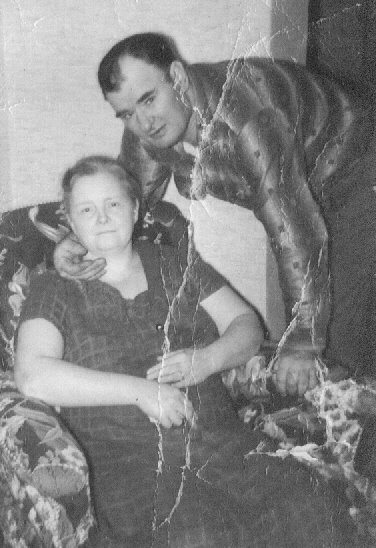
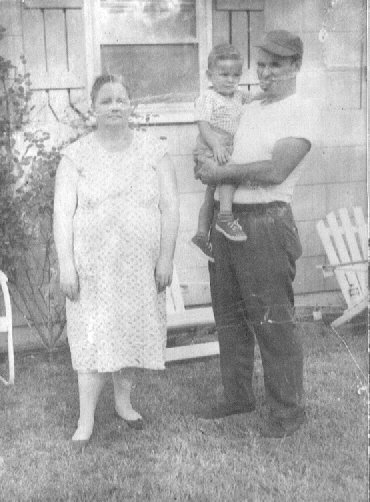
Anna & William with first born grandchild Michael (1959)
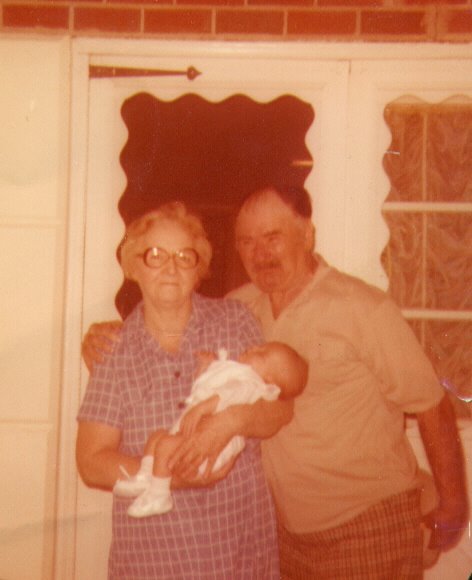
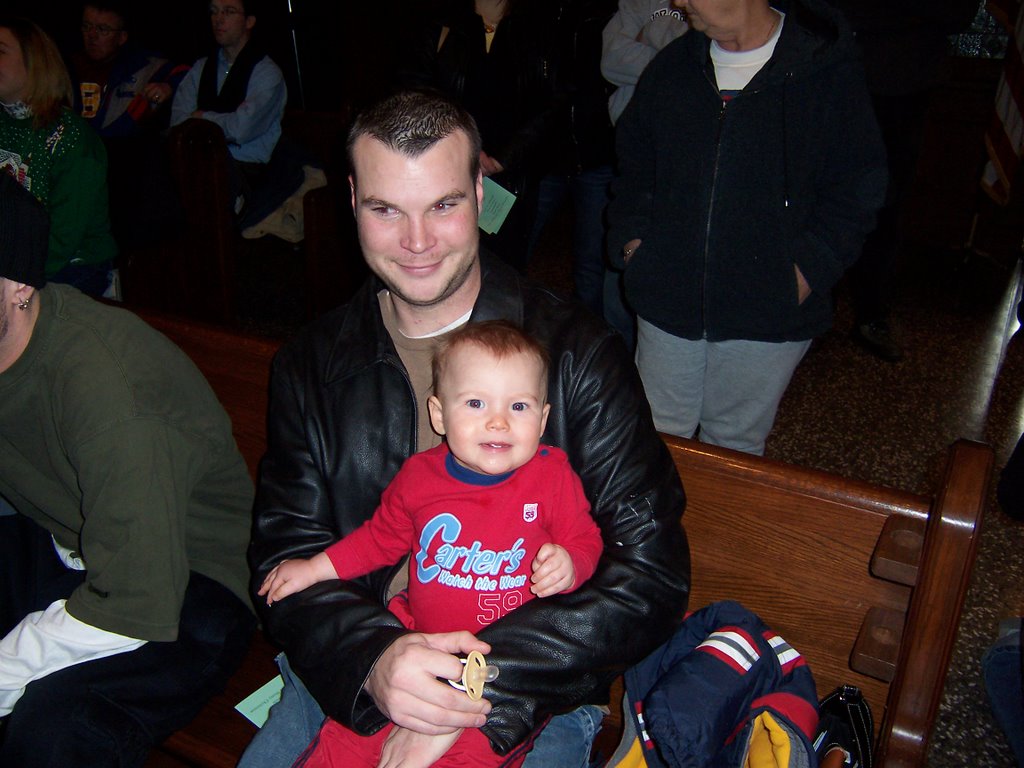
Anna & William at their home on Ridge Avenue (approx 1960) Anna & William with their first born great grandchild (my son) Shaun 1978
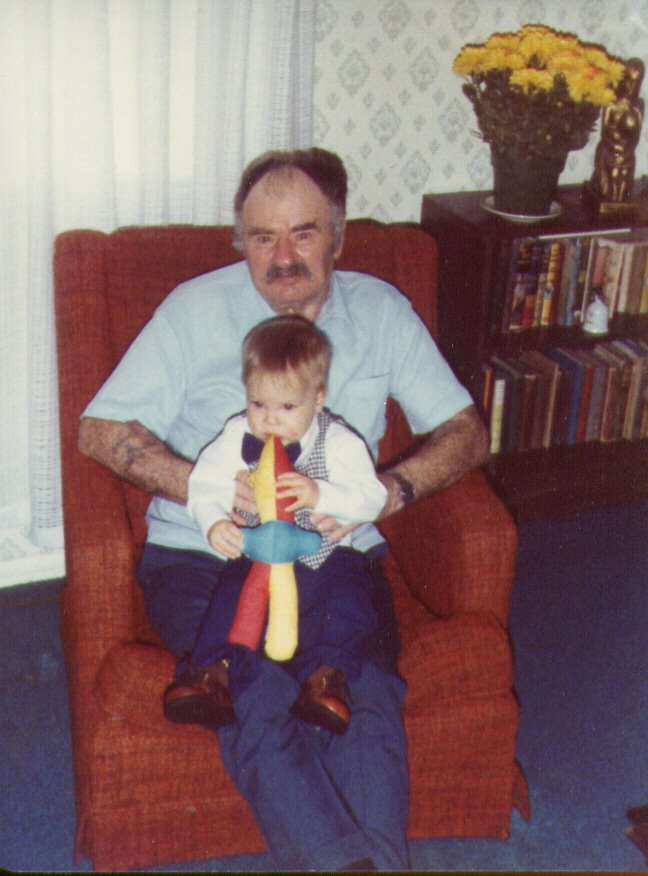
William & Shaun (1978)
William & Shaun on Easter April 15th, 1979 (another Easter Sunday birthday)

Honoring An Honorable Man

With Easter fast approaching and falling this year on the 16th of April, it reminds me of another Easter one hundred years ago. It was on April 15th, 1906 when my grandfather William Joseph Gallagher II was born to William and Mary (Keller) Gallagher on an Easter Sunday.

It has been nearly twenty six years since my grandfather died but his life lives on in the memories of those who loved and adored and knew him as I was lucky enough to have done. When I think of my grandfather, I remember his twinkling laughing brown eyes that lit up his entire face. I remember a man so strong in bodily presence that when he entered a room, he surrounded it with strength of character. He was quiet but powerful and listened intently to those around him. This is his story.

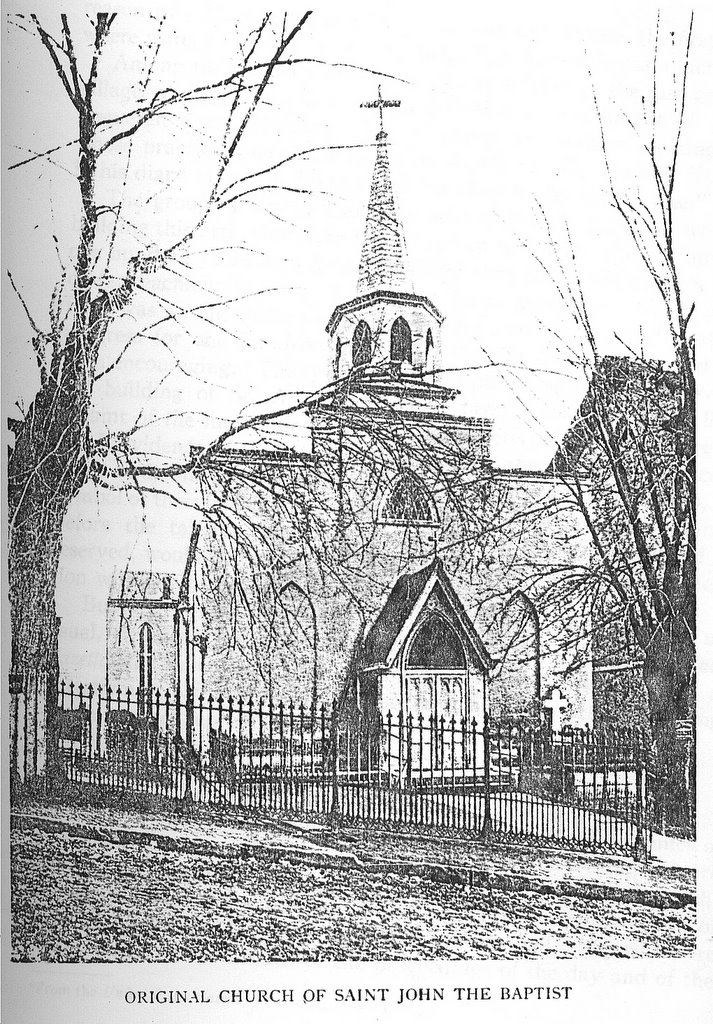
Born on an Easter Sunday one hundred years ago, William Joseph Gallagher was the son of an Irish Catholic father and a German Lutheran born mother. Baptized on April 29th, 1906 at St. John the Baptist Catholic Church, his godparents were George and Mary Cannon. (Mary Cannon was his paternal aunt) William was joined eighteen months later by a sister Anna Marie Gallagher born November 5th, 1907. William did have another sibling Patrick John Gallagher who died shortly after birth.

William had two nicknames as child. He was called Will by his family but was known as Bill by his friends. William attended St. John the Baptist Church and its parish grade school up to the 8th grade before leaving his education behind and entering the workforce to make a living. (most children from the working class left school at young ages to work in local factories in the early 20th century)

William worked in Pencoyd Iron Works located in what was once known as West Manayunk. (today it is called Lower Merion Township) He could perform a variety of duties at the works from melting iron to creating steel. Also employed at Pencoyd was his father William and before his death in 1890 his maternal grandfather John Keller. William married Anna Marie McCaffery in 1928 and in 1931 had his first child and son William Joseph Gallagher III. In the early 1930’s, Pencoyd Iron Works wanted to send William to its South Africa plant but family pressure lead him to decline the opportunity which he later regretted because as the Great Depression descended on the country, William lost his job at Pencoyd. (it should be noted that while at Pencoyd, William made the steel for the construction of the Benjamin Franklin Bridge that expands from Center City Philadelphia over the Delaware River and into Camden New Jersey) The next ten years turned out to be a great struggle for him and his family as he looked for work and made ends meat by doing a variety of odd jobs. He was known to walk each morning from his Manayunk home to Germantown just to wait outside the Salvation Army building to get called for a day’s worth of work to feed his family. During these Depression years he had three more children John Patrick born in 1933, Collum Eugene born in 1935 and Mary Louise born in 1938. He had one more child in 1942 Ann Marie. Before the birth of his fifth and last child Ann Marie, William was hired at Midvale Steel in the Nicetown Section of Philadelphia. The country entered World War II and the once idle factories of the Depression prospered once again with orders from the government for military supplies. Midvale Steel was a viable plant until the late 1960’s when once again economic outsourcing caused the failure then subsequencial closures of steel mills and factories.

But during his days at Midvale Steel, William was deeply respected for his work ethics. He was not afraid of heights and ran what was known at the time ‘the highest crane in the country in the tallest one story building in the world” This crane and its operator took large pieces of steel and placed them in large processors to make the Navy’s Battleship gun turrets. This job at the mill was considered “very dangerous” and only those “highly experienced operators” could do this type of work. It was not until my grandfather’s death November 27th, 1980 we his family really understood the respect others had for him.

My grandfather’s viewing was held on the evening of November 30th, 1980 at the funeral home. I remember the weather as being very cold. I remember walking into the funeral home with my parents and grandmother and remember how my grandmother walked up to my grandfather’s casket, knelt down and touched his face and cried out “Oh Daddy” as the tears rolled down her face and fell down onto the front of her black dress. After a private “family only” visit, the doors were opened and those who wanted to pay their respects came in. The usual family members and friends came through the doors but in addition to them were the former coworkers who twenty to thirty years before worked with my grandfather but who had not seen him in years. One after another entered through the double doors, knelt at his casket then went over to my grandmother and expressed their condolences. They told my grandmother that when one coworker saw the obituary in the local newspaper and learned of my grandfather’s death, the word was spread and everyone who had worked with my grandfather at Midvale and who was still living made the trip up to the Northeast section of Philadelphia to pay their respects to the family of a man who touched their lives in many different ways.

William was an active outdoorsman who loved to hunt in the Allegheny Mountains and fish in every available body of water within his reach. In the earlier days of his life, he went hunting with his brother-in-law Coll McCaffery who happened to also be his wife’s cousin. They hunted deer, rabbit and pheasant and on occasion had a few run-ins with bear. The latter created the foundation for many childhood stories and tales to be told to his future grandchildren. As a young man he went fishing in the Wissahickon creek and continued to do so into his later fifties. More then once he took along his two eldest grandchildren, one being me. I remember getting up before dawn, grabbing a blanket and following my grandfather who had pole and bucket in hand as we walked in the woods of the Wissahickon to get to that perfect fishing spot. As he set up his pole, I found myself a comfortable spot, wrapped the blanket around me and went to sleep until the sun was high in the sky. When I awoke, grand pop usually had several catfish in that bucket. Later he fished in local ponds or other creeks but I did not go fishing with him again until the summer of 1976 when at age sixteen I flew out to California to spend the summer with my Gallagher cousins and my grandparents who had been out there in Newport Beach for just under a year. Out there off the pier over the Pacific Ocean, I did take up the rod and tried my hand at fishing though quite frankly I do not remember catching one blessed thing. It was in California that my grandfather introduced my younger cousin Eric to the art of fishing and without a doubt this younger cousin did better then me at the art.

For as long as I remember, my grandparents had a pet. Sometimes they had a dog. Sometimes they had a cat. Sometimes they even had both. However, because my grandfather had a soft spot for anything furry, that furry creature usually made its way into the family home. Oh yes, William had a soft spot for strays and those strays were usually of the canine variety and these canines (scrawny and skinny) were often found wandering around the tracks at Midvale and more often then not were taken home (to my grandmother’s horror) and placed in the backyard of the family home. Of course, this was during the days when dyers were a luxury and clothes were hung out side on clothes lines. You can probably guess what I am about to say next. In the early morning hours as grandmom crossed the yard with basket in hand to hang the clothes out, she often stepped in a pile of something the dog left behind that caused this Irish Catholic woman to scream out in horror only those words said in a bar full of drunken men during a boxing match.

Did I mention William loved the horse races? Like every other Irish blooded Gallagher, William loved the horse races so much that the radio was on each and every time there was a horse race. Nothing like sitting down at the dinner table eating a meal when a Gallagher of the male sex jumps up from the table yelling for his horse to reach the finish line first.(Like the horse could hear him). Did I mention the newspaper of choice in the Gallagher home was a Racing Form? And finally, did I mention all three of William’s sons followed in his foot steps? It seems lately that every time I call my Uncle Jack (Gallagher) in Texas, he is at a horse race. I know Uncle Gene is not much different and when my Uncle Bill was alive, he spent his fair share of time at a race track.

Fishing was not the only sport grand pop taught me. He taught me how to shoot pool. During that same summer of 1976 in California, grand pop taught me to play pool and play well. Grand pop also taught me how to protect myself in both the physical and mental way. He taught me where to hit a man if attacked outside. “Poke him in the eyes then kick him in the balls screaming at the top of your lungs”, he said. He taught me the value of a woman having a career because a woman always needs something to fall back on if her husband dies or leaves her. “Learn a trade”, he said. “You never know what the future holds”, pretty modern words and thoughts for a man born just after the turn of the 20th century.

There are some funny memories of grand pop. Like when we took walks in the Local Park and grand pop always told me to carry a big stick just in case we were attacked by wild dogs. I never recalled being attacked by anything especially wild dogs. Or when grand pop was trying to hide alcohol from grandmom by pouring the alcohol (brandy) into a 7UP bottle and drinking it at a party I was having for my oldest son’s baptism. I clearly remember grandmom telling me how proud she was of grand pop for drinking soda not alcohol like everyone else. She discovered the deception hours’ later when grand pop appeared a little tipsy then asked me to drive her home without him. Later that evening, we received a telephone call from Uncle Gene telling us grand pop was happily sitting on a neighbor’s lawn and he could not get him to move.

Devoted to family and loved everything life had to offer is how I remember grand pop. Born to an Irish born father and a German born mother, this little boy learned the value of a hard day’s work from his mother, the value of enjoying life from his father and the value of cherishing family for as long as you live. He found love with Anna Marie McCaffery which lasted fifty two years and pleasure in raising his five children. He believed in God. He believed in his country and stood with hand over his heart anytime the National Anthem was played no matter where he was or what he was doing. He was funny and serious and today on his 100th birthday, I want to honor this man as he was one of the last truly honorable men I have known and I am so proud to have called this man, my grandfather.


Post Note; at the time of William’s death in 1980, he left behind his wife Anna, his five children, fifteen grandchildren and two great grandchildren.
Sunday, April 09, 2006

Final Article On The Series Of East Falls

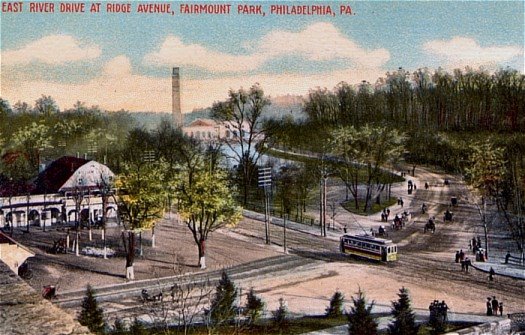
1900 Photograph of Ridge Avenue (Trolley car is on Ridge Avenue) This section of Ridge Avenue is just below Wissahickon Creek Falls going towards Manayunk/Roxborough. Gustine Lake is the body of water in the background .

Though there are many places still to visit, review and discuss in the East Falls Section of Philadelphia, I will close out this series with one last article on the "Street" Ridge Avenue itself.

Ridge Avenue is a natural highway that was once called a "well established Indian Path" that ran from the City to the Countryside for more then three hundred years.

First called "Kings Road" in the 1700's, it underwent many name changes before it was finally called Ridge Avenue. Names included but were not limited to were; Manatawny Road, Reading Turnpike, Robeson's Road, Rocks Burrow, Wissahickon Road, Rich Road, Ridge Road and Ridge Road Turnpike.

History Of Gustine Lake

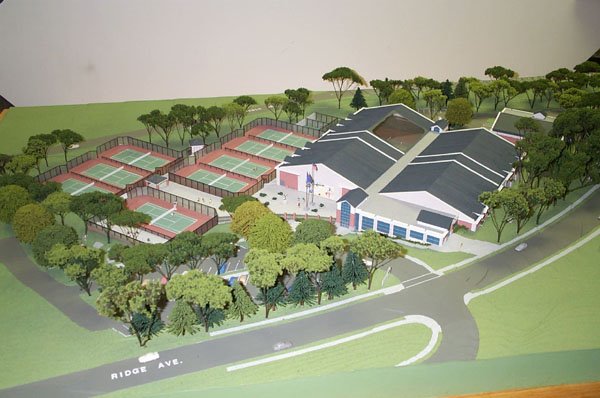
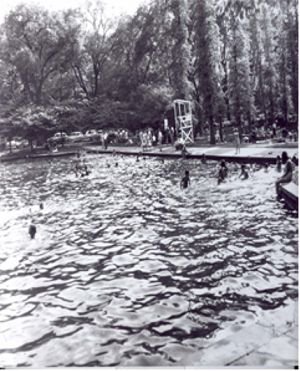
Arthur Ashe Youth Tennis Center (constructed on the grounds of the old Gustine Lake) 1950 Photograph of Gustine Lake
My Father Ronald Weleski (age 5yrs) 1939 Photograph at Gustine Lake
Closeup Photograph of Ronald Weleski at Gustine Lake in 1939

Manmade lake once located at the 4200 block of Ridge Avenue just below the Wissahickon Falls and near where the Wissahickon Creek dumps into the Schuylkill River. The lake was fed by the waters of the Wissahickon Creek for many years until the lake was drained and a pool built on the same grounds.

For many years, Gustine Lake was the public waterhole for those living in the East Falls and surrounding areas during those hot summers before the invention of modern Air conditioners.

During the heighten concerns of the polio epidemic between the years 1932 to 1950, many families avoided the public waterhole during the the last weeks of August thu to the first two weeks of September when polio outbreaks were at their highest.

Today, the grounds of Gustine Lake are undergoing the construction of the Arthur Ashe Youth Tennis Center.

Saturday, April 08, 2006

History Of Laurel Hill Cemetery


In 1835, the North Section was once the country estate of Joseph Sim. The Central section of the cemetery was once the estate of George Worten Pepper. Before, his estate was taken over by the cemetery, it held Laurel Hill College for men and contained a Catholic College Chapel on its grounds.

When Laurel Hill was founded in 1836 by John Jay Smith it was the first rural cemetery in Philadelphia and the country's second only rural Victorian Garden cemetery of its kind known for its architectural structure and beauty. Before 1836, burials took place in Church yard cemeteries and on the grounds of estates.

There are many notable Philadelphians buried at Laurel Hill. 19th Century Industrialists and Civil War Generals are just a few of those interred in its grounds.

In the late 1960s, the cemetery fell in disarray and it was not until the Friends' group was established that the cemetery began to return to its original splendor. Because of the hard work and dedication of the Laurel Hill Friend's group, the cemetery became a National Historic Landmark in 1998 which I proudly was a part of. The formal dedication of the Pennsylvania Historical Marker took place on May 7th, 2000.

In the years that followed, I began writing articles for the cemetery's newsletter about the ordinary folks interred in Laurel Hill and also about those whom the cemetery 's existence played a part in their lives. I personaaly thought too much attention was placed on the "Rich and Famous" and not enough on the "Ordinary Folks' interred in the cemetery and I wanted it known that though the cemetery may focus on the first group, there was even a larger group of ordinary everyday folks who were interred in its grounds that may not have been as wealthy or policitally connected but who also served an importance in the local community as well.

I am sad to say that today the cemetery has turned from a place of quiet historical beauty to a place of commercialism.

History Of St. Bridget's Catholic Church


Held its first mass on April 15th, 1855. Parish school opened under the Sisters of St. Joseph nuns on September 1st, 1888. The first Pastor was Father James Cullen who served the church from 1853 to 1865.

Today, the church and school remain a strong influence on the East Falls Catholic community.

Thursday, April 06, 2006

History Of The Falls Housing Project

East Falls Housing Project


Before the City of Philadelphia built the East Falls housing project , the land was own and occupied by a 19th century chemical plant which provided houses for the workman and their families up on the hill behind the plant. This section of East Falls was known as Laboratory Hill.

The chemical plant made alcohol which caused the production of many obnoxious gases. During the Civil War, the plant made a lot of money because of the high cost of quinine that was used.

Laboratory Hill became Merck Chemical before it closed and the land bought by the City for low cost houses.

Today, the Falls Housing Project no longer exists. In its place is a new housing development complete with single family homes, senior citizen housing and stores in an effort to revitalize the area.

Monday, April 03, 2006

History Of Dobson Mills


First located at Ridge Avenue and the Wissahickon Creek, the mill was famous for making the Army Blankets for the Union soldiers during the Civil War. The mill was demolished in 1872 by the Fairmont Park Commission to extend the Wissahickon Park. The mill moved its location to Ridge Avenue and Scotts Lane where it stayed in business until the late 1930's. Like other mills of its time, its employees included children who worked 12 hour days (6a to 5p) at a rate of 3 dollars a week and like other mills if one member of a family offended the employer, the entire family risked being laid off.

Today the walls surrounding the mill have been torn down and apartments have been built in what was once the mill.

History Of The Falls Tavern


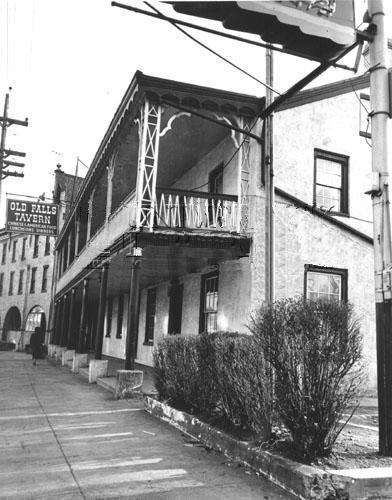
Once located at Ridge Avenue and Indian Queen Lane, the tavern was founded in 1731 and remained a part of the East Falls community until its closure in 1972. The tavern stood two and one half stories high with heavy white washed plaster outside the building and a very steep pitched roof. The front of the building had a two story porch and the upper portion of the porch had a fancy black iron balustrade. The back of the building faced the Schuylkill River where people sat on its porches. When you entered the tavern's central double doors with its long panels of glass you entered a room with a deep red carpet and a colonial staircase. The bar room was darkly paneled and had a huge fireplace. In the tavern's early days, people from all around came to the tavern for its famous catfish and waffle dinners. The catfish once came directly from the Schuylkill. In the tavern's later days, the catfish was born and raised in catfish farms. Today, a post office stands in its place.

East Falls Series

The next few Journeys Into The Past will consist of a short series about the different locations that once were and some still are a vital part of the everyday life in the East Falls Section of Philadelphia.

Friday, March 31, 2006

Buck Fleming

John Weleski was nineteen years old in this photograph. Known as "Buck Fleming" during his boxing days, I wonder if he took the Fleming part of his name from the name of that street in the Roxborough section of Philadelphia. According to the street map, Fleming Street was the cross street at Roxborough Avenue where he grew up. I have to wonder if perhaps, he played at this corner as a child or maybe hung there with friends as a teenager.

Born John Joseph Wisloski on May 3rd 1904, he was the child of Eva Wisloski. It is my belief that his father's name was Sylvester. But because his father left the family (or was thrown out by the wife as the legend goes) when he was a child, I can only guess Sylvester Wisloski was his name. According to the Censes records of 1910, a man by the name of Sylvester Wisloski lived in the Roxborough area and had a son named John who was six years old.

John Wisloski married Marie Schroeder and had three children, Lillian Marie, Ronald Joseph and John Joseph. John changed his last name from Wisloski to Weleski between the births of his sons Ronald in 1933 and John in 1945. His wife Marie died two days after the birth of her son John in 1945.

John suffered a great many losses in his family over the course of a few years. His mother died in 1932, his brothers Andrew and Samuel died in an accident in 1938, his sister Eva died in 1945 as did his wife Marie.

John Weleski suffered a heart attack and died in 1954. He is interred with his wife Marie in Laurel Hill Cemetery. Also interred in the same plot are Charles and Mary (Mervine) Schroeder, parents of Marie and Earl Schroeder, thirteen year old brother of Marie.

.

Sunday, March 19, 2006

More Irish Eyes (Generations Later)

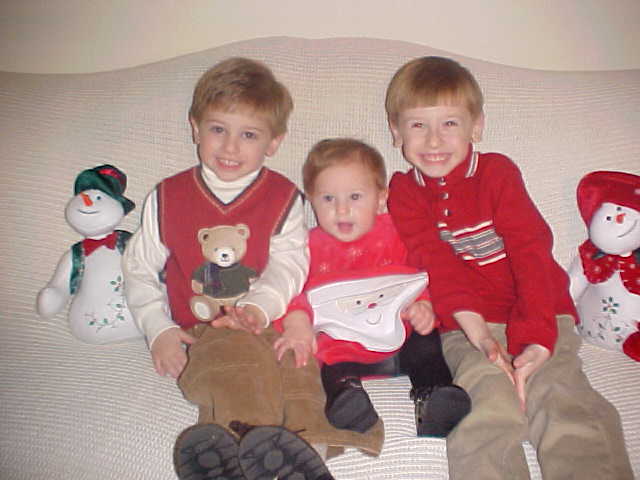
Shaun
Frankie & Frankie (far left & middle)
John (far right) Shaun


By the way, I call these Irish Eyes Are Smiling. However, there are some who would say they are Devilish Eyes That Are Up To No Good..........................

Saturday, March 18, 2006

Irish Eyes Are Smiling

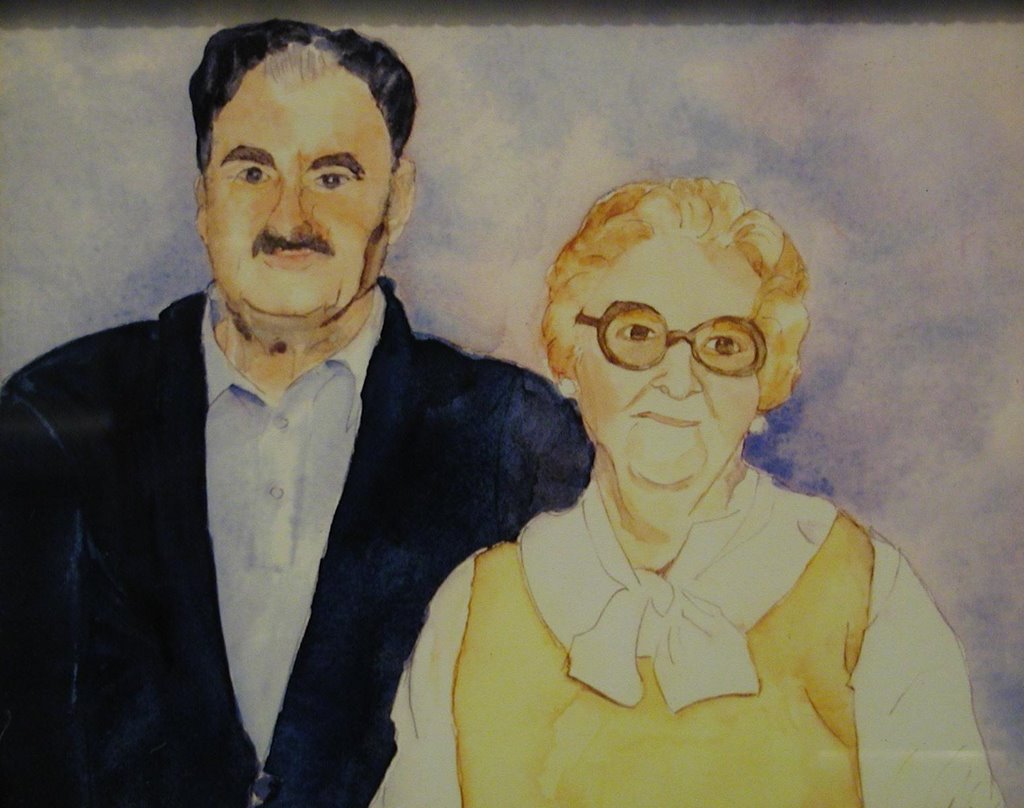
Grandparents
Mom
Uncle Jack

While sitting in the "Ole Ye Ale House" last night eating the traditional ham & cabbage and drinking beer listening to Irish music, it brought back memories of my grandparents who of course were both Irish. When they played the song "Irish Eyes Are Smiling" I could almost see the face of my grandfather whose eyes were always smiling. Today, my mom has those same eyes and truth be told my Uncle Jack looks just like my grandfather, his father.

Friday, March 17, 2006

Cresson Street Railroad

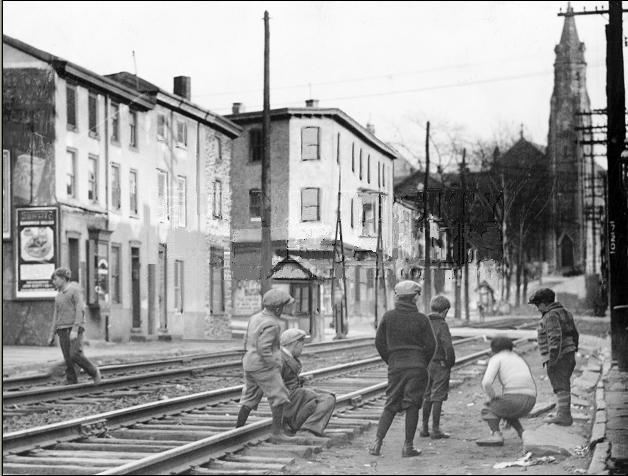
Boys play along the tracks of the railroad that ran along Cresson Street (St. John's in the background) before it had the protection of the wall and before the railroad was raised.

Having the railroad so close to residential areas meant there were many accidents. For example, it was not unusual for a house or place of business along Cresson Street to catch on fire from the sparks left behind as a train rolled by nor was it unusual for a train to hit those who played on or were too close to its tracks.

Thursday, March 16, 2006

Old Ridge Avenue


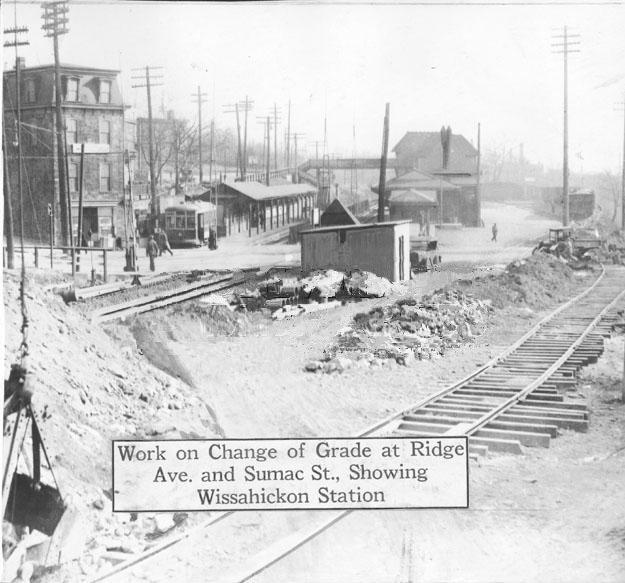
Once upon a time, Ridge Avenue use to cross over the railroad tracks at the Wissahickon train station. Today, Rochelle Avenue is the new street name and Ridge Avenue has a new route. It now goes around the railroad and up over a man made bridge road that is famous for its bike races. (also known as the wall)

Tuesday, March 14, 2006

And The Walls Came Tumbling Down

When the demolition work began on the Old Falls Tavern, some "die hard" patrons saluted its demise. This historical tavern met with the recking ball in the early 1970's only to be replaced with a post office.

Old Falls Tavern

Built in the 18th century and home to the famous catfish and waffles meal. Catfish were once abundant in the Schuylkill River and Wissahickon Creek and was a popular meal for two centuries.
The Old Falls Tavern was located on Ridge Avenue and its back porch viewed the Schuylkill River. Once an elegant and glamorous place, it fell in disrepair in the middle of the 20th century. While in existence, this tavern was a popular place among the males in our family.

Falls Of The Schuylkill Library


The first library in East Falls opened on June 1, 1901 as a Deposit Station on the second floor of the Old Academy, the first community center in Philadelphia. It was built in 1819 as a place of education and worship. Since 1932, the building has been used as a theater, and was the scene of Grace Kelly's acting debut. Featuring English Collegiate architecture, the current library opened on November 18, 1913. The building was funded by Andrew Carnegie, and the land was donated by William H. Merrick and the Warden Estate. The library was renovated in 1997 as part of the "Changing Lives" campaign, which refurbished branches and ensured Internet access. Atop the library, you'll see a catfish weathervane on the cupola. The preschool center also features a catfish. They are symbols of the thousands of catfish that thronged the Schuylkill River two centuries ago, when East Falls was known as Fort St. Davids. One fisherman in the 1830's caught 3,000 in one night with his dip net. Catfish and waffles were a popular meal in the inns and taverns that surrounded the river. (see Old Falls Tavern) While you visit, take a look at the beautiful garden outside the library. It has been maintained by a dedicated group of volunteers since the late 1980's. The library is located at Midvale & Warden.

Monday, March 13, 2006

What It Was Like For Those Who Worked In The Iron Mills In The Late 19th and Early 20th Centuries

An explosion of gas, a slipping of the furnace, a cave-in of the furnace stack, a tilted ladle, a cracked converter, an overturning of a pile of iron, the breaking of a rotten scaffold . . . these are some of the most common of death-dealing [conditions] which make human life in and about iron mills and locomotive works as precarious as upon a field of battle.
And for all this slaughter . . . [management gives] but one answer: “Carelessness on the part of the injured person"


Taken from an earlier 1900's report on Iron Mills.

Saturday, March 11, 2006

Midvale Steel and William Joseph Gallagher


After our country entered into War World II, the once lagging industry and country's depression receded and opportunity for workers began once again. It was at this time that my grandfather William Gallagher got a job at Midvale Steel in the Nicetown section of Philadelphia as a " roller " of steel but it was not long before he ran the biggest crane in the city in what was considered the largest one story building in the nation where he used the crane to pick up the large guns that went on the Navy's gun ships to dip them into the hot steaming steel. Before long my grandfather became one of the most respected employees in Midvale due to his courage and ability to perform a job well done. As his sons William, John and Gene became of age, they also were employed at Midvale. Sadly, Midvale Steel fell on difficult financial times and closed its doors a final time in 1976. It should be noted that Coll McCaffery, my grandmother's cousin and husband of William's sister Anna was also once employed by Midvale Steel. As a Train Conductor, he drove the trains in the rail yard to transport the steel. John Gallagher (Uncle Jack) resigned his position at Midvale Steel in the early 1960's to relocate to California and seek work as a Life Insurance agent.

Midvale Steel

Midvale Steel Company, Car Axles, Tires, Projectiles And Armor Plate Nicetown "Though a modern establishment, the Midvale Steel Works had rapid growth and constitute one of the gigantic industries of the country. Car axles, steel tires for locomotive wheels and structural work have long been their well-known products. They also made propeller shafts for steamships, and gun forgings and steel projectiles and armor plates for the United States Government".

Three Generations of Iron Workers at Pencoyd


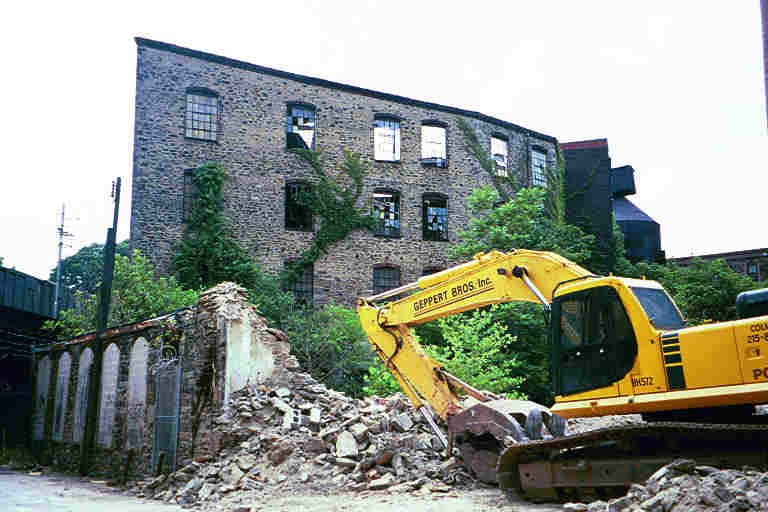
The building above is the remains of what was once Pencoyd Iron Works. Located on the west side of the Schuylkill River in Belmont Hills (once called West Manayunk), this mill was the employer of John Keller (my grandfather William Gallagher's grandfather), William Gallagher (my grandfather's father) and my grandfather William Gallagher. John Keller was a "heater" of iron at the mill and in 1890 he was involved in an explosion. Though he did not perish right away, he did eventually die from burns he received at the mill. My grandfather William Gallagher was a "roller of steel" at the mill and in the early 1930's was asked by the mill's owner to relocate to South Africia to open a plant down there. However, he turned down this opportunity because of pressure from his family to remain in Philadelphia. An opportunity, he regretted until the day he died in 1980 because shortly thereafter the mill suffered financial loss and many of its employees were laid off including my grandfather and his father.

Tuesday, March 07, 2006

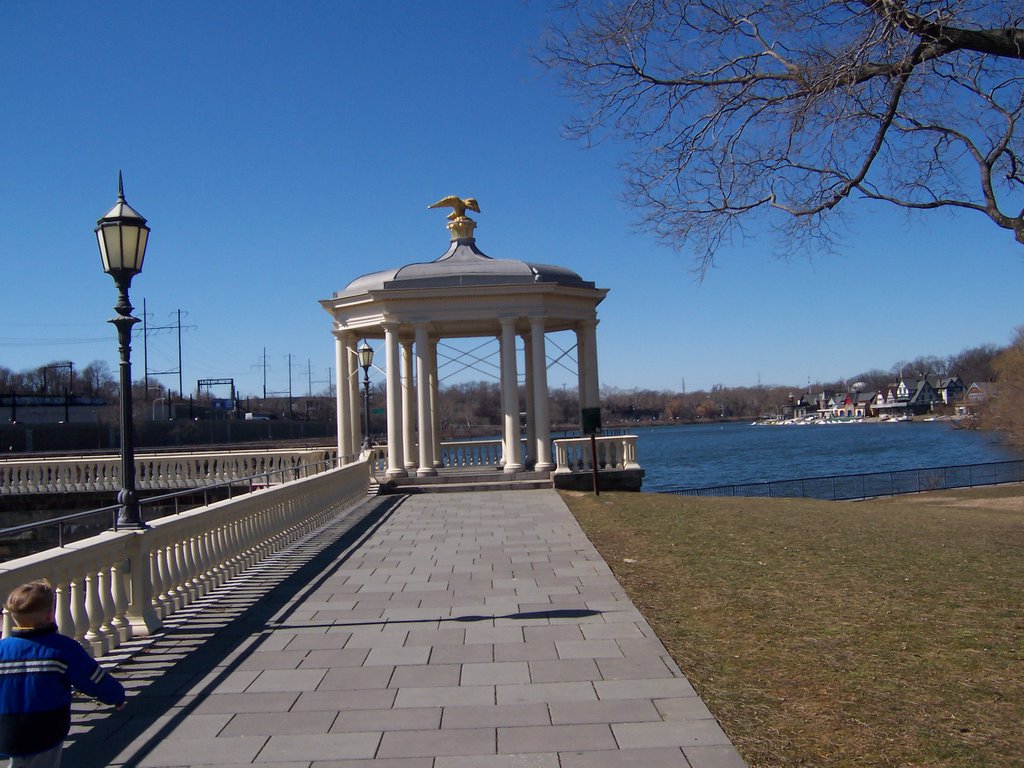
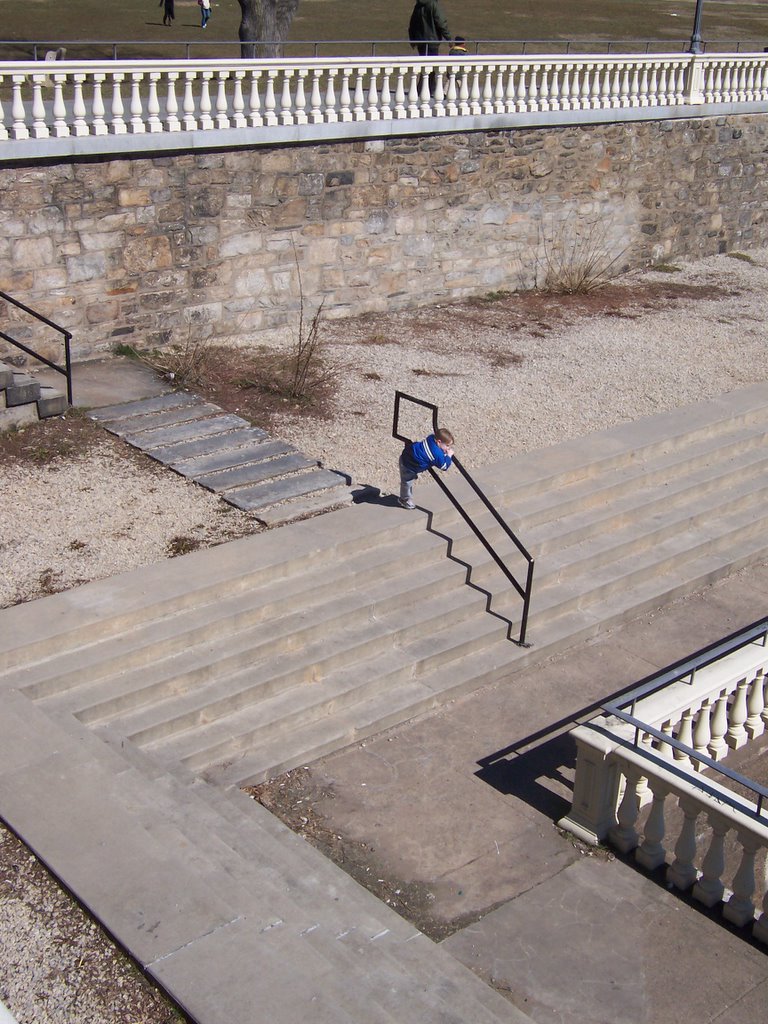
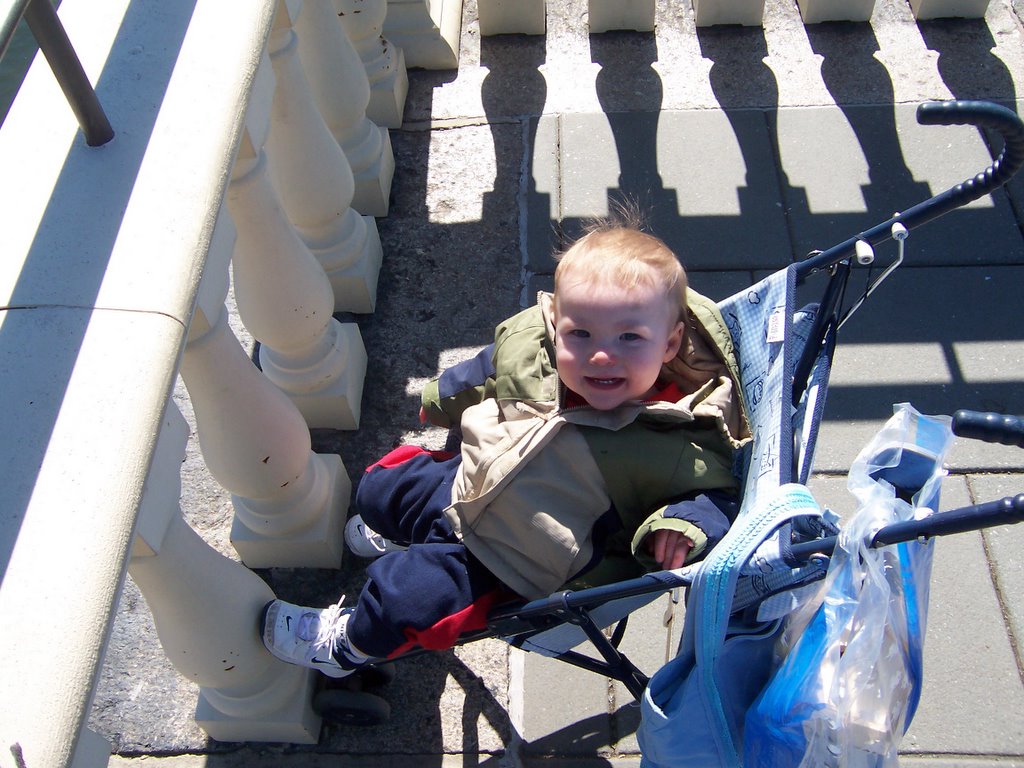
More Photographs of the Water Works

Magnificent Sight
Bigger View
Running For The Gazabo
Too Many Steps
The Eagle Has Landed
Cheerful Smiles

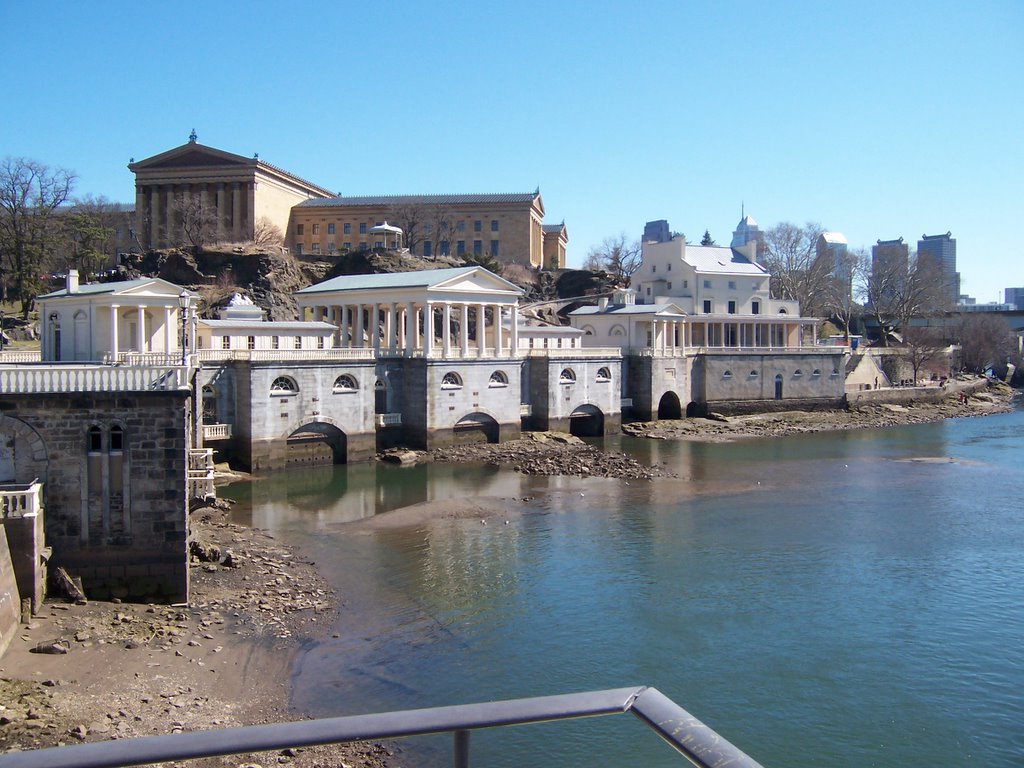
Fairmount Water Works "1812-1909"

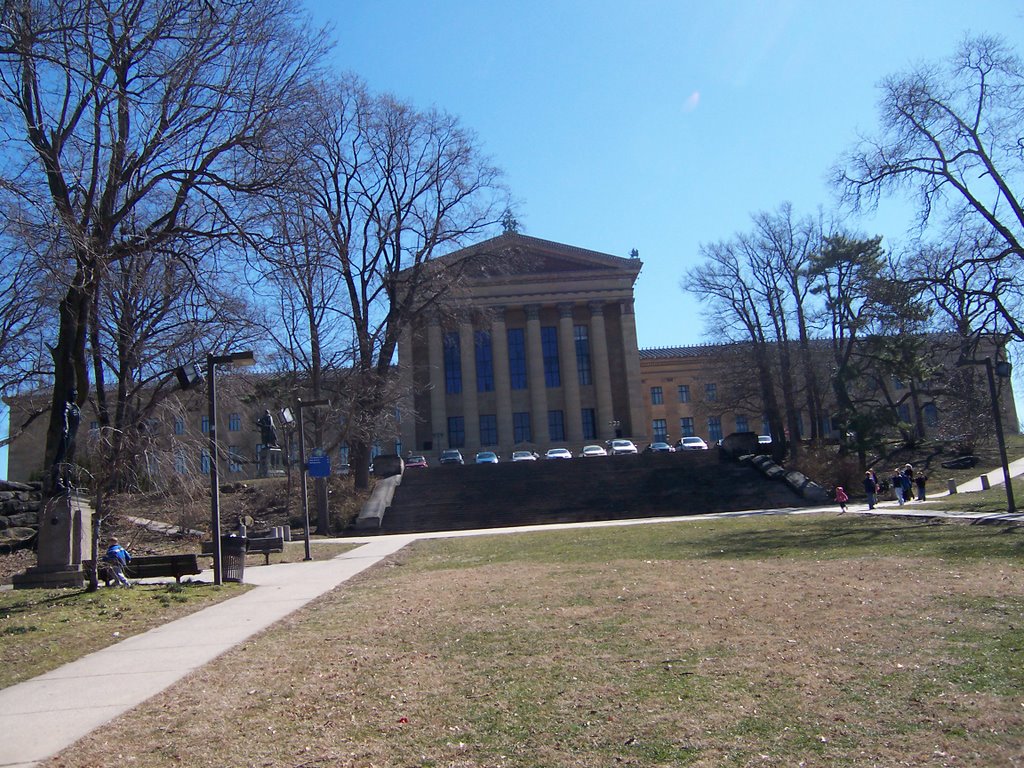
Fairmount Water Works with view of the Philadelphia Art Museum in the background.

Built in 1812 to supply water to the growing city of Philadelphia. Up until then the water was supplied by the city's wells and had become polluted. Residents feared that the outbreaks of Yellow Fever were from the polluted wells. Frederick Graff who designed the Water Works asked the city to provide "buffer" land on both sides of the Waterworks to prevent pollution. The Fairmount Park, largest park in the nation was then created. However by 1909, the buffer land known as Fairmount Park was not big enough to prevent the waters of the Schuylkill from being polluted by the industry up river. Therefore in 1909 the Fairmont water Works closed and new access to water came from the Delaware River.

Monday, March 06, 2006

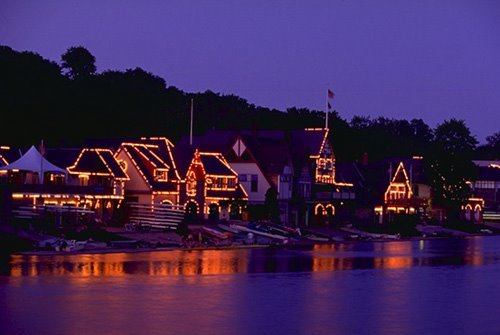
Boathouse Row At Night


If you ever want to experience a spectacular sight, drive along the West River Drive and glance across the river towards Boathouse Row in the early morning hours before dawn or after the sun goes down.

Many times I take this route to work just so I can experience its beauty. Just imagine the beauty of the lights as they dance across the water's surface. You cannot help but feel a sense of peace and contentment as you view the reflection off the river. There is no better way to start your day.

Sunday, March 05, 2006

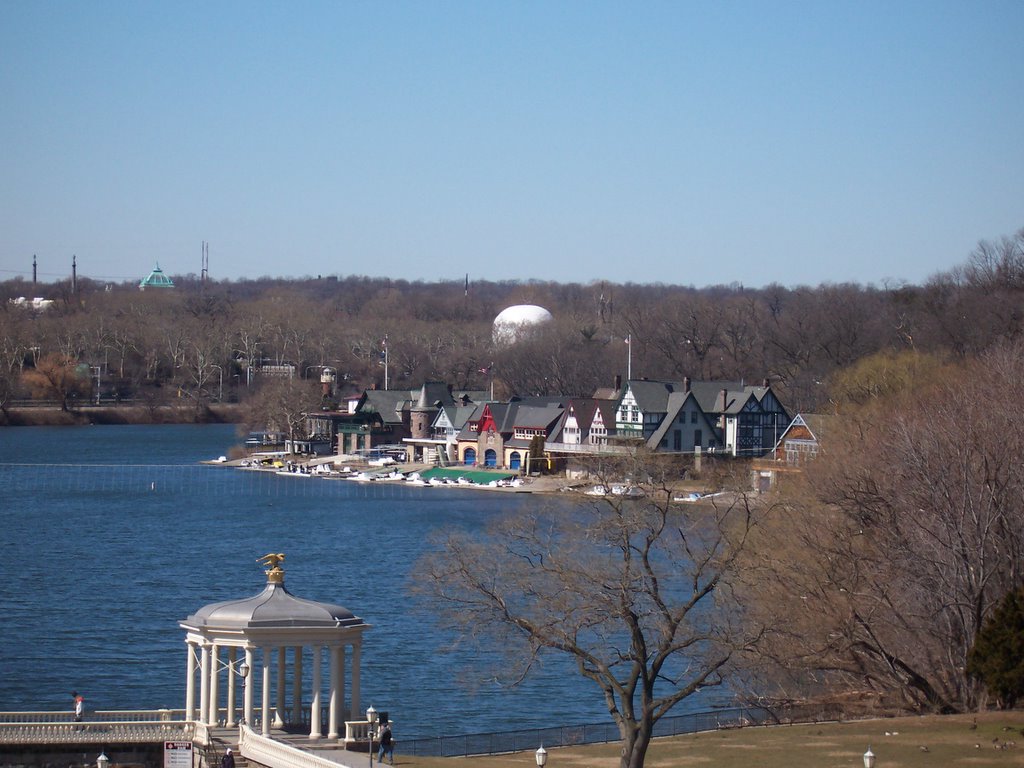
Boathouse Row


Situated along the riparian banks of the Schuylkill River below the Art Museum and the Waterworks, and nestled at the foot of Lemon Hill along East River Drive, are the Boat Clubs of the Schuylkill Navy, familiarly known as "Boathouse Row". Philadelphia and rowing have been inextricable linked for over a century and a half. This unique relationship of a city to its river and Boathouse Row has produced a saga of unequaled World and National championships.

The Schuylkill Navy is the oldest amateur athletic association in the country, dating back to the mid 1800s. Boathouse Row, which consists of several Victorian era boathouses, is their home. Races, regattas, and exhibitions are held here every year, and are very popular with locals and tourists alike. For a charming view of Boathouse Row with it’s twinkling lights, drive along West River Drive after dark. Visit East River Drive on foot - there’s usually lots of activity to watch, from rowers in the river to joggers and cyclists on land.

Saturday, March 04, 2006

Area's Oldest Catholic School Closes

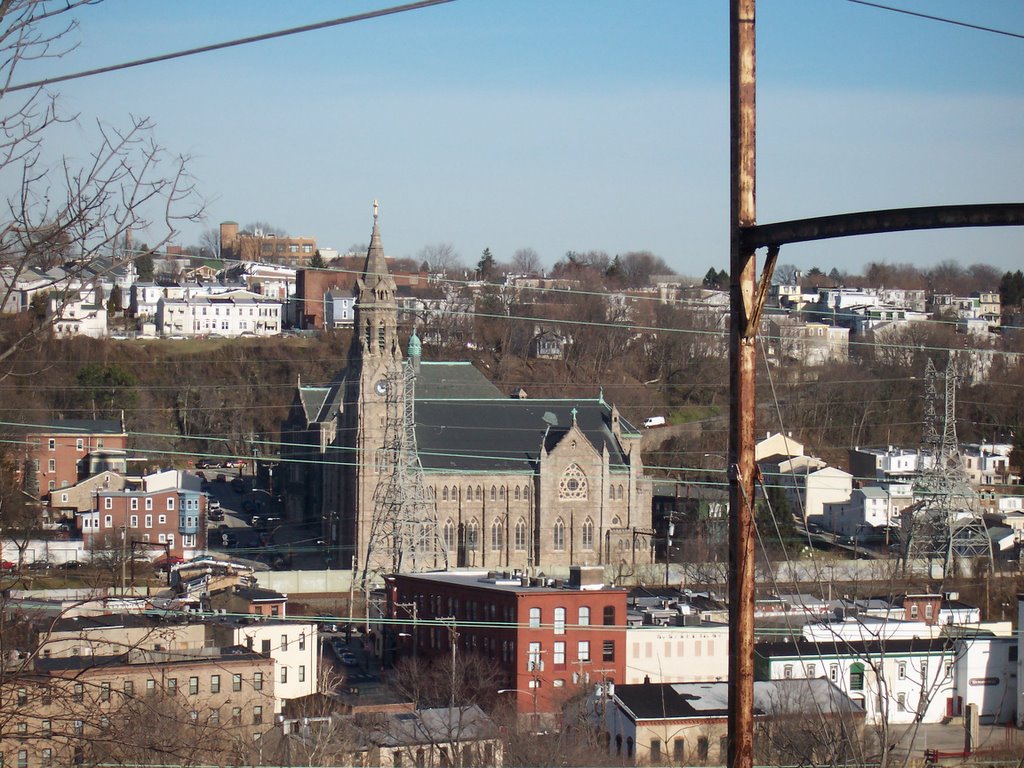
St John the Baptist cira 2006
St John the Baptist (19th century)
Father Eugene Murphy

After a two year battle to remain open, St. John the Baptist Catholic grade school will join other local grade schools by closing its doors forever after the end of this academic school year.

To see this school close its doors after so many years is indeed tragically sad. This was the school my grandparents attended in the early part of the 20th century. This was the school Father Eugene Murphy created in the late 19th century. A school he believed should provide it parish children the best modern education of its time. He encouraged the parents of his parish to provide their children an education to the 12th grade. He encouraged the parents to keep their young children out of the mills and factories as was so popular in the late 19th century and early 20th century. He believed girls as well as boys should receive an education. Education was so important to him that he visited each and every classroom each day just to speak with the children of his parish school.

At the conclusion of this academic school year, St. John the Baptist will close its doors along with the St. Lucy's, St. Josaphat's, St. Mary's and Holy Family.

Thursday, March 02, 2006

166 Roxborough Avenue

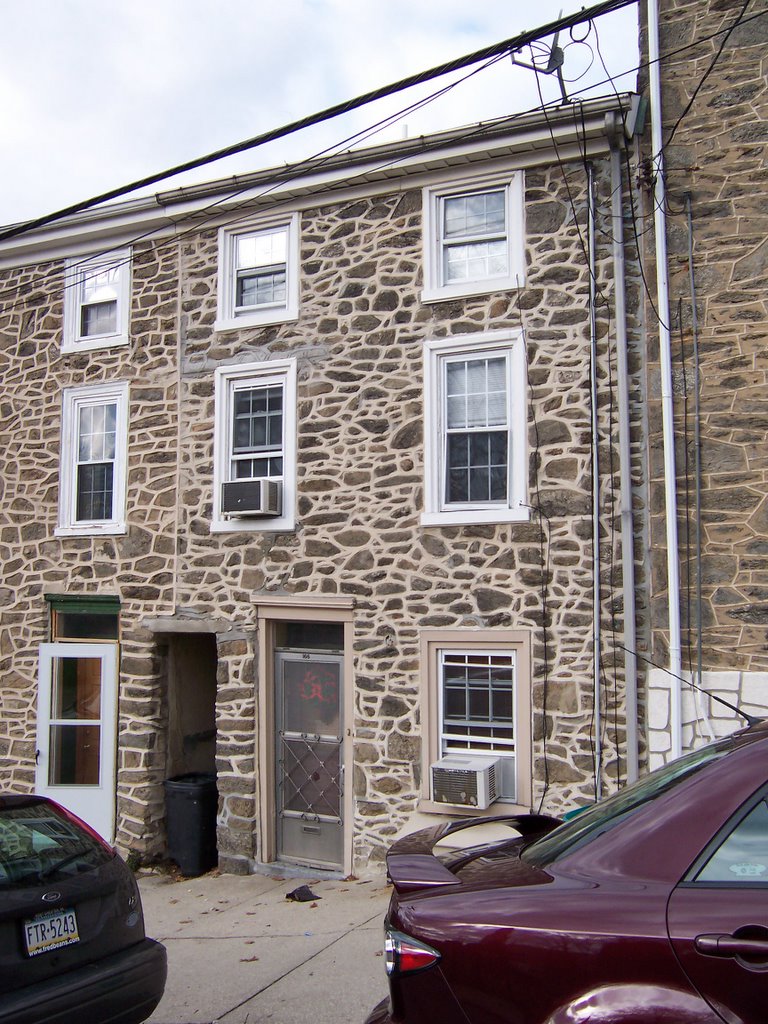
A typical rowhouse in Manayunk made with the original Wisshahickon stone. This house in Manayunk was the home of the Wisloski family. The below paragraph was taken directly from "a journey into the past".

While researching archival records at St. John the Baptist Church located in Manayunk, I came across the death records of Andrew and Samuel Wisloski. Both were listed as dying on the same day from Asphyxiation. This information prompted me to investigate the reason behind the Wisloski brothers cause of death. Upon further investigation, I discovered that after an evening of drinking, the Wisloski brothers got into a fist fight at home and unbeknownst to both of them the gas pipe above the stove was inadvertently hit by one or both of them causing the release of gas. Both were asphyxiated by the gas fumes. Andrew was 50yrs old and Samuel was 40yrs old at the time of their death. The date of death was listed as March 11th, 1938 and the funeral mass was held at St. John's on March 16th, 1938 at 9AM. Burial was held on the same date at Westminster cemetery in lot 327, grave number two. Residence listed at the time of their death was 166 Roxborough Avenue.

Monday, February 27, 2006

And You Thought Friday The 13th Was Scary


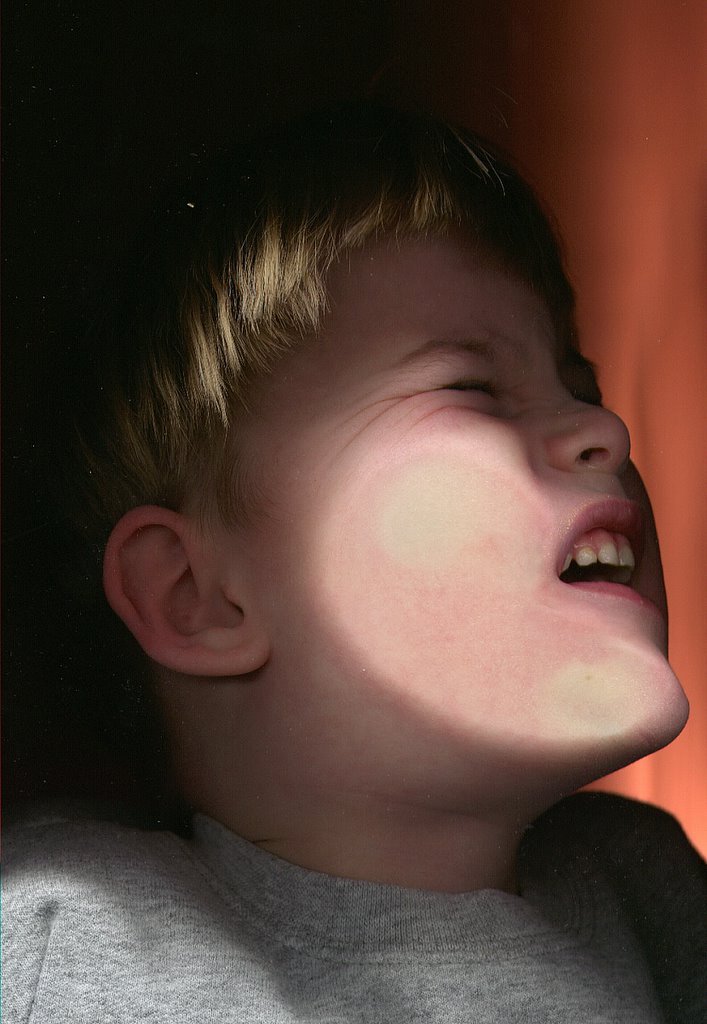
This is the definition of "fun" for a four year old. He thought it was great "fun" to scan himself on the computer scanner..............................I think he looks as if he could be in the movie Friday the 13th or Halloween or even maybe Nightmare on Elm Street.